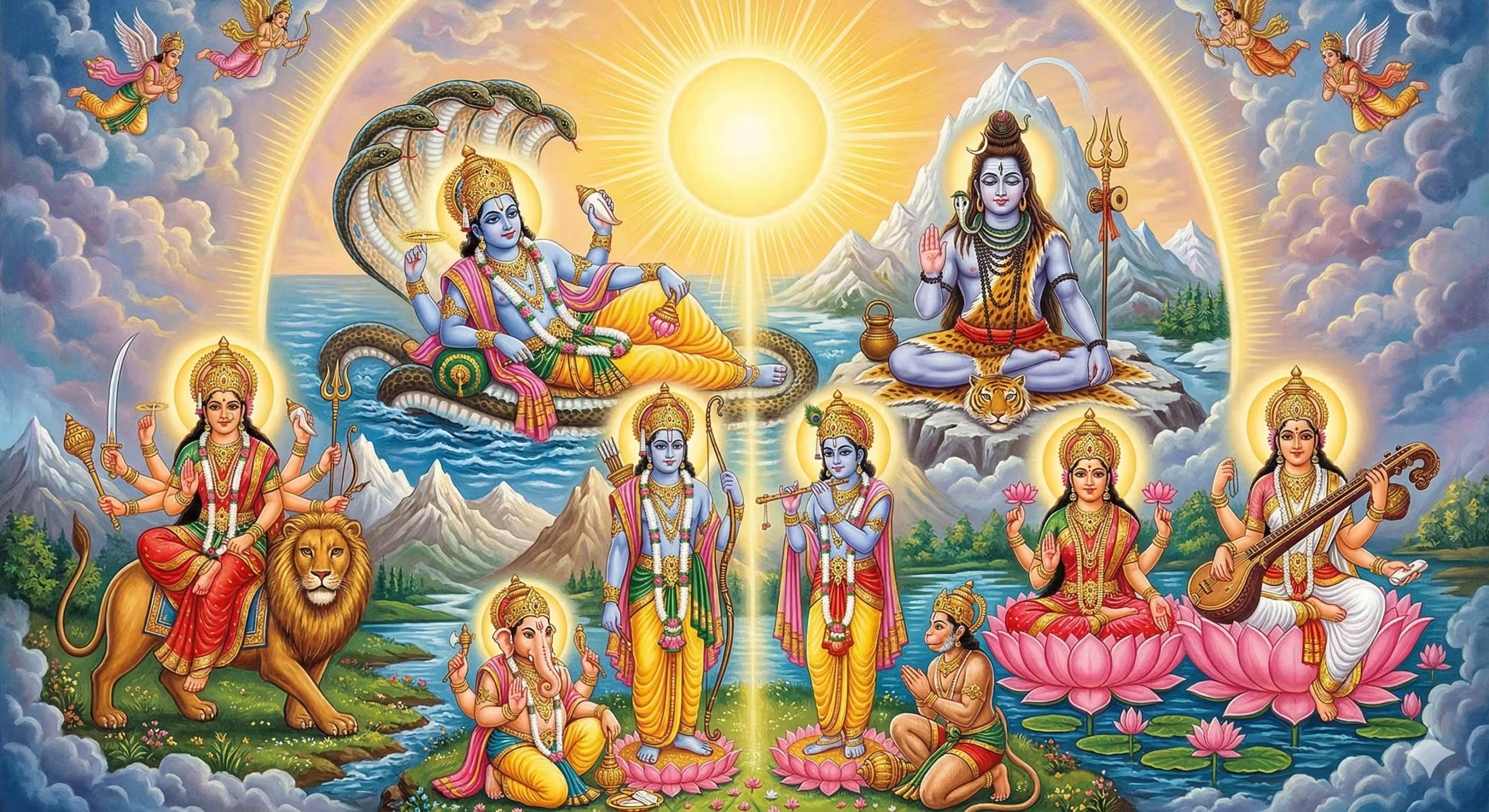
Hinduism, one of the world’s oldest religions, features a vast and rich pantheon of deities. Rather than being strictly polytheistic, many Hindu traditions view these numerous Hindu god and goddesses as diverse manifestations of a single, formless Supreme Reality known as Brahman.
This article provides a systematically organized guide to the major deities, their avatars, and associated forms, offering a clear understanding of the divine hierarchy in Hindu theology.
1. The Supreme Reality: Brahman
In Hindu philosophy, Brahman is the ultimate, formless, infinite, and eternal cosmic power that constitutes the fabric of the universe. Brahman is not a personified god but the underlying truth and soul of all existence. Every deity listed below is considered a physical manifestation or a specific aspect of this infinite Supreme Reality.
2. The Trimurti: The Divine Trinity
The Trimurti represents the three fundamental cosmic forces of the universe: creation, preservation, and destruction. These roles are personified by three major male deities.
Lord Brahma: The Creator
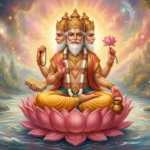
Lord Brahma is the creator of the universe and all living beings. He is traditionally depicted with four faces, representing the four Vedas, and sits on a lotus that emerges from Lord Vishnu’s navel. Despite his supreme role in creation, Brahma is rarely worshipped in daily rituals, with only a few dedicated temples existing in India, most notably in Pushkar.
Lord Vishnu: The Preserver
Lord Vishnu is the protector and preserver of the universe, tasked with maintaining cosmic order (Dharma). Whenever the world is threatened by chaos, evil, or demonic forces, Vishnu incarnates upon the earth in various forms (avatars) to restore peace.
The Dashavatara (Ten Avatars of Lord Vishnu)
- Matsya (The Fish): The first avatar, who took the form of a giant fish to save the first man (Manu), the sages, and the sacred Vedas from a catastrophic cosmic flood.
- Kurma (The Tortoise): Vishnu took this form to support Mount Mandara on his shell during the Samudra Manthan (churning of the cosmic ocean), helping the gods obtain the nectar of immortality.
- Varaha (The Boar): When the demon Hiranyaksha dragged the earth (Bhudevi) to the bottom of the cosmic ocean, Vishnu appeared as a mighty boar to defeat the demon and rescue the planet on his tusks.
- Narasimha (The Half-Man, Half-Lion): This fierce avatar was assumed to bypass a complex boon of invincibility held by the demon king Hiranyakashipu, slaying him to protect the young devotee Prahlada.
- Vamana (The Dwarf): Appearing as a dwarf Brahmin, Vishnu tricked the arrogant demon king Bali into granting him three paces of land, subsequently expanding to cosmic proportions to reclaim the three worlds.
- Parashurama (The Warrior with an Axe): A fierce sage-warrior who incarnated to rid the earth of corrupt and tyrannical Kshatriya (warrior) kings who were abusing their immense power and harming the innocent.
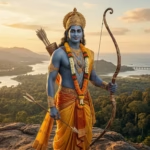
- Lord Rama: The noble prince of Ayodhya and the hero of the epic Ramayana. He embodies the ideal man, husband, and king, famously defeating the demon king Ravana to rescue his wife, Sita.
- Lord Krishna: The charismatic deity of the epic Mahabharata and speaker of the Bhagavad Gita. He is revered as a supreme statesman, a divine lover, and the destroyer of the tyrannical King Kamsa.
- Gautama Buddha: In many later Vaishnava traditions, Buddha is recognized as the ninth avatar, incarnating to promote non-violence (Ahimsa) and to steer people away from excessive ritualistic sacrifices. (Note: Some regional traditions list Balarama, Krishna’s brother, as the eighth or ninth avatar).
- Kalki (The Future Avatar): The prophesied final incarnation who is expected to appear at the end of the current age (Kali Yuga). Riding a white horse and wielding a blazing sword, Kalki will destroy all evil and usher in a new era of purity.
Lord Shiva: The Destroyer and Transformer
Lord Shiva is the dynamic force of destruction, which in Hinduism is viewed as a necessary precursor to recreation and transformation. He is a complex deity—both a supreme ascetic meditating on Mount Kailash and a fierce warrior. He is commonly worshipped in the abstract form of the Shiva Linga.
Associated Deities and Incarnations of Lord Shiva
- Lord Hanuman: Widely revered as an incarnation (or partial incarnation) of Lord Shiva’s divine energy (Rudra). Hanuman is the ultimate symbol of strength, perseverance, and selfless devotion, renowned for his crucial role in aiding Lord Rama in the Ramayana.
- Nataraja: This is Lord Shiva in his form as the cosmic dancer. His dance, the Tandava, represents the rhythmic cycle of creation, preservation, and destruction of the universe.
- Bhairava: A fierce, terrifying manifestation of Shiva associated with annihilation. He is often depicted guarding Hindu temples and is worshipped for protection against enemies and supreme fears.
3. The Tridevi: The Divine Goddesses
Just as the Trimurti governs the cosmic functions, the Tridevi consists of three supreme goddesses who represent the vital energies (Shakti) required by the male deities to perform their cosmic duties.
Goddess Saraswati
The goddess of knowledge, music, arts, wisdom, and learning. She is the divine consort of Lord Brahma and is depicted playing the Veena (a musical instrument) while dressed in pure white, symbolizing absolute purity and the light of true knowledge.
Goddess Lakshmi
The goddess of wealth, fortune, prosperity, and beauty. As the consort of Lord Vishnu, she provides the abundance necessary to sustain the universe. She is famously known to incarnate alongside Vishnu whenever he descends to earth.
Avatars and Forms of Goddess Lakshmi
- Goddess Sita: The consort of Lord Rama and the central female figure of the Ramayana. She represents extreme devotion, purity, self-sacrifice, and courage in the face of immense adversity.
- Goddess Radha: The eternal consort and greatest devotee of Lord Krishna in his youth. The relationship between Radha and Krishna represents the highest form of spiritual love and the soul’s longing for the divine.
- Goddess Rukmini: The principal wife and queen of Lord Krishna in the kingdom of Dwarka. She is revered as a direct incarnation of Lakshmi, embodying elegance, duty, and royal grace.
- Ashtalakshmi: The eight secondary manifestations of Goddess Lakshmi, each presiding over a specific source of wealth, such as agriculture, courage, progeny, victory, and knowledge.
Goddess Parvati / Shakti
The goddess of power, love, and spiritual fulfillment. She is the consort of Lord Shiva and the mother of Ganesha and Kartikeya. Parvati is the gentle aspect of Mahadevi (the Great Goddess), but she can take on terrifying forms to destroy evil.
Fierce Forms of Parvati (Shakti)
- Goddess Durga: A warrior goddess created by the combined anger of all the gods to slay the invincible buffalo demon, Mahishasura. She rides a lion or tiger and wields multiple weapons in her many arms.
- Goddess Kali: The most fearsome manifestation of cosmic power and time. She destroys ignorance and ultimate evil, often depicted with a dark complexion, a garland of skulls, and a fiercely protruding tongue.
- Goddess Sati: The first incarnation of Shiva’s consort. She famously self-immolated in a sacrificial fire to protest her father’s profound disrespect toward Lord Shiva, leading to Shiva’s world-shattering grief.
4. Other Major Deities
Lord Ganesha
The elephant-headed son of Lord Shiva and Goddess Parvati. Ganesha is universally worshipped as the remover of obstacles (Vighnaharta), the patron of arts and sciences, and the deity of intellect and wisdom. He is traditionally honored before any new venture or religious ceremony.
Lord Kartikeya (Murugan)
The elder brother of Ganesha and the son of Shiva and Parvati. Known as the God of War, he was born specifically to command the divine army of the gods and defeat the powerful demon Taraka. He is exceptionally popular in South India under the name Lord Murugan.
5. The Vedic Deities (Dikpalas and Elements)
These gods, prominent in the ancient Vedic texts, govern the forces of nature and the cardinal directions. While they are subordinate to the Trimurti in classical Hinduism, they hold crucial roles in maintaining the earthly realm.
- Lord Indra: The king of the heavens (Swarga) and the leader of the Devas. He is the god of lightning, thunder, storms, and rain, wielding a mighty weapon known as the Vajra (thunderbolt).
- Lord Agni: The god of fire and the acceptor of sacrifices. He acts as the essential messenger between humans and the gods, carrying the offerings made in fire rituals (Yajnas) to the heavens.
- Lord Varuna: The god of the oceans, water, and the celestial law (Rita). He is a profound moral authority who oversees truth and justice, originally holding a supreme position in the early Vedic pantheon.
- Lord Vayu: The god of the wind and the vital breath of life (Prana). He is celebrated for his incredible speed and power, and is acknowledged as the spiritual father of both Lord Hanuman and the mighty warrior Bhima.
- Lord Surya: The Sun god, worshipped as the ultimate source of light, warmth, and life on earth. He is depicted riding a magnificent chariot driven by seven horses, which represent the colors of the rainbow or the days of the week.
- Lord Yama: The god of death, dharma (justice), and the underworld. He is the first mortal who died and now acts as the impartial judge of departing souls, assigning them to heaven or hell based on their earthly karma.
- Lord Chandra (Soma): The moon god, associated with the night, plants, and vegetation. In Vedic traditions, “Soma” also refers to the divine nectar of immortality that provides strength to the gods.
6. Other Notable Divinities
- Lord Kamadeva: The Hindu god of human love, desire, and passion. He famously wields a bow made of sugarcane with arrows made of fragrant flowers, and is comparable to the Western deity Cupid.
- Lord Kubera: The god of wealth and the treasurer of the gods. A devout follower of Lord Shiva, he governs the distribution of riches and is the guardian of the northern direction.
- Lord Vishwakarma: The divine architect, engineer, and craftsman of the gods. He is credited with designing the flying chariots (Vimanas) and forging the powerful weapons wielded by the principal deities.
- Lord Dhanvantari: The god of Ayurvedic medicine and healing. He emerged from the churning of the cosmic ocean holding the pot of Amrita (the nectar of immortality) and is worshipped for good health and immunity.
A Note on Lord Shiva’s Avatars
Please note: While Lord Vishnu’s ten primary avatars (Dashavatara) are universally standardized, Lord Shiva’s incarnations and manifestations are vast and vary significantly across different ancient texts (Puranas). For the sake of brevity and clarity, this guide highlights only his most prominent and widely worshipped forms.
Conclusion
The Hindu pantheon is an intricately layered system where the singular ultimate reality (Brahman) expresses itself through numerous deities, each serving specific cosmic, natural, or moral functions. From the supreme Trimurti and Tridevi to their various earthly avatars and the elemental gods, this hierarchical structure reflects the rich, accommodating, and diverse spiritual tapestry of Hinduism.