Lord Hanuman is one of the most widely revered and universally beloved deities in Hinduism. A central figure in the epic Ramayana, he is the ultimate symbol of Bhakti (devotion), Shakti (strength), and Vidya (wisdom). Worshipped across the globe by millions, Hanuman is a Vanara (a monkey-faced humanoid) who exemplifies the limitless power that comes from selfless service and unwavering faith. As a Chiranjeevi (an immortal being), he is believed to be ever-present on Earth, listening to the prayers of his devotees and protecting them from evil, fears, and obstacles.
The Origin and Birth Story of Lord Hanuman
The birth of Lord Hanuman is a fascinating convergence of divine boons and cosmic events. He was born to Anjana, an apsara (celestial nymph) who was cursed to live on Earth as a female Vanara, and Kesari, a valiant Vanara king. Due to his parentage, he is often called Anjaneya (son of Anjana) or Kesari Nandan (son of Kesari).
According to Hindu scriptures, Anjana performed intense austerities to Lord Shiva for twelve years to be blessed with a child. Pleased with her devotion, Shiva granted her a boon. During this time, King Dasharatha of Ayodhya was performing a Putrakameshti Yagna (a ritual to have children) and received sacred pudding (payasam) to distribute among his wives. By divine design, a kite snatched a portion of this pudding and dropped it while flying over the forest where Anjana was praying.
Vayu, the Hindu God of Wind, guided the falling pudding into Anjana’s outstretched hands. Upon consuming it, she gave birth to Hanuman. Because Vayu played an instrumental role in his birth, Hanuman is celebrated as Vayuputra or Pavanputra (Son of the Wind). Furthermore, many sacred texts, including the Shiva Purana, describe Lord Hanuman as the eleventh manifestation or Rudra Avatar of Lord Shiva himself.
Significance, Roles, and Powers
Lord Hanuman’s significance in Hindu theology is profound. He is not merely a deity of immense physical strength; he represents the perfect harmony of power and intellect, action and devotion.
- The Supreme Devotee: Hanuman’s primary identity is that of the greatest devotee of Lord Rama. He demonstrates that the highest state of existence is selfless service to the Divine.
- Reliever of Troubles (Sankat Mochan): He is deeply worshipped for his ability to dispel fears, cure diseases, and remove obstacles from his devotees’ paths.
- Immortal Guardian (Chiranjeevi): Hanuman was blessed with immortality by Goddess Sita. He is destined to remain on Earth until the end of the current cosmic cycle (Kali Yuga), chanting the name of Lord Rama and guarding his devotees.
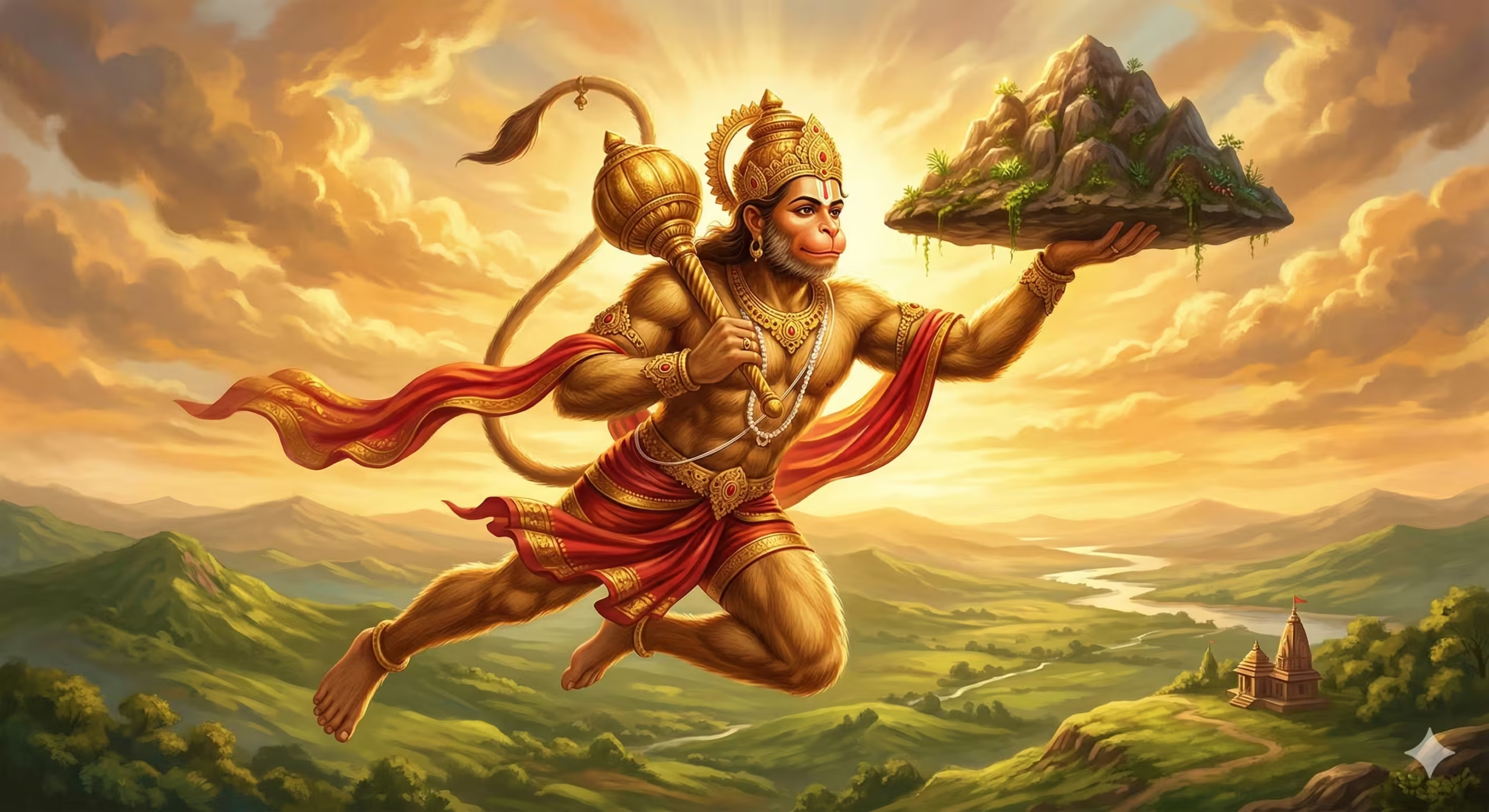
- Boundless Powers: As the son of the Wind God, he possesses the ability to fly at the speed of thought, change his physical size at will (from microscopic to mountainous), and wield strength capable of lifting entire mountains.
Symbolism: Appearance, Weapons, and Attributes
The iconography of Lord Hanuman is deeply symbolic, with every aspect of his appearance carrying a spiritual message.
Appearance
Hanuman is depicted as a muscular Vanara, signifying both humanity’s evolutionary roots and the untamed nature of the human mind, which can be disciplined through devotion. He is most commonly portrayed in a kneeling posture before Lord Rama (symbolizing humility) or flying through the air (symbolizing swift action). His idols are often coated in Sindoor (saffron-red vermilion), a tradition that stems from his unconditional love for Rama and Sita.
Weapons
His primary weapon is the Gada (mace). The Gada is a symbol of self-discipline, inner strength, and the destruction of negative forces. It signifies that true power should be wielded responsibly and only to uphold Dharma (righteousness).
Attributes
Despite his formidable strength, Hanuman’s most defining attributes are his Brahmacharya (celibacy/purity), his supreme intellect, and his mastery over the Vedas and other scriptures. He is famously described in the Hanuman Chalisa as Jnan Guna Sagar (the ocean of wisdom and virtue).
Important Stories and Legends
The life of Lord Hanuman is filled with awe-inspiring legends that highlight his innocence, power, and devotion.
Swallowing the Sun
As a hungry child, Hanuman mistook the rising sun for a glowing, ripe mango and leapt into space to eat it. This alarmed the cosmos, prompting Lord Indra (King of the Gods) to hurl his thunderbolt (Vajra) at the child. The weapon struck Hanuman on the jaw (Hanu), causing him to fall to earth and giving him the name “Hanuman” (one with a prominent jaw). Angered by this, Vayu withdrew all air from the universe until the gods appeased him by showering the young Hanuman with magnificent boons, making him invincible.
The Leap to Lanka and Lanka Dahan
During the search for Lord Rama’s abducted wife, Sita, Hanuman realized his true potential and leapt across the ocean to the island kingdom of Lanka. After finding Sita in the Ashoka Grove, he was captured by the demon king Ravana’s guards. When Ravana ordered Hanuman’s tail to be set on fire, Hanuman playfully extended his tail, jumped from roof to roof, and burned down the magnificent city of Lanka—an event known as Lanka Dahan.
Fetching the Sanjeevani Mountain
During the great war in Lanka, Lord Rama’s brother, Lakshmana, was mortally wounded. The only cure was the Sanjeevani herb located on the Dronagiri mountain in the Himalayas. Unable to identify the specific herb in the dark, Hanuman lifted the entire mountain and flew it back to the battlefield, saving Lakshmana’s life just in time.
Tearing His Chest
When Lord Rama was rewarding his allies after returning to Ayodhya, Hanuman declined any material gifts. When questioned about his devotion, Hanuman simply tore open his own chest with his bare hands. To the astonishment of the court, the glowing images of Lord Rama and Goddess Sita were literally enshrined within his heart.
Avatars, Forms, and Associated Names
Lord Hanuman is worshipped in various forms and by numerous names, each reflecting a specific attribute or legend.
Panchamukhi Hanuman
This is a magnificent, five-faced form of Hanuman assumed during the Ramayana war to kill Ahiravana, a dark sorcerer of the netherworld. To defeat him, Hanuman had to extinguish five lamps simultaneously. The five faces represent:
- Hanuman (facing East): Grants purity of mind and success.
- Narasimha (facing South): The lion-face grants victory and fearlessness.
- Garuda (facing West): The eagle-face nullifies black magic and poison.
- Varaha (facing North): The boar-face showers prosperity and wealth.
- Hayagriva (facing Upwards): The horse-face bestows supreme knowledge and wisdom.
Ekamukhi Hanuman
This is the standard, single-faced depiction of Hanuman, revered universally for general well-being, devotion, and courage.
Associated Names and Titles
- Bajrangbali: Bajrang (derived from Vajra-anga) means “one with a body as hard as a thunderbolt,” and Bali means “strong.”
- Maruti: Meaning the son of Marut (another name for Vayu, the wind god).
- Sankat Mochan: The one who liberates from danger and sorrow.
- Mahavira: The great hero.
Major Temples and Pilgrimage Sites
There are countless Hanuman temples across the world, but a few hold extraordinary spiritual and historical significance.
- Sankat Mochan Temple (Varanasi, Uttar Pradesh): Founded by the poet-saint Tulsidas, this temple is famous for liberating devotees from all kinds of distress.
- Salasar Balaji Temple (Rajasthan): A highly revered shrine where Hanuman is uniquely depicted with a round face, mustache, and beard.
- Mehandipur Balaji Temple (Rajasthan): Famous for ritualistic healing, devotees flock here to be cured of evil spirits, black magic, and psychological ailments.
- Hanuman Dhara (Chitrakoot, Madhya Pradesh): Located on a steep hill, a natural spring flows continuously over the idol of Lord Hanuman, believed to have been created by Lord Rama to cool Hanuman’s body after he burned Lanka.
- Jakhu Temple (Shimla, Himachal Pradesh): Situated on the highest peak of Shimla, it houses a massive 108-foot-tall statue of Hanuman. Legend states that Hanuman rested on this hill while searching for the Sanjeevani mountain.
Festivals and Worship Practices
The worship of Lord Hanuman is deeply ingrained in Hindu daily life, characterized by simplicity and immense faith.
- Hanuman Jayanti: This festival celebrates the birth anniversary of Lord Hanuman. It is observed on the full moon day (Purnima) of the Hindu lunar month of Chaitra. Devotees visit temples, observe fasts, and participate in special prayers and processions.
- Tuesdays and Saturdays: These two days of the week are considered especially auspicious for worshipping Hanuman. Devotees often fast and visit temples to seek protection from the malefic effects of the planets Mars (Mangal) and Saturn (Shani).
- The Hanuman Chalisa: Authored by Goswami Tulsidas, this 40-verse Awadhi hymn is chanted daily by millions. It praises Hanuman’s courage, devotion, and celestial origins, and is believed to ward off evil and instill confidence.
- Sundara Kanda Path: Reading or reciting the Sundara Kanda—a chapter from the Ramayana that exclusively focuses on Hanuman’s heroic journey to Lanka—is a highly meritorious practice believed to solve severe life problems.
- Offerings: Devotees commonly offer Sindoor (vermilion), jasmine oil, red flowers, and sweets like laddoos to Lord Hanuman as a mark of love and respect.