Nestled in the serene, agricultural landscape of Paritala village in the NTR district (formerly Krishna district) of Andhra Pradesh, the Shri Paritala Hanuman Temple is a spectacular monument of faith, devotion, and architectural grandeur. Situated conveniently along the bustling NH-65 highway that connects the major cities of Vijayawada and Hyderabad, this temple is renowned globally for housing one of the tallest statues of Lord Hanuman.
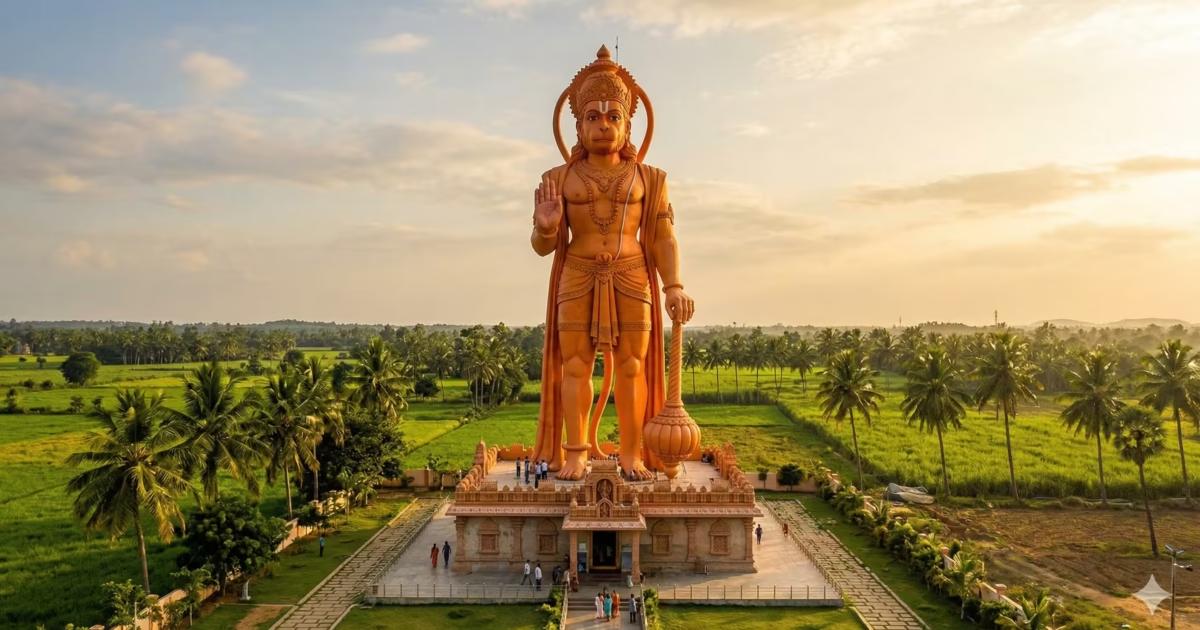
Standing at an awe-inspiring height of 135 feet (41 meters), the colossal deity can be seen from miles away, towering over the surrounding lush green fields and palm trees. It serves not just as a visual beacon, but as a powerful spiritual epicenter where devotees from all walks of life come to seek strength, courage, and divine protection from the revered Vanara deity. Whether you are a devoted pilgrim seeking blessings or a traveler marveling at the sheer scale of Indian temple architecture, the Shri Paritala Hanuman Temple offers an unforgettable experience of peace and majesty.
History and Origin
The Shri Paritala Hanuman Temple is a relatively modern marvel of Hindu temple architecture, having been officially inaugurated and opened to the public in the year 2003. The temple was conceptualized and established by a group of devout followers and a dedicated religious trust. Their primary vision was to honor Lord Hanuman’s supreme devotion to Lord Sri Rama and to create a monumental landmark of peace and spirituality that would inspire future generations.
The construction of such a massive structure was a formidable engineering feat. It required meticulous planning, hundreds of skilled artisans, sculptors, and modern structural engineering techniques to ensure the 135-foot colossus could withstand the region’s intense weather conditions, including heavy monsoons and high winds.
Upon its completion, the statue proudly held the record as the tallest Hanuman statue in the world for several years, and it remains one of the most prominent and tallest statues in India today. To put its immense scale into perspective, the Paritala Hanuman statue stands taller than the famous Christ the Redeemer statue in Rio de Janeiro, Brazil. Over the past two decades, what started as an ambitious project has evolved into a major pilgrimage destination, deeply woven into the spiritual fabric of Andhra Pradesh and transforming the quiet village of Paritala into a bustling hub of devotion.
The Presiding Deity: Veera Abhaya Anjaneya Swamy
The presiding deity of the temple is worshipped in the powerful and benevolent form of Veera Abhaya Anjaneya Swamy. In Hindu theology, Lord Hanuman is the ultimate embodiment of Bhakti (unwavering devotion), Shakti (boundless strength), Gyan (wisdom), and selfless service.
At Paritala, Lord Hanuman is depicted in a majestic standing posture, exuding a sense of calm readiness and absolute authority.
- The Gada (Mace): He holds his iconic Gada resting firmly in one hand. The mace symbolizes his immense physical power, his role as a relentless protector against evil forces, and the destruction of the human ego and ignorance.
- The Abhaya Mudra: His other hand is raised high in the Abhaya Mudra—the universal gesture of fearlessness, reassurance, and divine blessing. Through this mudra, Lord Hanuman reassures his devotees that he will protect them from all worldly anxieties and spiritual obstacles.
Worshipping this specific form of Anjaneya is believed to instill supreme confidence, inner peace, and the mental fortitude required to achieve victory over life’s most daunting hurdles.
Temple Architecture and Unique Features
The architectural brilliance of the Shri Paritala Hanuman Temple lies primarily in the sheer scale, proportion, and intricate detailing of the central statue, balanced by the traditional aesthetics of the surrounding complex.
- The 135-Foot Colossus: The gigantic statue is meticulously crafted from reinforced concrete and steel, yet it possesses the delicate artistry of traditional stone carving. It is painted in vibrant, traditional hues—primarily a glowing ochre or orange, reflecting Hanuman’s association with Sindoor. The sculptors have beautifully captured the intricate details of his facial expressions, emphasizing a look of deep compassion mixed with divine authority. His ornate crown, heavy jewelry, and flowing garments are rendered with stunning precision. The sheer magnitude of the statue set against the open sky is a photographer’s delight and a deeply humbling sight.
- The Garbhagruha (Inner Sanctum): The massive statue is erected upon a large, elevated platform that ingeniously doubles as the main temple building. The Garbhagruha (sanctum sanctorum) is located at the very base of the colossal statue. Inside this intimate, spiritually charged space, the daily worship of a smaller, traditional, intricately carved idol of Lord Hanuman takes place. This contrast between the giant external monument and the intimate internal shrine allows devotees both public awe and private communion.
- Sri Rama Parivar Shrines: According to Hindu tradition, Lord Hanuman’s presence is always intertwined with his beloved Lord Rama. Within the temple complex, adjacent to the main shrine, there are beautiful, distinct sub-shrines dedicated to Lord Sri Rama, Goddess Sita, and Lord Lakshmana. These shrines feature classic South Indian Vimana (tower) architecture, adorned with colorful stucco figures depicting scenes from the Ramayana.
- The Temple Grounds and Facilities: The complex is exceptionally well-maintained, featuring lush green gardens, clean, paved circumambulation (Pradakshina) paths, and a tranquil atmosphere. The spacious layout allows massive crowds to move freely during festivals without feeling congested. The temple administration also maintains facilities for drinking water, shoe storage, and resting areas, making it an ideal and comfortable spot for family visits and extended spiritual meditation.
Spiritual Importance and Daily Rituals
The spiritual ambiance at the Shri Paritala Hanuman Temple is palpable from the moment you step through its gates. According to Vedic traditions, Hanuman is the ultimate remover of distress (Sankat Mochan). Devotees flock to the temple carrying their burdens, offering prayers for good health, prosperity, success in education and careers, and relief from planetary doshas.
The Connection to Shani Dosha
One of the primary reasons devotees visit this temple is to seek relief from the malefic effects of the planet Saturn (known as Shani Dosha or Sade Sati). According to Puranic legends, Lord Hanuman once rescued Lord Shani from the clutches of the demon king Ravana. In gratitude, Shani promised that anyone who devoutly worships Lord Hanuman would be spared from his harsh astrological afflictions.
Daily Pooja and Specialized Offerings
The temple follows strict Agama Shastra protocols for its daily routines:
- Suprabhata Seva & Abhishekam: The day begins in the serene pre-dawn hours with the waking of the deity, followed by a sacred Abhishekam (ritual bathing) of the main idol in the inner sanctum. Priests chant Vedic mantras while offering milk, honey, curd, tender coconut water, and holy river water.
- Sindoor Archana: Lord Hanuman is highly fond of Sindoor (vermillion). Devotees frequently sponsor Sindoor Archana, where the deity is adorned with a thick paste of orange vermillion, signifying vitality and auspiciousness.
- Aku Pooja and Vada Mala: Distinct to South Indian Hanuman worship, devotees offer garlands made entirely of betel leaves (Aku Pooja) and massive garlands woven from savory, deep-fried lentil fritters (Vada Mala). These offerings are considered highly potent for fulfilling specific vows.
- Continuous Chanting: The temple echoes throughout the day with the continuous recitation of the Hanuman Chalisa, the Sundara Kanda chapter of the Ramayana, and the Rama Nama, creating a highly resonant, spiritually charged environment.
Major Festivals Celebrated
While the temple bustles with enthusiastic crowds every Tuesday and Saturday (the days traditionally dedicated to Lord Hanuman), certain annual festivals transform the temple into a vibrant carnival of faith and cultural celebration:
- Hanuman Jayanti: This is the most significant and lavishly celebrated festival at the temple, marking the auspicious birth of Lord Hanuman. Celebrated with immense fervor, the entire 135-foot statue and temple complex are illuminated with brilliant, colorful lights. Special Maha Abhishekams, intricate Homas (Vedic fire rituals), and grand processions are organized. A key feature of this festival is the massive Annadanam (free food distribution), where tens of thousands of visiting devotees are served traditional Andhra meals as prasadam.
- Sri Rama Navami: Celebrating the birth of Lord Rama, this festival holds equal, if not parallel, importance at Paritala. The celestial wedding ceremony of Lord Rama and Goddess Sita (Kalyanotsavam) is performed with great pomp, music, and traditional rituals, while Lord Hanuman is worshipped as the supreme devotee witnessing the divine union.
- Karthika Masam: During the auspicious month of Karthika (typically October/November), the temple sees a surge of devotees who come to light hundreds of oil lamps around the temple precincts, creating a breathtaking visual of devotion during the evening hours.
Unique Beliefs and Miracles
The temple is steeped in local lore, and the steadfast faith of regular visitors has given rise to several unique practices.
- The 41-Day Mandala Pradakshina: A profound belief held by many is the power of the Mandala Pradakshina. It is said that circumambulating the main temple base a specific number of times for 41 consecutive days can manifest a devotee’s deepest righteous desires, whether it be curing a chronic illness, resolving a severe financial crisis, or finding a suitable life partner.
- The Red Cloth Coconut: A common sight around the temple premises is hundreds of coconuts tied to the designated grills or trees, tightly bound in red cloth. Devotees perform this ritual, believing it acts as a divine, protective shield for their families against negative energies.
- The Highway Guardian: For drivers, truckers, and families traveling along the busy NH-65 highway, the Shri Paritala Hanuman Temple serves as a guardian deity. It is considered almost a mandatory ritual for regular commuters to pull their vehicles over, offer a brief, heartfelt prayer from the road, or step inside to break a coconut. This practice is believed to ensure a safe, accident-free journey.
Visitor Information and Travel Guide
Planning a visit to the Shri Paritala Hanuman Temple is incredibly convenient due to its highly accessible, strategic location.
Practical Information for Pilgrims
- Temple Timings: The temple is generally open to visitors from 6:00 AM to 8:00 PM every day. The timings may be extended during major festivals like Hanuman Jayanti.
- Entry Fee: There is no entry fee for general Darshan (viewing of the deity). Special poojas, Archanas, or VIP lines may require nominal ticket purchases at the official temple counter.
- Dress Code: While there is no strict, enforced dress code, visitors are expected to dress modestly and respectfully. Covering shoulders and knees is highly recommended in keeping with traditional Hindu temple customs.
- Best Time to Visit: The early morning hours (6:30 AM to 8:30 AM) or late afternoons (after 4:30 PM) are highly recommended. During these times, the tropical Andhra weather is pleasant, the crowds are thinner, and the “golden hour” sunlight hitting the towering 135-foot statue creates a magical, photogenic glow that is perfect for capturing memories.
Nearby Attractions to Complete Your Trip
If you are traveling from afar, you can combine your visit to Paritala with other renowned landmarks in the region:
- Kondapalli Fort & Toy Village (approx. 20 km): A historic 14th-century fort famous for the nearby village artisans who craft world-renowned, colorful wooden Kondapalli toys.
- Sri Durga Malleswara Swamy Varla Devasthanam (Kanaka Durga Temple, approx. 32 km): The immensely powerful and famous temple dedicated to Goddess Kanaka Durga, located atop the Indrakeeladri hill in Vijayawada.
- Bhavani Island (approx. 30 km): A picturesque river island on the Krishna River, offering boating and serene picnic spots.
How to Reach Paritala, Andhra Pradesh
The temple is located approximately 30 to 34 kilometers from the bustling, commercial city of Vijayawada, making it an easy day trip or a convenient stopover.
- By Road: The most convenient way to reach the temple is by road. Situated right on National Highway 65 (NH-65) connecting Vijayawada and Hyderabad, it takes about 45 to 50 minutes to drive from central Vijayawada. State-run APSRTC buses traveling toward Nandigama or Hyderabad frequently stop here. Private taxis, cabs, and auto-rickshaws are also readily available for hire.
- By Rail: The nearest major railway hub is the Vijayawada Junction (BZA), which is one of the largest, busiest, and best-connected railway stations in India, linking the north and south. From the station, you can easily hire a prepaid cab or catch a local bus to Paritala.
- By Air: The closest airport is the Vijayawada International Airport (VGA) in Gannavaram, located about 50 to 55 kilometers from the temple complex. Visitors can hire a prepaid taxi or an app-based cab directly from the airport, enjoying a smooth drive to the temple.