
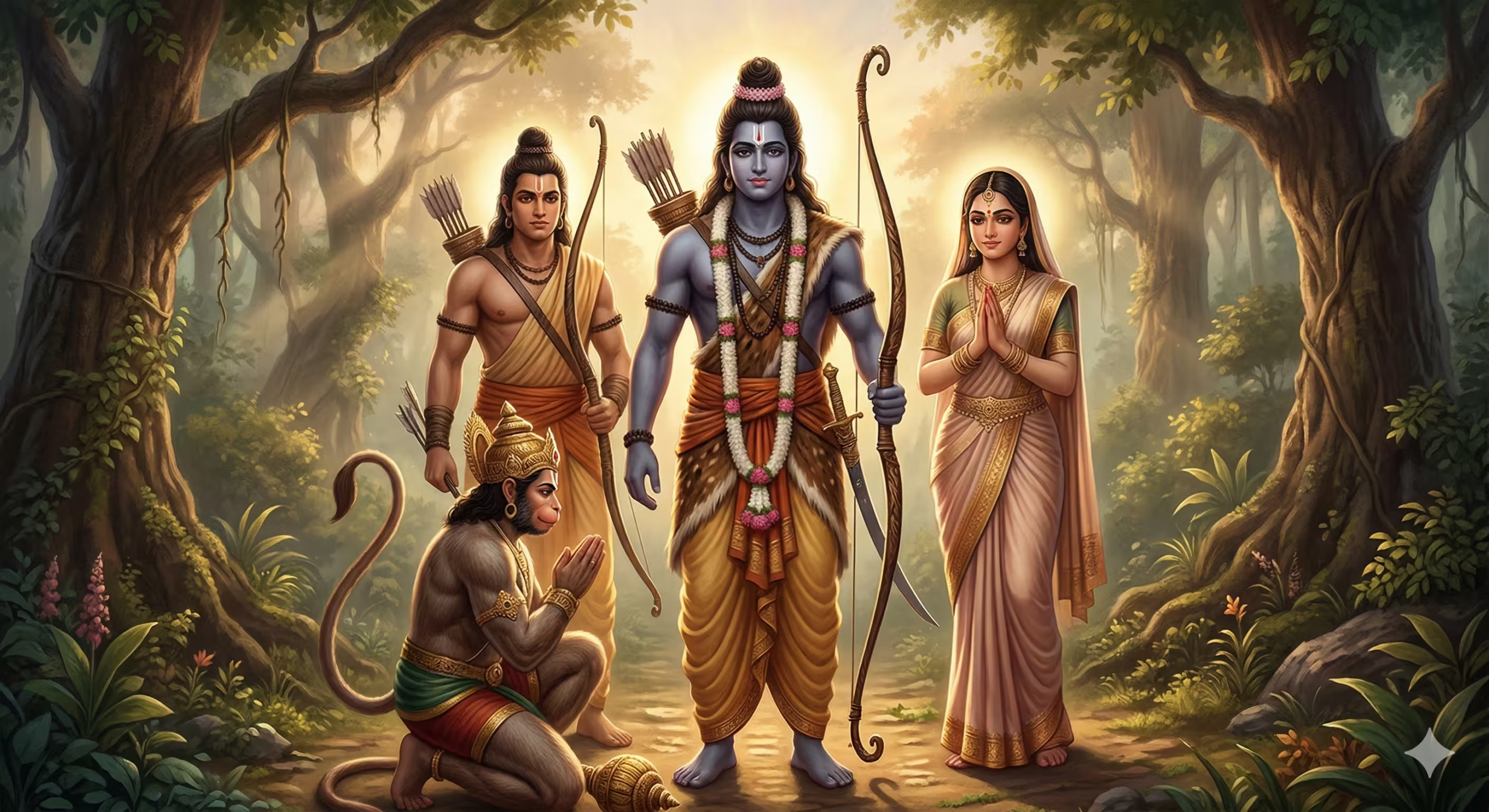
Shloka 1:
चरितं रघुनाथस्य शतकोटिप्रविस्तरम् ।
एकैकमक्षरं पुंसां महापातकनाशनम् ॥
Meaning:
The life story of Lord Rama has a vast expanse of a billion verses. Each and every letter of it is capable of destroying the greatest sins of mankind.
Shloka 2:
ध्यात्वा नीलोत्पलश्यामं रामं राजीवलोचनम् ।
जानकीलक्ष्मणोपेतं जटामुकुटमण्डितम् ॥
Meaning:
Meditating on Lord Rama, who is dark like a blue lotus, who has lotus-like eyes, who is accompanied by Mother Sita and Lakshmana, and whose head is adorned with a crown of matted hair;
Shloka 3:
सासितूणधनुर्बाणपाणिं नक्तञ्चरान्तकम् ।
स्वलीलया जगत्त्रातुमाविर्भूतमजं विभुम् ॥
Meaning:
Who holds a sword, a quiver, a bow, and arrows in His hands, who is the destroyer of demons, and who is the unborn, all-pervading Lord manifested by His own divine play to protect the world;
Shloka 4:
रामरक्षां पठेत्प्राज्ञः पापघ्नीं सर्वकामदाम् ।
शिरो मे राघवः पातु भालं दशरथात्मजः ॥
Meaning:
A wise person should read this Ram Raksha Stotra, which destroys sins and grants all desires. May Raghava protect my head, and the son of Dasharatha protect my forehead.
Shloka 5:
कौसल्येयो दृशौ पातु विश्वामित्रप्रियः श्रुती ।
घ्राणं पातु मखत्राता मुखं सौमित्रिवत्सलः ॥
Meaning:
May the son of Kausalya protect my eyes, may the one dear to Vishwamitra protect my ears, may the protector of sacrifices protect my nose, and may the one affectionate to Lakshmana protect my mouth.
Shloka 6:
जिह्वां विद्यानिधिः पातु कण्ठं भरतवन्दितः ।
स्कन्धौ दिव्यायुधः पातु भुजौ भग्नेशकार्मुकः ॥
Meaning:
May the ocean of knowledge protect my tongue, may the one revered by Bharata protect my neck, may the bearer of divine weapons protect my shoulders, and may the breaker of Shiva’s bow protect my arms.
Shloka 7:
करौ सीतापतिः पातु हृदयं जामदग्न्यजित् ।
मध्यं पातु खरध्वंसी नाभिं जाम्बवदाश्रयः ॥
Meaning:
May the husband of Sita protect my hands, may the conqueror of Parashurama protect my heart, may the slayer of Khara protect my middle body, and may the refuge of Jambavan protect my navel.
Shloka 8:
सुग्रीवेशः कटी पातु सक्थिनी हनुमत्प्रभुः ।
ऊरू रघूत्तमः पातु रक्षःकुलविनाशकृत् ॥
Meaning:
May the master of Sugriva protect my waist, may the Lord of Hanuman protect my pelvic region, and may the best of the Raghus, the destroyer of the demon race, protect my thighs.
Shloka 9:
जानुनी सेतुकृत्पातु जङ्घे दशमुखान्तकः ।
पादौ विभीषणश्रीदः पातु रामोऽखिलं वपुः ॥
Meaning:
May the builder of the bridge protect my knees, may the slayer of the ten-headed Ravana protect my calves, may the bestower of wealth upon Vibhishana protect my feet, and may Lord Rama protect my entire body.
Shloka 10:
एतां रामबलोपेतां रक्षां यः सुकृती पठेत् ।
स चिरायुः सुखी पुत्री विजयी विनयी भवेत् ॥
Meaning:
The virtuous person who reads this protective stotra, endowed with the power of Rama, becomes long-lived, happy, blessed with children, victorious, and humble.
Shloka 11:
पातालभूतलव्योमचारिणश्छद्मचारिणः ।
न द्रष्टुमपि शक्तास्ते रक्षितं रामनामभिः ॥
Meaning:
The beings that wander in the netherworld, on earth, and in the sky, or those who roam in disguise (demons), cannot even look at the person protected by the names of Rama.
Shloka 12:
रामेति रामभद्रेति रामचन्द्रेति वा स्मरन् ।
नरो न लिप्यते पापैर्भुक्तिं मुक्तिं च विन्दति ॥
Meaning:
A person who remembers the names Rama, Ramabhadra, or Ramachandra is never tainted by sins and attains both worldly enjoyment and spiritual liberation.
Shloka 13:
जगज्जैत्रैकमन्त्रेण रामनाम्नाभिरक्षितम् ।
यः कण्ठे धारयेत्तस्य करस्थाः सर्वसिद्धयः ॥
Meaning:
Whoever wears around their neck (memorizes) this stotra, which is protected by the name ‘Rama’—the only mantra to conquer the world—has all mystical perfections (siddhis) at their command.
Shloka 14:
वज्रपञ्जरनामेदं यो रामकवचं स्मरेत् ।
अव्याहताज्ञः सर्वत्र लभते जयमङ्गलम् ॥
Meaning:
Whoever remembers this Rama armor called ‘Vajrapanjara’ (the cage of diamonds) has their commands obeyed everywhere and attains victory and auspiciousness.
Shloka 15:
आदिष्टवान्यथा स्वप्ने रामरक्षामिमां हरः ।
तथा लिखितवान्प्रातः प्रबुद्धो बुधकौशिकः ॥
Meaning:
Exactly as Lord Shiva commanded in a dream, Sage Budhakaushika woke up in the morning and wrote down this Ram Raksha Stotra.
Shloka 16:
आरामः कल्पवृक्षाणां विरामः सकलापदाम् ।
अभिरामस्त्रिलोकानां रामः श्रीमान्स नः प्रभुः ॥
Meaning:
The one who is like a garden of wish-fulfilling trees, who brings an end to all calamities, and who is the most enchanting in the three worlds—that glorious Rama is our Lord.
Shloka 17:
तरुणौ रूपसम्पन्नौ सुकुमारौ महाबलौ ।
पुण्डरीकविशालाक्षौ चीरकृष्णाजिनाम्बरौ ॥
Meaning:
The two who are young, handsome, tender, exceedingly strong, with large lotus-like eyes, and dressed in bark and black deer skin;
Shloka 18:
फलमूलाशिनौ दान्तौ तापसौ ब्रह्मचारिणौ ।
पुत्रौ दशरथस्यैतौ भ्रातरौ रामलक्ष्मणौ ॥
Meaning:
Who eat fruits and roots, who have self-control, who are ascetics and celibates—these two brothers, Rama and Lakshmana, the sons of Dasharatha;
Shloka 19:
शरण्यौ सर्वसत्त्वानां श्रेष्ठौ सर्वधनुष्मताम् ।
रक्षःकुलनिहन्तारौ त्रायेतां नो रघूत्तमौ ॥
Meaning:
Who are the refuge for all living beings, the foremost among all archers, and the destroyers of the demon race—may those supreme Raghus protect us.
Shloka 20:
आत्तसज्जधनुषाविषुस्पृशावक्षयाशुगनिषङ्गसङ्गिनौ ।
रक्षणाय मम रामलक्ष्मणावग्रतः पथि सदैव गच्छताम् ॥
Meaning:
With bows strung, hands on their arrows, and equipped with quivers containing inexhaustible arrows, may Rama and Lakshmana always walk before me on my path for my protection.
Shloka 21:
सन्नद्धः कवची खड्गी चापबाणधरो युवा ।
गच्छन्मनोरथान्नश्च रामः पातु सलक्ष्मणः ॥
Meaning:
Ever-ready, wearing armor, holding a sword, and carrying a bow and arrows, may the youthful Rama, along with Lakshmana, walk with us and fulfill our desires.
Shloka 22:
रामो दाशरथिः शूरो लक्ष्मणानुचरो बली ।
काकुत्स्थः पुरुषः पूर्णः कौसल्येयो रघूत्तमः ॥
Meaning:
Rama, the son of Dasharatha, the valiant one, accompanied by the powerful Lakshmana, the descendant of Kakutstha, the complete supreme being, the son of Kausalya, and the best of the Raghus;
Shloka 23:
वेदान्तवेद्यो यज्ञेशः पुराणपुरुषोत्तमः ।
जानकीवल्लभः श्रीमानप्रमेयपराक्रमः ॥
Meaning:
Who is known through the Vedanta, the lord of sacrifices, the supreme person described in the Puranas, the beloved of Janaki, the glorious one, of immeasurable valor;
Shloka 24:
इत्येतानि जपेन्नित्यं मद्भक्तः श्रद्धयान्वितः ।
अश्वमेधाधिकं पुण्यं सम्प्राप्नोति न संशयः ॥
Meaning:
(Lord Shiva says) My devotee who chants these names daily with faith undoubtedly attains merit greater than that of the Ashvamedha sacrifice.
Shloka 25:
रामं दूर्वादलश्यामं पद्माक्षं पीतवाससम् ।
स्तुवन्ति नामभिर्दिव्यैर्न ते संसारिणो नराः ॥
Meaning:
Those who praise Lord Rama—who is dark like a blade of durva grass, has lotus-like eyes, and wears yellow garments—with these divine names, do not fall into the cycle of birth and death.
Shloka 26:
रामं लक्ष्मणपूर्वजं रघुवरं सीतापतिं सुन्दरम् ।
काकुत्स्थं करुणार्णवं गुणनिधिं विप्रप्रियं धार्मिकम् ॥
Meaning:
Rama, the elder brother of Lakshmana, the best of the Raghus, the husband of Sita, the beautiful one, the ornament of the Kakutstha dynasty, the ocean of compassion, the treasure of virtues, the beloved of the Brahmins, the righteous one;
Shloka 27:
राजेन्द्रं सत्यसन्धं दशरथतनयं श्यामलं शान्तमूर्तिम् ।
वन्दे लोकाभिरामं रघुकुलतिलकं राघवं रावणारिम् ॥
Meaning:
The king of kings, true to His promise, the son of Dasharatha, dark-complexioned, the embodiment of peace, enchanting to all the worlds, the glory of the Raghu dynasty, Raghava, the enemy of Ravana—to Him I bow.
Shloka 28:
रामाय रामभद्राय रामचन्द्राय वेधसे ।
रघुनाथाय नाथाय सीतायाः पतये नमः ॥
Meaning:
Salutations to Rama, Ramabhadra, Ramachandra, the Creator, the Lord of the Raghus, the Master of all, and the husband of Sita.
Shloka 29:
श्रीराम राम रघुनन्दन राम राम ।
श्रीराम राम भरताग्रज राम राम ॥
Meaning:
O Shri Rama, Rama, the joy of the Raghus, Rama, Rama! O Shri Rama, Rama, elder brother of Bharata, Rama, Rama!
Shloka 30:
श्रीराम राम रणकर्कश राम राम ।
श्रीराम राम शरणं भव राम राम ॥
Meaning:
O Shri Rama, Rama, fierce in battle, Rama, Rama! O Shri Rama, Rama, be my refuge, Rama, Rama!
Shloka 31:
श्रीरामचन्द्रचरणौ मनसा स्मरामि ।
श्रीरामचन्द्रचरणौ वचसा गृणामि ॥
Meaning:
I remember the feet of Shri Ramachandra in my mind. I praise the feet of Shri Ramachandra with my words.
Shloka 32:
श्रीरामचन्द्रचरणौ शिरसा नमामि ।
श्रीरामचन्द्रचरणौ शरणं प्रपद्ये ॥
Meaning:
I bow my head to the feet of Shri Ramachandra. I take refuge in the feet of Shri Ramachandra.
Shloka 33:
माता रामो मत्पिता रामचन्द्रः ।
स्वामी रामो मत्सखा रामचन्द्रः ॥
Meaning:
Lord Rama is my mother, and Lord Ramachandra is my father. Lord Rama is my master, and Lord Ramachandra is my friend.
Shloka 34:
सर्वस्वं मे रामचन्द्रो दयालुः ।
नान्यं जाने नैव जाने न जाने ॥
Meaning:
The compassionate Ramachandra is my everything. I know no one else, I truly know no one else.
Shloka 35:
दक्षिणे लक्ष्मणो यस्य वामे च जनकात्मजा ।
पुरतो मारुतिर्यस्य तं वन्दे रघुनन्दनम् ॥
Meaning:
He who has Lakshmana on His right, the daughter of Janaka (Sita) on His left, and Maruti (Hanuman) in front of Him—I bow to that joy of the Raghus.
Shloka 36:
लोकाभिरामं रणरङ्गधीरं राजीवनेत्रं रघुवंशनाथम् ।
कारुण्यरूपं करुणाकरं तं श्रीरामचन्द्रं शरणं प्रपद्ये ॥
Meaning:
He who is the most beautiful in all the worlds, steadfast on the battlefield, lotus-eyed, Lord of the Raghu dynasty, the embodiment of compassion, the bestower of mercy—in that Shri Ramachandra I take refuge.
Shloka 37:
मनोजवं मारुततुल्यवेगं जितेन्द्रियं बुद्धिमतां वरिष्ठम् ।
वातात्मजं वानरयूथमुख्यं श्रीरामदूतं शरणं प्रपद्ये ॥
Meaning:
He who is as swift as the mind, as fast as the wind, the master of his senses, the foremost among the wise, the son of the wind god, the chief of the monkey army, the messenger of Shri Rama (Hanuman)—in him I take refuge.
Shloka 38:
कूजन्तं रामरामेति मधुरं मधुराक्षरम् ।
आरुह्य कविताशाखां वन्दे वाल्मीकिकोकिलम् ॥
Meaning:
I bow to the cuckoo-like sage Valmiki, who sits on the branch of the tree of poetry and sweetly sings the sweet syllables ‘Rama-Rama’.
Shloka 39:
आपदामपहर्तारं दातारं सर्वसम्पदाम् ।
लोकाभिरामं श्रीरामं भूयो भूयो नमाम्यहम् ॥
Meaning:
The remover of all distress, the bestower of all wealth, the most beautiful in all the worlds—to Shri Rama I bow again and again.
Shloka 40:
भर्जनं भवबीजानामर्जनं सुखसम्पदाम् ।
तर्जनं यमदूतानां रामरामेति गर्जनम् ॥
Meaning:
The roaring chant of ‘Rama-Rama’ scorches the seeds of worldly existence (birth and death), earns happiness and prosperity, and terrifies the messengers of death (Yama).
Shloka 41:
रामो राजमणिः सदा विजयते रामं रमेशं भजे ।
रामेणाभिहता निशाचरचमू रामाय तस्मै नमः ॥
Meaning:
Lord Rama, the jewel among kings, is always victorious. I worship Rama, the Lord of Sita. By Rama, the army of demons was destroyed; to that Rama, my salutations.
Shloka 42:
रामान्नास्ति परायणं परतरं रामस्य दासोऽस्म्यहम् ।
रामे चित्तलयः सदा भवतु मे भो राम मामुद्धर ॥
Meaning:
There is no greater refuge than Rama; I am the servant of Rama. May my mind always be absorbed in Rama; O Rama, please uplift me.
Shloka 43:
राम रामेति रामेति रमे रामे मनोरमे ।
सहस्रनाम तत्तुल्यं रामनाम वरानने ॥
Meaning:
(Lord Shiva says to Goddess Parvati) O beautiful-faced one! I delight in the enchanting name of Rama by continually chanting ‘Rama, Rama, Rama’. The name of Rama is equal to the thousand names of Lord Vishnu (Vishnu Sahasranama).