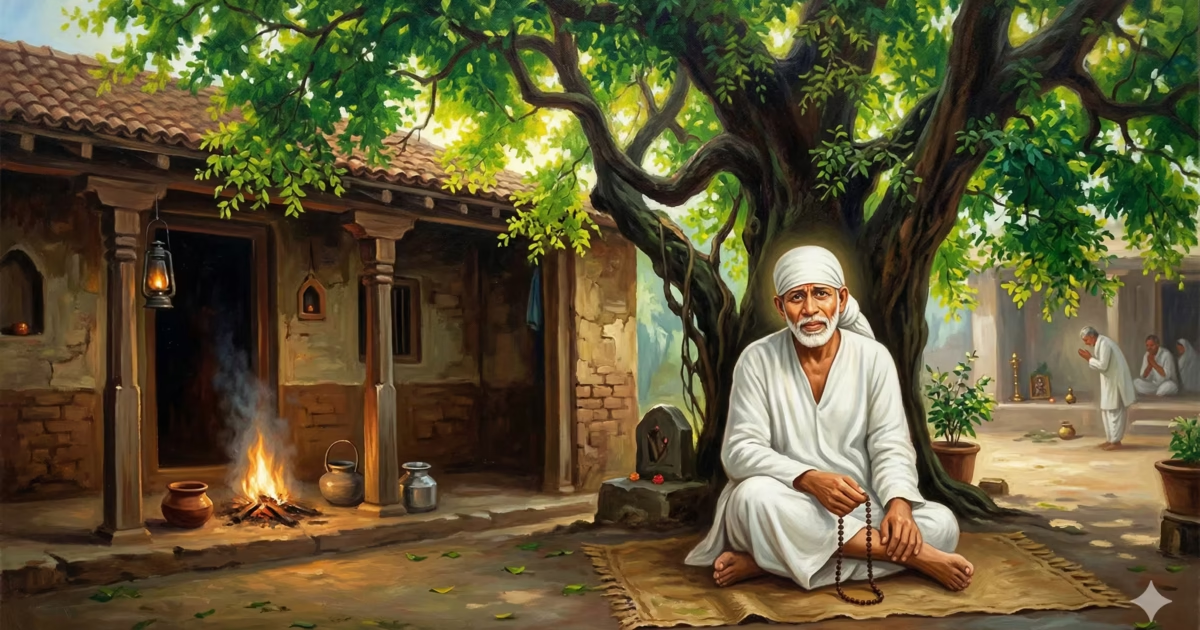
Shirdi Sai Baba remains one of the most revered spiritual figures in Indian history, transcending the boundaries of religion, caste, and creed. Known for his simple lifestyle and profound wisdom, he is worshipped by millions of Hindus and Muslims alike. His life was a testament to the idea of Sabka Malik Ek (One God Governs All), and his teachings continue to guide seekers toward the path of self-realization, compassion, and unwavering faith.
Early Life and Mysterious Origins
The early life of Sai Baba is shrouded in mystery, as he rarely spoke about his birth or family background. According to most historical accounts and the Sri Sai Satcharitra (the most authoritative text on his life), he is believed to have been born around the mid-19th century.
While his exact birthplace is debated, many followers believe he was born in a village called Pathri in Maharashtra. Some accounts suggest he was born to Brahmin parents but was raised by a Sufi fakir and his wife. This dual heritage—Hindu by birth and Muslim by upbringing—later became a central theme of his life, as he effortlessly blended the traditions of both faiths, often living in a dilapidated mosque (which he named Dwarkamai) while maintaining a sacred fire (Dhuni) and reciting both the Quran and Hindu scriptures.
The Arrival in Shirdi and Spiritual Journey
Sai Baba first appeared in the village of Shirdi in the Ahmednagar district of Maharashtra when he was a lad of about sixteen. He was seen sitting under a Neem tree, lost in deep meditation, unaffected by the heat or cold. The villagers were struck by his radiating peace and austere lifestyle.
He left Shirdi for a period and returned in 1858 with a wedding party. It was during this second arrival that a temple priest named Mahalsapati greeted him with the words, “Aao, Sai!” (Welcome, Sai!). From then on, he was known as Sai Baba. He spent the rest of his life in Shirdi, transforming the small village into a major pilgrimage center.
The Guru and Philosophy
Sai Baba often spoke of his “Guru” or “Murshid” with great love and devotion, though he rarely named him. He emphasized that the Guru is the lighthouse that guides the soul through the stormy ocean of worldly existence. His philosophy was grounded in two main pillars:
- Shraddha (Faith): Unwavering trust in the Divine and the Guru.
- Saburi (Patience and Perseverance): The ability to wait calmly for the fruits of one’s actions and Divine grace.
Teachings and Core Philosophy
Sai Baba did not establish a new religion or write formal treatises. Instead, he taught through parables, direct interaction, and his own exemplary life. His core teachings included:
- Universal Brotherhood: He vehemently opposed the caste system and religious bigotry. By living in a mosque but giving it a Hindu name, he showed that God resides everywhere.
- Charity and Selflessness: He encouraged the practice of Dakshina (giving), not to accumulate wealth for himself—as he remained a beggar until his last breath—but to teach his followers the virtue of non-attachment.
- The Importance of Food: He believed that feeding the hungry was the highest form of worship. He often cooked large quantities of food in a copper pot (Handi) and distributed it to the poor and animals alike.
- Inner Purification: He stressed that external rituals are meaningless without internal purity, humility, and the surrender of the ego.
Miracles and Notable Incidents
The life of Sai Baba is replete with Chamatkars (miracles), which he used primarily to instill faith in his devotees or to alleviate their suffering.
- Lighting Lamps with Water: On one occasion, when local shopkeepers refused to give him oil for his lamps, Baba used water to light them. The lamps burned brightly throughout the night, leaving the villagers in awe.
- Controlling the Elements: There are stories of him commanding a fierce storm to stop to protect the villagers and calming the flames of his sacred Dhuni when they grew too intense.
- Ubiquitous Presence: Many devotees reported seeing Baba in different places simultaneously or receiving his help in far-off cities the moment they prayed to him.
- The Healing Touch: He was known to cure incurable diseases using Udi (the sacred ash from his fire). He took the physical sufferings of his devotees upon himself, demonstrating his immense compassion.
Contribution to Society and Culture
Sai Baba’s greatest contribution was the social integration of a fractured society. During a time of significant religious tension, he created a space where the “Maulvi” and the “Pandit” could sit together.
Literary and Musical Legacy
While Baba wrote nothing himself, his life inspired the Sri Sai Satcharitra, written by Hemadpant (Govind Raghunath Dabholkar). This book is considered the “Bible” of Sai devotees. Furthermore, the Aarti (prayers) performed at Shirdi four times a day are masterpieces of devotional literature, blending Marathi and Sanskrit verses that capture his essence. His life has also inspired countless bhajans, films, and television series that continue to spread his message of love.
Important Places and Traditions
Shirdi: The Spiritual Heart
The town of Shirdi is the primary site associated with him. Key locations include:
- The Samadhi Mandir: This is where his physical body was laid to rest in 1918. It is the focal point of worship for pilgrims.
- Dwarkamai: The mosque where he lived for over 60 years. It still houses the Dhuni (perpetual fire) that has been burning since his time.
- Chavadi: A place where he stayed every alternate night.
- Lendi Baug: A garden where Baba used to spend time in solitude and water the plants.
Major Festivals
The legacy of Sai Baba is celebrated with great fervor during:
- Guru Purnima: A day dedicated to honoring the Guru.
- Ram Navami: Celebrated in Shirdi since 1897, symbolizing the union of Hindu and Muslim festivities.
- Vijayadashami (Dussehra): The day Sai Baba took Mahasamadhi (left his physical form) in 1918.
Modern Legacy and Followers
Today, Shirdi Sai Baba’s following has reached global proportions. From small roadside shrines to massive marble temples in the United States, United Kingdom, and Australia, his presence is felt worldwide. His followers do not necessarily identify as “Sai-ists” but often remain within their own religious frameworks, seeing Baba as a universal bridge to the Divine.
The Shirdi Saibaba Sansthan Trust is one of the richest religious organizations in India, but it remains dedicated to Baba’s principles by running massive charitable hospitals, schools, and free meal programs (Annadan). His legacy is not just in the miracles attributed to him, but in the millions of lives he continues to transform through the simple, powerful message of faith and patience.