The Tritiya Tithi (third day) of the Shukla Paksha (waxing phase of the moon) in the Hindu month of Vaishakha is known in Sanatan Dharma as ‘Akshaya Tritiya’ or ‘Akha Teej’. The most direct and clear answer to why Akshaya Tritiya is celebrated is that it is a Swayamsiddha and Abujh Muhurat (an inherently flawless and unconditionally auspicious time) in the Hindu calendar. Any auspicious activity, worship, penance, or charity performed on this day yields results that never diminish or perish. On this sacred day, the cosmic energy is highly Sattvic (pure), bestowing infinite fruits upon mankind in both material and spiritual realms.
The Meaning of ‘Akshaya’ and Its Astrological Significance
To truly understand the celebration of Akshaya Tritiya, it is essential to first understand its literal meaning. ‘Akshaya’ is a Sanskrit word that translates to ‘that which never diminishes’, ‘that which never decays’, or ‘the eternal’.
According to Vedic astrology, Akshaya Tritiya is the only day in the entire year when both the Sun and the Moon are situated in their exalted phases, shining with their maximum brilliance in the sky. Due to this exceptionally strong and specific planetary alignment, the entire day becomes completely free of any astrological flaws. This is the primary reason why auspicious ceremonies like marriages, head-shaving ceremonies (Mundan), housewarming (Griha Pravesh), and the inauguration of new businesses are conducted on this day without even consulting the almanac (Panchang).
Primary Mythological and Historical Reasons for Celebrating Akshaya Tritiya
In Indian culture, the reverence for Akshaya Tritiya as a grand festival is deeply rooted in several mythological events and historical beliefs:
The Incarnation of Lord Parashurama
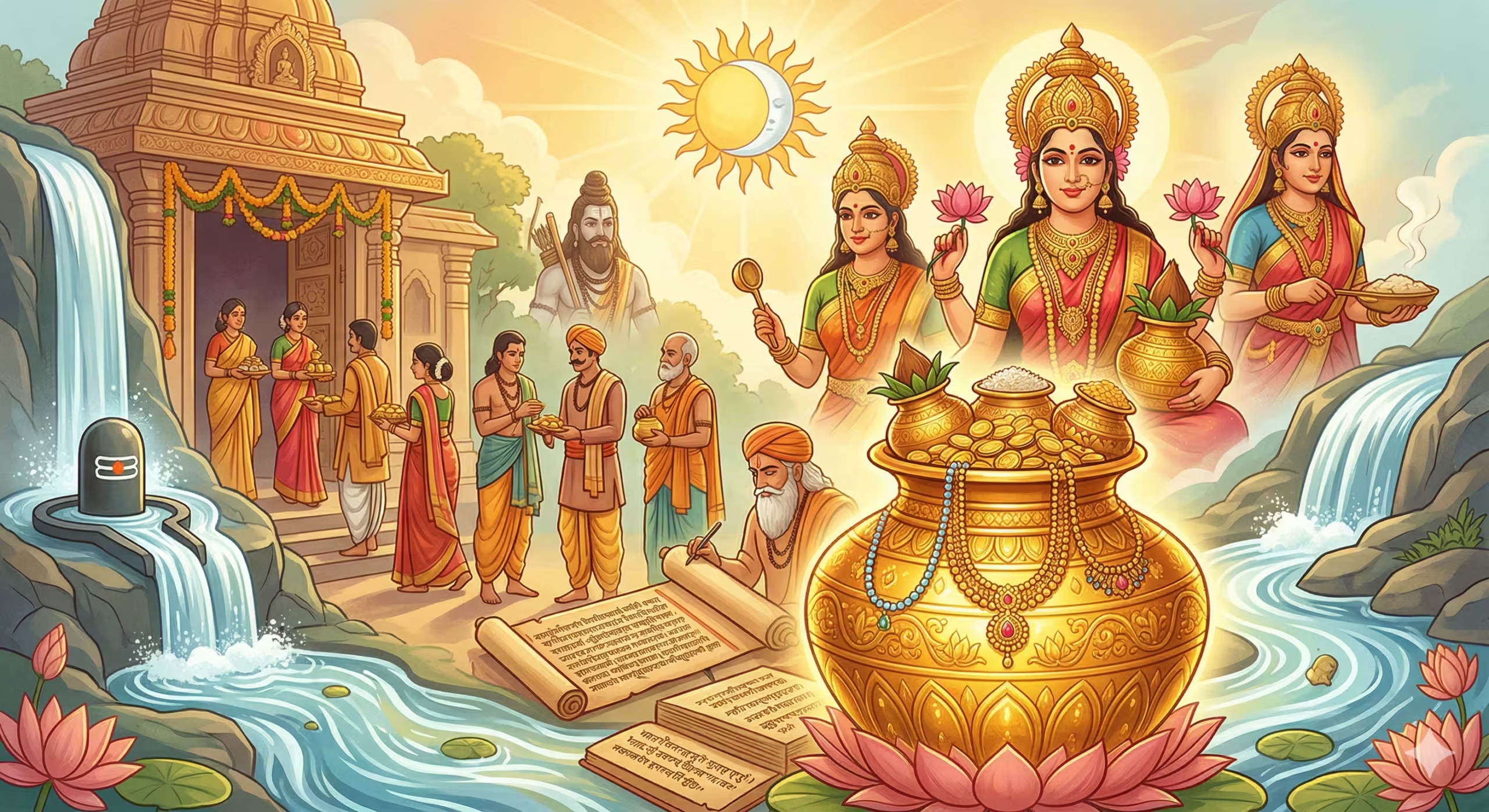
The most prominent reason for celebrating Akshaya Tritiya is that Lord Parashurama, the sixth incarnation of Lord Vishnu, was born on this holy date. Born to Mata Renuka and Sage Jamadagni, Lord Parashurama was blessed with the boon of being a Chiranjeevi (immortal). Therefore, this day is celebrated with great joy and devotion as ‘Parashurama Jayanti’.
The Descent of Goddess Ganga to Earth
Pleased by the severe penance of King Bhagiratha, the purifying Goddess Ganga descended from heaven to Earth on the day of Akshaya Tritiya. This festival is celebrated with deep reverence to commemorate her arrival, which brought salvation to mankind and washed away the sins of humanity.
The Beginning of Treta and Satya Yuga
According to Hindu scriptures and Puranas, the different eras (Yugas) of time commenced on this very date. Akshaya Tritiya marks the beginning of both the Satya Yuga (the era of truth) and the Treta Yuga. Because it is the starting day of the grand eras, it is also referred to as ‘Yugadi Tithi’, which magnifies its spiritual importance manifold.
The Writing of the Mahabharata and Bhagavad Gita
The composition of the great epic Mahabharata also began on the day of Akshaya Tritiya. It was on this day that Sage Ved Vyasa began narrating the epic to Lord Ganesha, who continuously wrote it down without a single pause. Contained within this massive epic is the divine wisdom of the Shrimad Bhagavad Gita, making this day a celebration of eternal knowledge.
The Reunion of Sudama and Lord Krishna
The historic and emotional reunion of Lord Krishna and his childhood friend Sudama took place on this day. When Sudama arrived in Dwarka with a mere handful of roasted rice, Lord Krishna lovingly accepted this humble offering and eradicated Sudama’s ‘Akshaya’ (endless) poverty, blessing him with boundless wealth and happiness.
The Appearance of Goddess Annapurna and the Akshaya Patra
During the difficult period of their exile, the Pandavas were facing a severe shortage of food. To resolve this, Lord Surya (the Sun God) gifted Yudhishthira an ‘Akshaya Patra’ (an inexhaustible vessel) on this day. The magical property of this vessel was that the food inside it would never deplete until Draupadi had finished her meal. Additionally, Mata Parvati’s form as ‘Annapurna’ (the Goddess of Food and Nourishment) also manifested on this day.
Major Traditions Associated with Akshaya Tritiya and Their Reasons
Several religious and social traditions are observed on Akshaya Tritiya. Deep spiritual and practical reasons are hidden behind these practices:
The Tradition of Buying Gold
Purchasing gold, silver, or other jewelry on Akshaya Tritiya is considered highly auspicious. The main belief behind this is that any valuable item or property acquired on this day remains in the family for generations. Gold is considered the earthly symbol of Goddess Lakshmi; hence, buying gold on this day invites stable wealth into the house and ensures there is never a lack of prosperity.
Initiating New Ventures and Businesses
Because Akshaya Tritiya is an ‘Abujh Muhurat’, buying a new home, purchasing a vehicle, or starting a new business venture yields highly fruitful results. It is believed that endeavors started on this day face no obstacles and experience continuous, ‘Akshaya’ (unending) growth.
The Importance of Charity and Holy Baths
Taking a holy dip in sacred rivers (especially the Ganges) is a mandated ritual for this day. Donating water, sattu (roasted gram flour), earthen pots, hand fans, umbrellas, fruits, and grains on Akshaya Tritiya is considered the highest form of charity. Providing these cooling items during the scorching heat of the Vaishakha month not only brings immense relief to the needy but also grants the donor limitless and unending spiritual merit (Punya).
Simple Rituals (Puja Vidhi) for Akshaya Tritiya
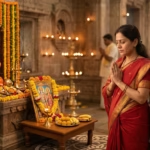
A special worship is conducted on this day to seek the blessings of Lord Vishnu and Goddess Lakshmi:
- Wake up before sunrise and take a bath in a holy river, or simply mix a few drops of Gangajal into your bathing water at home.
- Clean the worship area and establish the idols or pictures of Lord Vishnu and Goddess Lakshmi.
- Bathe the deities with Panchamrit (a holy mixture of milk, curd, ghee, honey, and sugar).
- Offer yellow garments, yellow flowers, sandalwood paste, Akshat (unbroken rice grains), and Tulsi leaves.
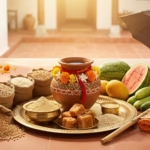
- Offer Naivedya (food offerings) consisting of barley, sattu, kheer (sweet rice pudding), and seasonal fruits.
- Recite the Vishnu Sahasranama, Kanakadhara Stotra, or Vishnu Chalisa.
- After concluding the Aarti, donate food, water, and clothing to Brahmins or the needy according to your capacity.
Spiritual Outcomes: The Attainment of ‘Akshaya’ Merit
The holy festival of Akshaya Tritiya is not solely a day for acquiring material comforts and wealth; it is a supreme opportunity for spiritual awakening and upliftment. According to Hindu beliefs, human life is governed by one’s karma and spiritual merits. Any chanting, penance, meditation, and havan (fire ritual) performed on this day with a selfless intention protects the soul across multiple lifetimes.
Worshiping Lord Vishnu and serving the needy destroys the accumulated sins of past lives. The merit earned on this day is truly ‘Akshaya’—meaning it remains with the individual even after death, assisting them in breaking free from the cycle of birth and death, and guiding them toward the ultimate path of Moksha (liberation).