Krishna Janmashtami, also widely known as Gokulashtami, Krishnashtami, Srikrishna Jayanti, or simply Janmashtami, is one of the most vibrant, universally cherished, and spiritually significant festivals in Hinduism. Celebrated by millions of devotees across the globe, this auspicious day marks the birth anniversary of Lord Krishna, the eighth incarnation (avatar) of Lord Vishnu.
Lord Krishna is a deity of many dimensions. To some, he is the mischievous butter thief (Makhan Chor); to others, he is the divine lover playing his enchanting flute; and to seekers of truth, he is the supreme philosopher who delivered the timeless wisdom of the Bhagavad Gita. He is revered as the embodiment of divine love, supreme wisdom, and the ultimate protector of Dharma (righteousness). Every year, devotees immerse themselves in immense devotion, observing strict fasts, singing beautiful bhajans, decorating their homes, and partaking in joyous midnight celebrations to welcome the birth of their beloved “Bal Gopal” (baby Krishna).
Krishna Janmashtami 2026 Date and Time
According to the Hindu lunar calendar, Lord Krishna was born on the Ashtami (eighth day) of the Krishna Paksha (dark fortnight) in the month of Bhadrapada. His birth took place at the stroke of midnight when the moon was shining brightly, precisely during the auspicious Rohini Nakshatra. Astrologically, this alignment of stars is considered incredibly powerful for spiritual practices.
For those preparing for the festivities, here is the accurate Krishna Janmashtami 2026 date and time:
- Krishna Janmashtami Date: 4 September 2026 (Friday)
- Ashtami Tithi Begins: 02:25 AM on 4 September 2026
- Ashtami Tithi Ends: 12:13 AM on 5 September 2026
- Rohini Nakshatra Begins: 12:29 AM on 4 September 2026
- Rohini Nakshatra Ends: 11:04 PM on 4 September 2026
Janmashtami 2026 Nishita Puja Muhurat
The most sacred window for worshiping Lord Krishna is during the Nishita Kaal (the midnight hour). According to Vedic timekeeping, this is the exact moment the Lord manifested on Earth. Devotees wait with bated breath for this hour to perform the central puja rituals.
- Nishita Puja Time: 11:57 PM (4 September) to 12:43 AM (5 September)
- Total Duration of Puja: 46 minutes
- Parana Time (Breaking the Fast): After 12:44 AM or strictly after sunrise on 5 September, depending on your family's or local community's tradition.
History and Origin of Krishna Janmashtami
The origin of Krishna Janmashtami dates back over 5,000 years to the ancient city of Mathura, situated on the banks of the Yamuna River. According to the Bhagavata Purana, at that time, Mathura was ruled by the tyrannical King Kansa, the maternal uncle of Lord Krishna. Under Kansa’s oppressive regime, Mother Earth (Bhumi Devi) was burdened by his sins and prayed to Lord Vishnu for salvation. In response, Vishnu promised to incarnate and restore cosmic balance.
Kansa’s sister, Devaki, was married to the noble Vasudeva. On their wedding day, a divine voice from the sky (Akashvani) prophesied that Devaki’s eighth child would be the cause of Kansa’s death. Driven by fear, paranoia, and anger, Kansa imprisoned Devaki and her husband Vasudeva. Year after year, he mercilessly killed their first seven children immediately after birth.
However, destiny and divine will cannot be altered. When the eighth child, Lord Krishna, was born on a dark, stormy night, extraordinary miracles unfolded. The heavy iron chains binding Vasudeva fell away, the prison guards fell into a deep, magical slumber, and the heavy locked doors miraculously swung open. A fierce storm raged outside, yet Vasudeva safely carried the newborn across the roaring Yamuna River to the safety of Gokul. There, Krishna was secretly exchanged with the newborn daughter of Nanda and Yashoda, ensuring his survival. He grew up as a cowherd, eventually returning to Mathura to slay Kansa, free his parents, and liberate the people from cruel tyranny.
Significance and Importance (जन्माष्टमी का महत्व)
The Janmashtami significance extends far beyond a traditional birthday celebration; it is a profound spiritual reminder of the victory of light over darkness, hope over despair, and good over evil. The festival teaches us that no matter how powerful evil may seem, truth and righteousness will inevitably triumph.
In the Bhagavad Gita, Lord Krishna famously declares to his disciple Arjuna: “Yada yada hi dharmasya glanirbhavati bharata… Abhyutthanam adharmasya tadatmanam srijamyaham” (Whenever there is a decline in righteousness and an increase in unrighteousness, O Arjuna, I manifest Myself on earth). He further adds that he incarnates age after age to protect the good, destroy the wicked, and re-establish the principles of Dharma.
जन्माष्टमी का महत्व (Importance of Janmashtami) lies in cultivating devotion, purity, and detachment from worldly illusions (Maya). It serves as a reminder to uphold Dharma and follow the path of Nishkama Karma (doing one’s duty without attachment to the results) and unconditional Bhakti (devotion). Celebrating this day is a way for devotees to recommit themselves to Krishna’s teachings, seeking his guidance to navigate the complexities of modern life with a calm and balanced mind.
Rituals and पूजा विधि (Step-by-Step Janmashtami Puja Process)
Performing the puja with pure intentions brings immense peace, joy, and prosperity to the household. The rituals are a beautiful mix of devotion and tender affection, treating the deity as a beloved child. Here is the detailed Janmashtami vrat vidhi step by step for celebrating at home:
- Purification (Snan and Shuddhi): Wake up early during the Brahma Muhurat (before dawn), take a holy bath, and wear clean clothes. Clean the entire house, especially the puja room or altar.
- Sankalpa (Vow): Sit before the altar with water in your right palm and take a formal vow (Sankalpa) to observe the fast with absolute sincerity, asking for the Lord’s grace to complete it successfully.
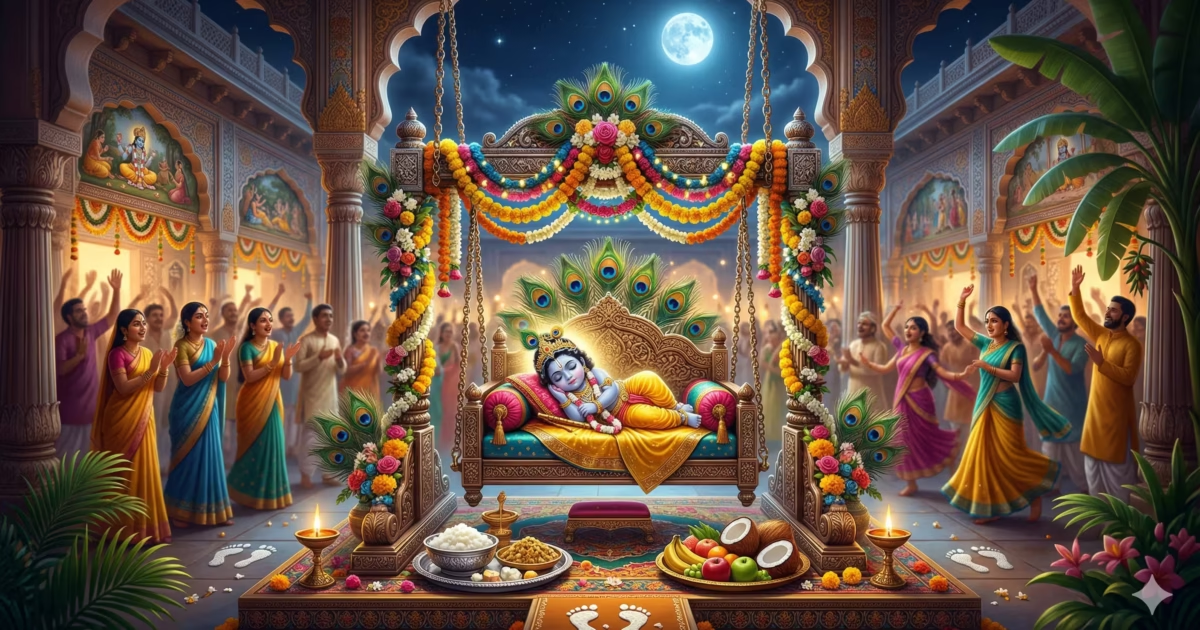
- Decorating the Jhula (Swing): Place a beautiful brass or silver idol of Bal Gopal (baby Krishna) in a beautifully decorated swing (Jhula). Adorn the swing with fresh, fragrant flowers, colorful fabrics, and peacock feathers. Many families create elaborate miniature scenes (Jhankis) depicting Krishna’s childhood in Gokul.
- Panchamrit Snan (Midnight Bath): As the clock strikes midnight during the Nishita Kaal, bathe the idol with Panchamrit. This sacred mixture consists of five items—cow’s milk (purity), curd (prosperity), ghee (victory), honey (sweetness of speech), and liquid sugar/jaggery (happiness). This is followed by a bath with holy water (Gangajal) and rose water.
- Shringar (Adornment): After carefully drying the idol, dress Lord Krishna in vibrant new garments (usually bright yellow Pitambar silk). Adorn him with miniature jewelry—necklaces, armbands, and a crown featuring his signature peacock feather. Do not forget to place his beloved flute by his side.
- Offering Bhog (Sacred Food): Offer his absolute favorite treats. The most essential offering is Makhan Mishri (freshly churned white butter mixed with rock sugar). Other offerings include Panjiri (a nutritious sweet made of roasted coriander powder, sugar, and dry fruits), seasonal fruits, and sweets. A grand offering of 56 specific food items, known as Chappan Bhog, is also a popular tradition in major temples. Always place a fresh Tulsi leaf on the offerings, as Krishna accepts no food without it.
- Aarti and Kirtan: Conclude the midnight ritual by gently swinging the cradle. Blow the conch shell (Shankh) to announce the birth, ring the temple bells, and sing the Krishna Aarti (“Aarti Kunj Bihari Ki”). Keep the atmosphere alive with joyful bhajans and dancing.
Story of Lord Krishna’s Birth (Krishna Janm Katha)
No Janmashtami celebration is truly complete without reciting, reading, or listening to the Krishna Janm Katha. The story is not just a myth but a deeply symbolic narrative. It details the magical midnight hour in the heavily guarded prison of Mathura.
As Vasudeva placed the newborn Krishna in a wicker basket to cross the Yamuna River, a torrential downpour began. In a breathtaking divine intervention, the cosmic serpent, Sheshnag, emerged from the waters, spreading his massive multi-headed hood over the basket like an umbrella to shelter baby Krishna from the rain. The Yamuna River, turbulent and overflowing, recognized the Lord. As soon as the rising water touched Krishna’s dangling feet, the river miraculously parted, providing a safe, dry path for Vasudeva.
Upon reaching the pastoral village of Gokul, Vasudeva quietly entered the house of his friend Nanda. He left Krishna by the side of the deeply sleeping mother, Yashoda, and returned to Mathura with her newborn baby girl—who was an incarnation of Goddess Yogmaya (the divine illusion). The next morning, Gokul erupted in absolute joy and celebration, completely unaware that the supreme creator of the universe had taken residence in their humble village disguised as a cowherd’s son. This heartwarming story of divine intervention remains a cornerstone of Hindu faith, illustrating that God protects those who surrender to Him.
Fasting Rules (व्रत विधि) and Their Importance
Fasting on Janmashtami is considered highly auspicious and is often referred to as “Vrat Raj” (the king of all fasts). From an Ayurvedic perspective, fasting during the monsoon month of Bhadrapada helps give the digestive system much-needed rest and detoxifies the body.
- Types of Fasting: Devotees generally observe two types of fasts based on their health and endurance.
- Nirjala Vrat: The strict fast involves abstaining completely from both food and water from sunrise until the midnight birth time.
- Phalahar Vrat: The more lenient fast allows the consumption of fruits, milk, buttermilk, water, and non-grain sattvic foods. Common Phalahar meals include dishes made from sabudana (tapioca pearls), kuttu (buckwheat) flour, water chestnut (singhara) flour, and roasted makhanas (fox nuts).
- Breaking the Fast (Parana): The fast is traditionally broken only after the Nishita Kaal puja is complete, the Aarti is sung, and the Charanamrit (the holy water used to bathe the deity) is consumed. Some traditional families wait until the following morning after sunrise to officially break their fast.
- Importance: The व्रत विधि (fasting process) is not merely about physical deprivation; it is a profound spiritual detox. It is designed to control the physical senses, conquer laziness, enhance mental willpower, and focus the mind entirely on the divine. By keeping the stomach light, the mind remains alert for chanting and meditation, bringing the devotee closer to spiritual liberation.
Traditions and Customs Followed in Different Regions
India’s immense cultural diversity shines beautifully during Janmashtami, with unique regional customs reflecting the local flavor of devotion:
- Maharashtra (Dahi Handi 2026): Celebrated with massive enthusiasm and energy on the day following the birth (5 September 2026), this tradition is a major highlight. Groups of spirited youth called “Govindas” travel across the city to form towering human pyramids. Their goal is to reach and break an earthen pot (Handi) filled with curd, butter, and money suspended high in the air. This thrilling event reenacts Krishna’s mischievous childhood habit of stealing butter from his neighbors’ homes, emphasizing teamwork, focus, and joy.
- Mathura and Vrindavan (Uttar Pradesh): The birthplace and childhood home of Lord Krishna host the most spectacular, multi-day celebrations. Temples like the Banke Bihari Temple and Dwarkadhish Temple are magnificently illuminated. Elaborate Ras Leelas—vibrant dance-dramas depicting Krishna’s life, his playful interactions with the Gopis, and his eternal love for Radha—are performed continuously by local artists.
- Gujarat (Dwarka): In the legendary kingdom established by Lord Krishna, the Dwarkadhish Temple sees an influx of thousands of pilgrims. The celebration is marked by continuous chanting of “Nand Gher Anand Bhayo, Jai Kanhaiya Lal Ki.” The local tradition of Makhan Handi is celebrated, and devotees perform traditional Garba and Raas dances.
- South India (Tamil Nadu, Karnataka, Andhra Pradesh): The celebration takes a more serene and deeply aesthetic turn. Homes are meticulously cleaned and decorated with beautiful, intricate Kolams (rangolis made of rice flour). Devotees draw tiny, delicate footprints of baby Krishna using rice paste, starting from the main doorway leading all the way into the puja room. This symbolizes the Lord physically entering their home to bless the family. Special delicacies like Seedai and Murukku are prepared as offerings.
- Eastern India (Manipur and Assam): Here, the festival is heavily centered around the classical Manipuri Raas Leela dances, which beautifully express the deep, spiritual love between Krishna, Radha, and the Gopis through graceful movements and soulful music.
How Krishna Janmashtami is Celebrated
The atmosphere on Janmashtami is electric, infused with spiritual fervor and boundless enthusiasm. Temples across the world, especially ISKCON (International Society for Krishna Consciousness) centers globally, are extravagantly decorated with fragrant garlands of marigolds and jasmine, brilliant lights, and colorful drapes.
Devotional music plays continuously. Devotees chant the Maha Mantra (“Hare Krishna, Hare Rama”) continuously on their Japa beads. Cultural programs are organized where young children are charmingly dressed up as baby Krishna (complete with flutes and peacock feathers) and his consort Radha, participating in fancy dress competitions and skits.
As the clock inches closer to midnight, an overwhelming joy washes over the gathered crowds. The anticipation builds until the exact moment of birth. Suddenly, conch shells are blown loudly, temple bells ring enthusiastically, curtains are drawn back to reveal the freshly adorned deity, and the air is filled with joyous, deafening chants of “Nand Ke Anand Bhayo, Jai Kanhaiya Lal Ki!” as the birth of the Lord is officially and triumphantly celebrated.
What to Do on Janmashtami (Dos)
- Early Rising: Wake up before sunrise (Brahma Muhurat) and take a purifying bath to start the day with physical and mental cleanliness.
- Chanting and Japa: Keep your mind engaged throughout the day by chanting “Om Namo Bhagavate Vasudevaya,” the Hare Krishna Maha Mantra, or simply the name of Krishna.
- Spiritual Reading: Spend time reading or listening to the sacred texts such as the Bhagavad Gita, the Bhagavata Purana, or stories from Krishna’s life.
- Use Tulsi Leaves: Ensure you include a fresh Tulsi leaf in every single food and water offering made to Lord Krishna, as it is considered essential for the acceptance of the Bhog.
- Acts of Charity: Show compassion to animals, especially cows. Feeding cows, donating to Gaushalas (cow shelters), and offering food to the poor are highly meritorious deeds on this day, as Lord Krishna was fundamentally a cowherd (Gopala) who loved all living beings.
What to Avoid on Janmashtami (Don’ts)
- Avoid Tamasic Food: Do not consume non-vegetarian food, alcohol, onions, garlic, or mushrooms on this holy day. These are considered Tamasic (inducing lethargy and ignorance) and disturb the spiritual vibration of the fast.
- Skip Grains During Fast: If you are observing the fast, strictly avoid regular grains, cereals, rice, and pulses until the fast is officially broken.
- Maintain Mental Purity: Refrain from negative thoughts, expressing anger, speaking ill of others (gossip), or engaging in arguments and disputes. The goal is internal peace.
- Observe Fasting Rules: Do not break the fast prematurely before the designated Parana time. Fasting is a test of devotion and discipline.
- Tulsi Rules: Never use a Tulsi leaf that has been plucked on the exact day of the festival, or on a Sunday or Ekadashi. Pluck it a day prior. Furthermore, never offer unwashed leaves or use them with impure hands.
Spiritual and Devotional Benefits of Observing Janmashtami
Observing Krishna Janmashtami with a pure heart and unwavering faith yields profound and lasting spiritual benefits. According to Vedic scriptures, sincerely fasting and participating in the midnight puja helps eradicate the heavy karmic sins accumulated over past lives.
The process of the fast and the intense focus on the divine cleanses the mind of toxic ego, greed, and materialistic attachments, slowly replacing them with universal love, compassion, and inner peace. By engaging in the Bhakti Yoga (the path of devotion) on this day, individuals learn the art of Sharanagati—total surrender to the divine will. Furthermore, those who selflessly worship Lord Krishna and sing his glories on Janmashtami are believed to be blessed with a prosperous, healthy, and harmonious life on earth, and ultimately, they attain Moksha (liberation from the endless cycle of birth and death), finding eternal residence in the spiritual realm of Goloka Vrindavan.