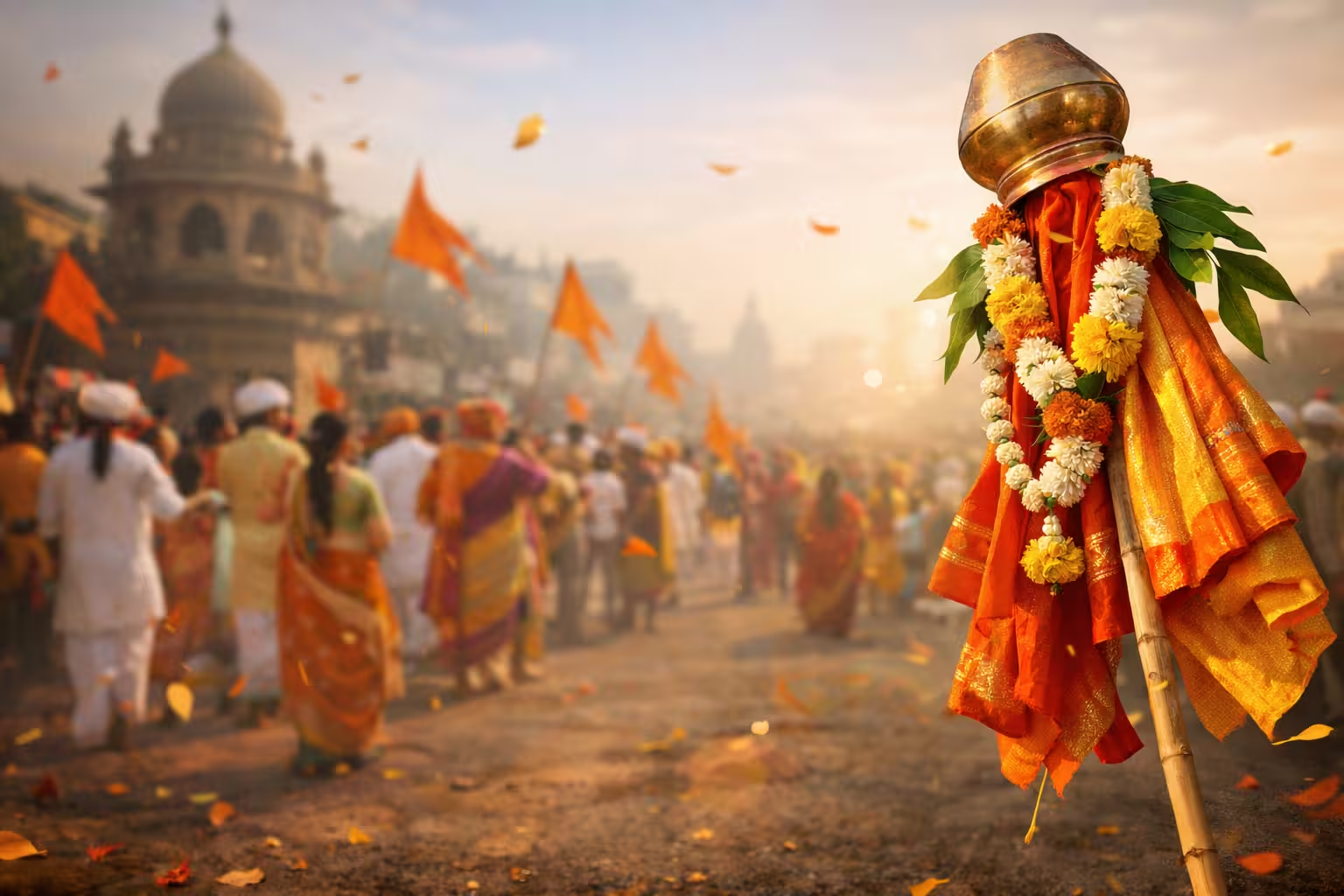
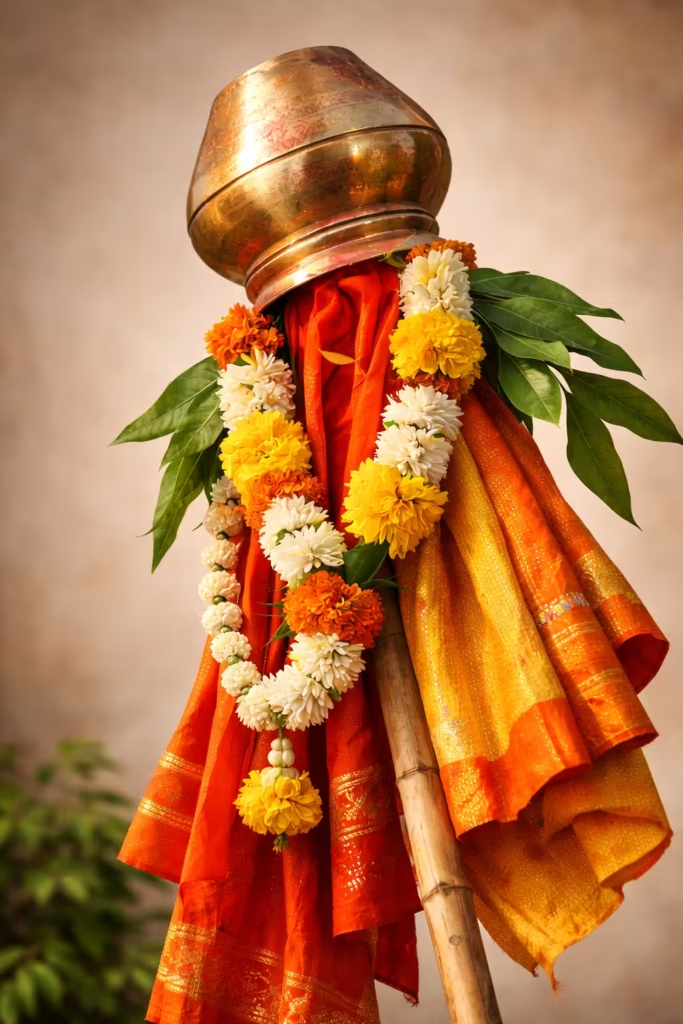
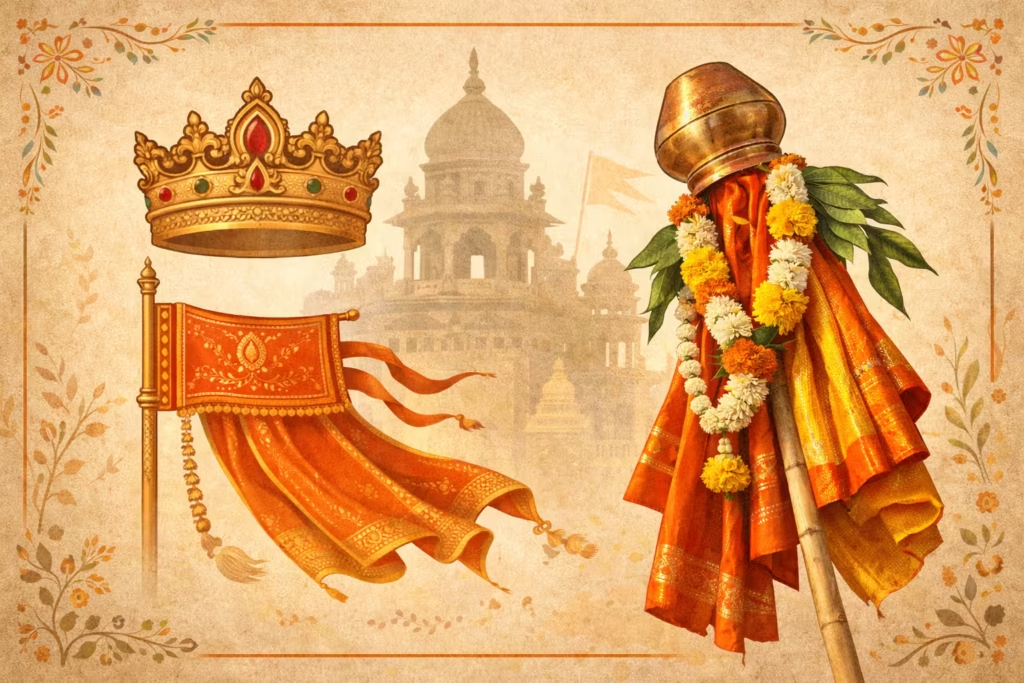
Gudi Padwa takes its name from two Marathi words: Gudi, the decorated flag or staff displayed outside the home, and Padwa, derived from Pratipada, the first day of the lunar fortnight. The raised gudi — a bright silk cloth tied to a long stick, adorned with neem and mango leaves, a garland of sugar beads and an inverted copper or silver pot — is a powerful visual symbol of victory, prosperity and protection from evil. Traditionally, the Gudi is hoisted to welcome good fortune and mark a fresh beginning of the new year.
Meaning and seasonal significance
Gudi Padwa marks the beginning of the Marathi New Year as per the lunisolar calendar (Vikram Samvat / Shaka variants) and coincides with the arrival of spring, making it a festival of new beginnings, renewal, and prosperity. It signifies the start of the Hindu New Year (Samvatsar) and the beginning of the agricultural cycle, when homes are refreshed and life is embraced with positivity and hope. Deeply rooted in tradition, Gudi Padwa is also associated with powerful mythological beliefs, including the victory of Lord Rama and the creation of the universe by Lord Brahma, making it a celebration of victory, creation, and auspicious beginnings.
When is Gudi Padwa in 2026?
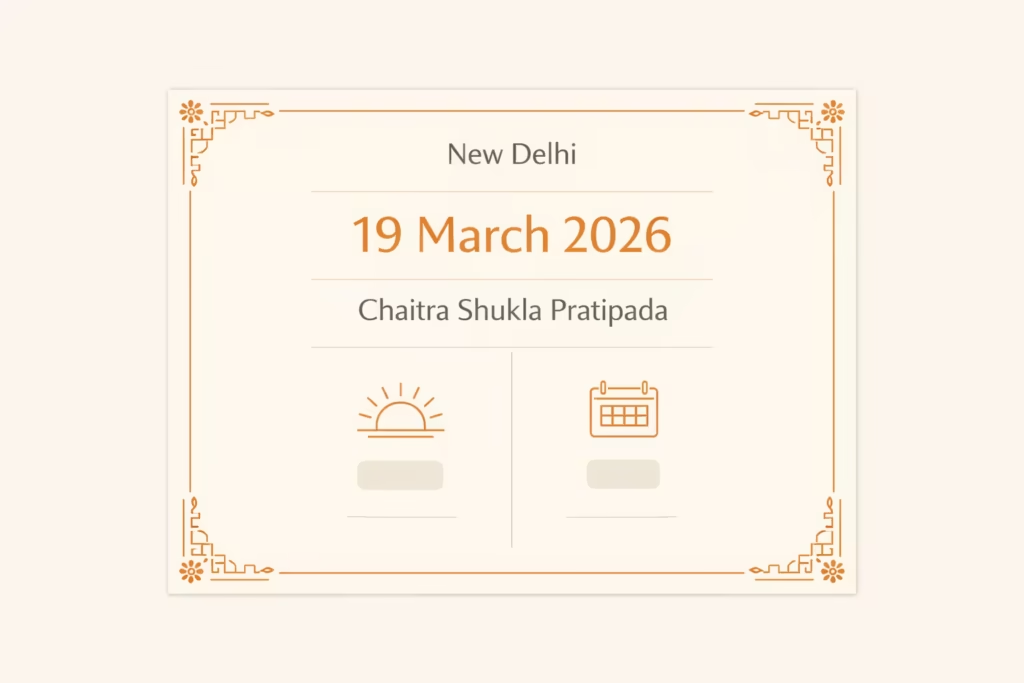
Gudi Padwa 2026 will be celebrated on Thursday, March 19, 2026, marking the beginning of the Hindu New Year as per the lunisolar calendar. This auspicious festival falls on Chaitra Shukla Pratipada, the first day of the bright fortnight in the month of Chaitra.
Gudi Padwa 2026 Auspicious Time (Shubh Muhurat)
According to Panchang calculations, the Pratipada Tithi begins at 06:52 AM on March 19, 2026 (New Delhi timing) and continues until the early hours of March 20, 2026. As per Hindu traditions, Gudi Padwa puja and Gudi hoisting should be performed during the Shubh Pratah (morning period) on March 19, which is considered highly auspicious.
Where Gudi Padwa is celebrated?
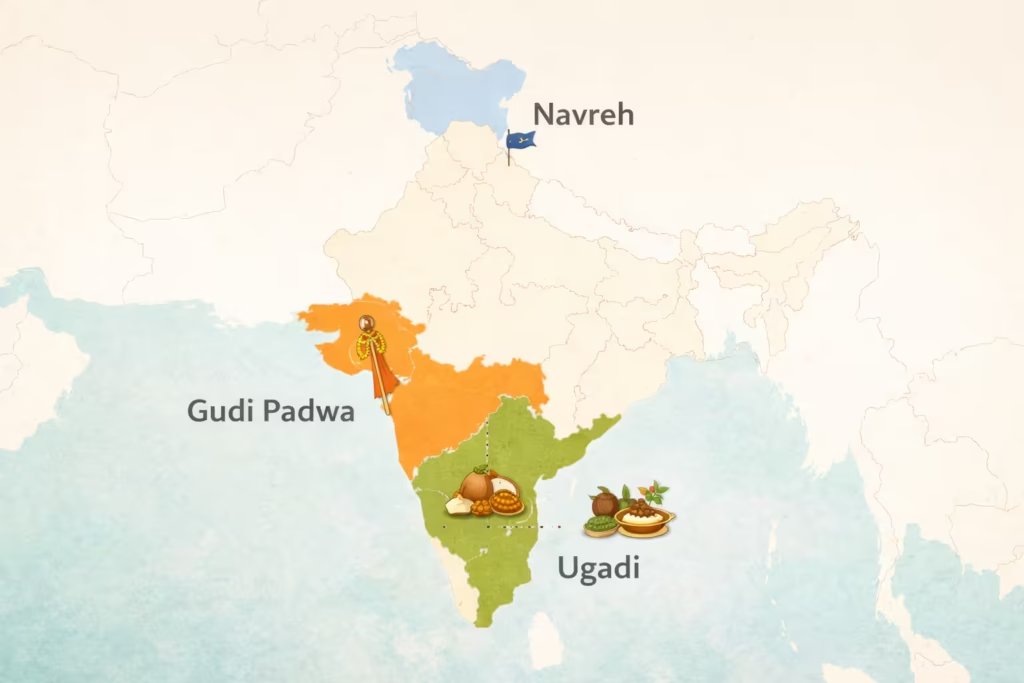
Gudi Padwa is primarily celebrated in Maharashtra, where the festival is observed across urban centres and rural villages alike; in cities such as Mumbai, Pune, Nashik, Kolhapur and Nagpur families hoist the Gudi, visit temples and take part in cultural programmes. The custom also appears in parts of Goa and the Konkan coast and among Marathi‑speaking communities in neighbouring states, while Maharashtrian diaspora groups organise community mandals and celebrations in countries such as the United Arab Emirates, United Kingdom, United States, Singapore and Australia. Although related lunar‑new‑year observances like Ugadi and Navreh occur elsewhere in India on the same tithi, the Gudi hoisting custom is especially characteristic of Marathi culture, so city‑wise coverage and local muhurat information are particularly helpful for readers.
How gudi padwa is celebrated?
On this day, devotees wake up early, clean their homes, and hoist the Gudi (a decorated flag with neem leaves, mango leaves, and a copper pot) outside their homes, symbolizing success and positivity. Special dishes like Puran Poli and Shrikhand are prepared, and people participate in festive rituals with great enthusiasm.
Note: Panchang timings (tithi start/end, sunrise, brahmuhurta, choghadiya) vary slightly by city — check your local panchang or temple noticeboard before fixing the exact puja hour.
Historical and mythological significance of Gudi Padwa
Different regions attribute varying legends to the festival: some link the gudi to King Shalivahana or the victory of Rama after his return to Ayodhya; others say the gudi commemorates the coronation of the first day of the Vikram or Shaka samvat. The festival’s core themes — renewal, victory and gratitude for the harvest — are consistently emphasised across sources.
Because Muhurat and choghadiya change with longitude and local sunrise, many families prefer to perform the Gudi hoisting after sunrise during a Shubh choghadiya or in brahmuhurta; temples publish city‑specific timings each year.
How to make and hoist the Gudi | symbolism explained
A traditional Gudi consists of:
- A long bamboo or wooden stick.
- A bright silk or satin cloth (often yellow, saffron or bright green) tied near the top.
- A garland of neem leaves and mango leaves; a string of sugar‑coated beads (shankarpali / sugar beads).
- An inverted copper or silver pot (kalash) placed on the top.
- Vermilion (kumkum) and turmeric (haldi) to adorn the gudi.
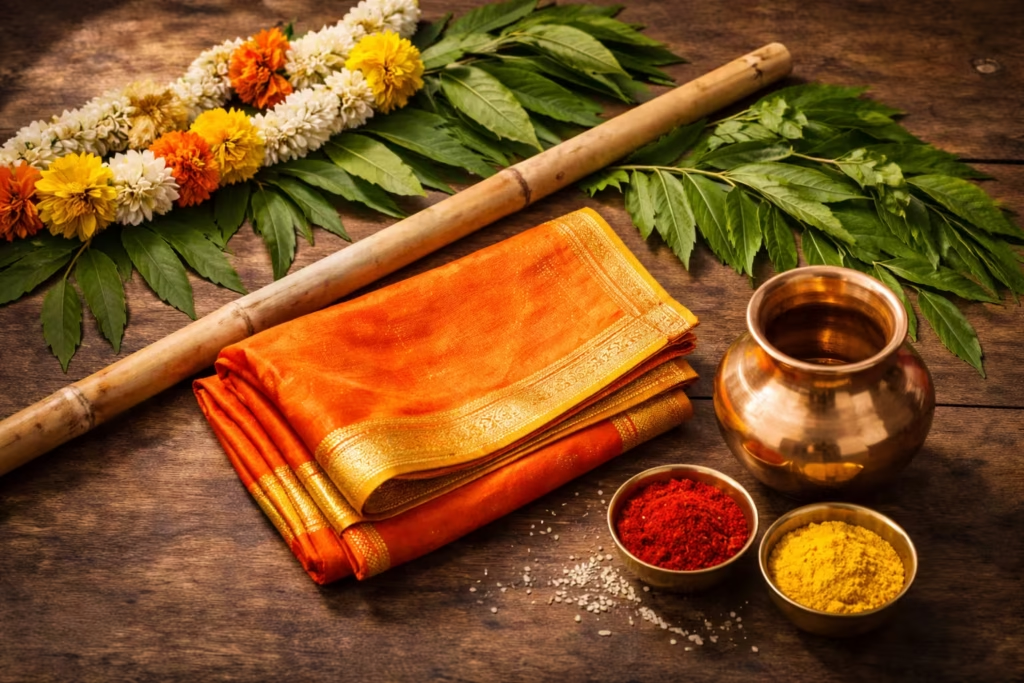
The gudi is hoisted outside a house near the main entrance or on a window — facing east or north — and is left up for several days. It is a visual prayer for wellness, protection and good fortune.
Puja Vidhi
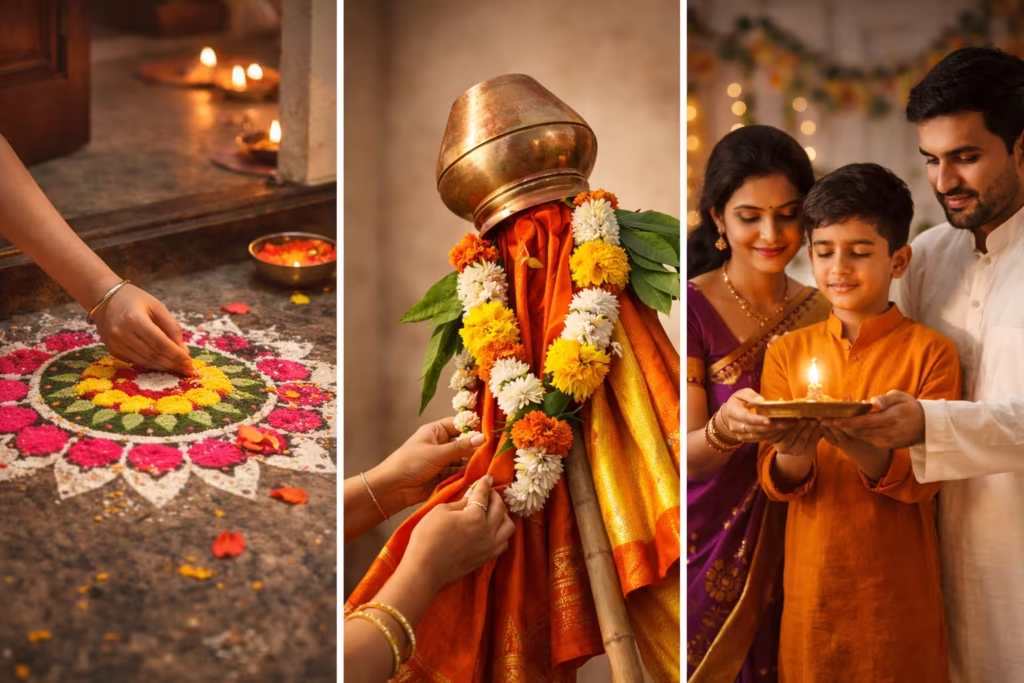
- Clean and decorate: Clean the main entrance and draw rangoli. Keep a new silk cloth, fresh neem leaves, mango leaves, and flowers ready.
- Prepare the Gudi: Tie the silk cloth to the top of the stick, fix the garland, and place the inverted pot on top. Apply kumkum and haldi to the pot and cloth.
- Hoisting: After sunrise or during the Shubh muhurat, fix the gudi outside the main door or balcony.
- Offerings & aarti: Light a lamp, offer flowers and sweets (especially puran poli, shrikhanda or puranpoli), and perform a short aarti. Chant simple salutations or the following mantra if you follow a scriptural tradition: “Om Shreem Namah” or recite traditional stotras as per family custom.
- Prasad & sharing: Share neem‑jaggery pachadi (a symbolic preparation combining bitter neem leaves and sweet jaggery) with family to mark the balance of life’s tastes.
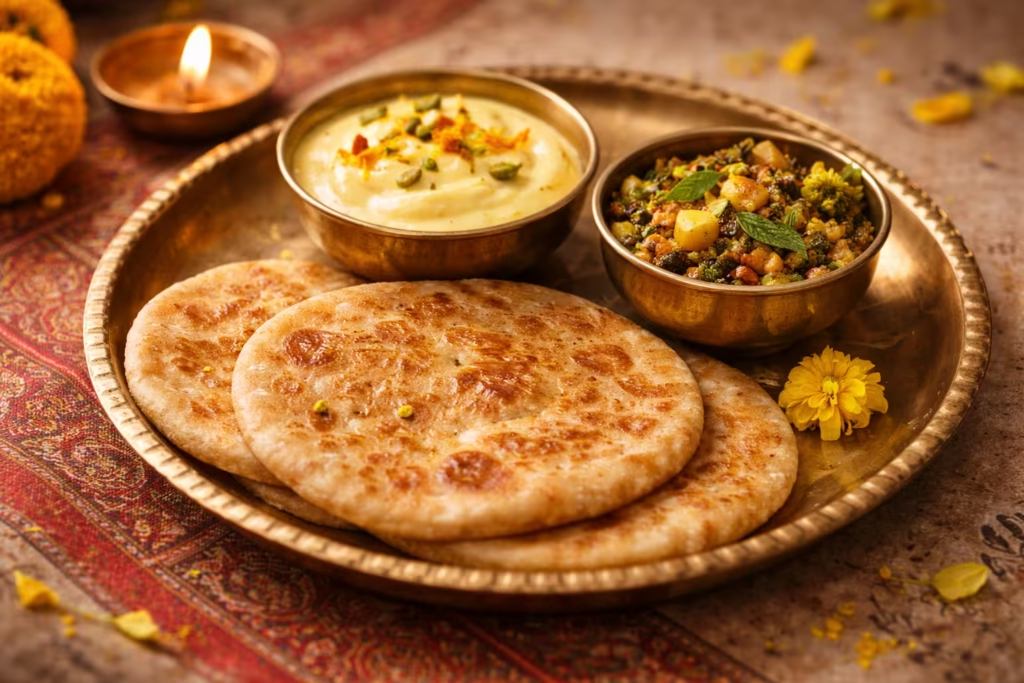
Dishes To be Prepared on Gudi Padwa
On the occasion of Gudi Padwa, many traditional and delicious dishes are prepared in households, which add to the joy of the festival. On this day, special dishes such as Puran Poli (a sweet flatbread stuffed with chana dal and jaggery), Shrikhand (sweetened yogurt flavored with cardamom), Neem-jaggery pachadi (symbolizing the balance of life’s bitter and sweet experiences), and Aam Panna (a refreshing drink made from raw mangoes) are prepared. In addition, some households also make poori-bhaji, besan laddoos, and other traditional sweets, making the celebration even more delightful.
Public events & temple celebrations
Major temples in Maharashtra — particularly in Pune, Nashik and Kolhapur — host special pujas, processions and cultural programmes. City administrations and cultural trusts often organise community feasts, classical music and folk dance performances that highlight Marathi traditions.
Astrological notes & practical tips
- If you have a family priest or pandit, confirm the city‑specific muhurat with them.
- Choose an auspicious choghadiya after sunrise if you must fix an exact hour.
- If tithi overlaps sunrise in your location, perform the ritual during the portion that falls in Shukla Pratipada (the bright tithi) — local panchangs help decide this.
Dos & Don’ts
- Do clean and decorate early in the morning.
- Do include neem leaves and share the pachadi to symbolise life’s bitter and sweet moments.
- Don’t hoist the Gudi during inauspicious muhurats such as Bhadra; consult your local panchang.
FAQs — quick answers
Q: Why neem and jaggery?
A: Neem (bitter) and jaggery (sweet) together are a symbolic reminder that life contains both unpleasant and pleasant experiences; the ritual is a lesson in balance and gratitude.
Q: Is Gudi Padwa same as Ugadi?
A: They mark the same lunar‑calendar new year (Chaitra Shukla Pratipada) but regional customs and names differ.
गुडी पाडवा 2026: तिथि, शुभ मुहूर्त, पूजा विधि और कैसे मनाएँ
| No. | Festival / Event | Date (2026) | Short information | Tithi (Start – End) |
|---|---|---|---|---|
| 1 | Makar Sankranti | 14 Jan 2026 | Sun’s transit into Makara (Capricorn); holy bath & charity | — (Solar event) |
| 2 | Pongal (Thai Pongal) | 15 Jan 2026 | Major harvest festival in South India | — |
| 3 | Vasant Panchami (Saraswati Puja) | 23 Jan 2026 | Worship of Goddess Saraswati; beginning of spring | Magha Shukla Panchami (07:58 AM, 23 Jan – 07:16 AM, 24 Jan) |
| 4 | Republic Day (India) | 26 Jan 2026 | National holiday of India | — |
| 5 | Maha Shivaratri | 15 Feb 2026 | Dedicated to Lord Shiva; night worship and fasting | Phalguna Krishna Chaturdashi (03:34 AM, 15 Feb – 04:04 AM, 16 Feb) |
| 6 | Holika Dahan | 2 Mar 2026 | Bonfire ritual before Holi; victory of good over evil | Phalguna Purnima (05:55 PM, 02 Mar – 05:07 PM, 03 Mar) |
| 7 | Holi (Festival of Colors) | 3 Mar 2026 | Festival of colors, joy, and togetherness | Phalguna Purnima (ends: 03 Mar 05:07 PM) |
| 8 | Chaitra Navratri / Gudi Padwa / Ugadi | 19 Mar 2026 | Navratri begins; New Year in many regions | Chaitra Shukla Pratipada (06:52 AM, 19 Mar – 04:52 AM, 20 Mar) |
| 9 | Rama Navami | 26 Mar 2026 | Birth of Lord Rama; Midday worship is considered special | Chaitra Shukla Navami (11:48 AM, 26 Mar – 10:06 AM, 27 Mar) |
| 10 | Hanuman Jayanti | 2 Apr 2026 | Birth anniversary of Lord Hanuman | Chaitra Shukla Purnima |
| 11 | Good Friday | 3 Apr 2026 | Christian observance of Jesus Christ’s crucifixion | — |
| 12 | Easter Sunday | 5 Apr 2026 | Christian festival of resurrection | — |
| 13 | Akshaya Tritiya | 19 Apr 2026 | Considered highly auspicious for new beginnings | Vaishakha Shukla Tritiya |
| 14 | Buddha Purnima | 1 May 2026 | Sacred day linked with Gautama Buddha | Vaishakha Purnima (09:12 PM, 30 Apr – 10:52 PM, 01 May) |
| 15 | Jagannath Rath Yatra | 16 Jul 2026 | Grand chariot festival of Lord Jagannath | Ashadha Shukla Dwitiya (11:50 AM, 15 Jul – 08:52 AM, 16 Jul) |
| 16 | Independence Day (India) | 15 Aug 2026 | National holiday of India | — |
| 17 | Raksha Bandhan | 28 Aug 2026 | Celebration of sibling bond (Rakhi) | Shravana Purnima |
| 18 | Krishna Janmashtami | 4 Sep 2026 | Birth of Lord Krishna | Bhadrapada Krishna Ashtami |
| 19 | Ganesh Chaturthi | 14 Sep 2026 | Birth of Lord Ganesha; Ganpati festival begins | Bhadrapada Shukla Chaturthi |
| 20 | Anant Chaturdashi | 25 Sep 2026 | Anant Vrat; commonly linked with Ganesh Visarjan | Bhadrapada Shukla Chaturdashi |
| 21 | Gandhi Jayanti | 2 Oct 2026 | Birth anniversary of Mahatma Gandhi | — |
| 22 | Sharad Navratri (Ghatasthapana) | 11 Oct 2026 | Nine-day worship of Goddess Durga begins | Ashwina Shukla Pratipada (09:19 PM, 10 Oct – 09:30 PM, 11 Oct) |
| 23 | Durga Ashtami (Maha Ashtami) | 19 Oct 2026 | A key Navratri day; Kanya Puja in many regions | Ashwina Shukla Ashtami |
| 24 | Vijayadashami (Dussehra) | 20 Oct 2026 | Victory of dharma; Ravan Dahan / Shastra Puja | Ashwina Shukla Dashami |
| 25 | Karwa Chauth | 29 Oct 2026 | Fast observed by married women; moonrise ends the vrat | Kartika Krishna Chaturthi |
| 26 | Dhanteras | 6 Nov 2026 | Dhanvantari worship; prosperity and health | Kartika Krishna Trayodashi (10:30 AM, 06 Nov – 10:47 AM, 07 Nov) |
| 27 | Naraka Chaturdashi (Chhoti Diwali) | 7 Nov 2026 | Abhyanga Snan; a key day of the Diwali season | Kartika Krishna Chaturdashi |
| 28 | Diwali (Lakshmi Puja) | 8 Nov 2026 | Main Diwali day; Lakshmi–Ganesha worship | Kartika Amavasya (11:27 AM, 08 Nov – 12:31 PM, 09 Nov) |
| 29 | Govardhan Puja (Annakut) | 9 Nov 2026 | Govardhan worship; Annakut | Kartika Shukla Pratipada |
| 30 | Bhai Dooj | 10 Nov 2026 | Brother–sister festival (Yama Dwitiya) | Kartika Shukla Dwitiya |
| 31 | Chhath Puja | 15 Nov 2026 | Sun worship; offering Arghya to rising/setting Sun | Kartika Shukla Shashthi |
| 32 | Guru Nanak Jayanti (Gurpurab) | 24 Nov 2026 | Birth anniversary of Sri Guru Nanak Dev Ji | Kartika Purnima |
| 33 | Christmas | 25 Dec 2026 | Birth of Jesus Christ; widely celebrated | — |