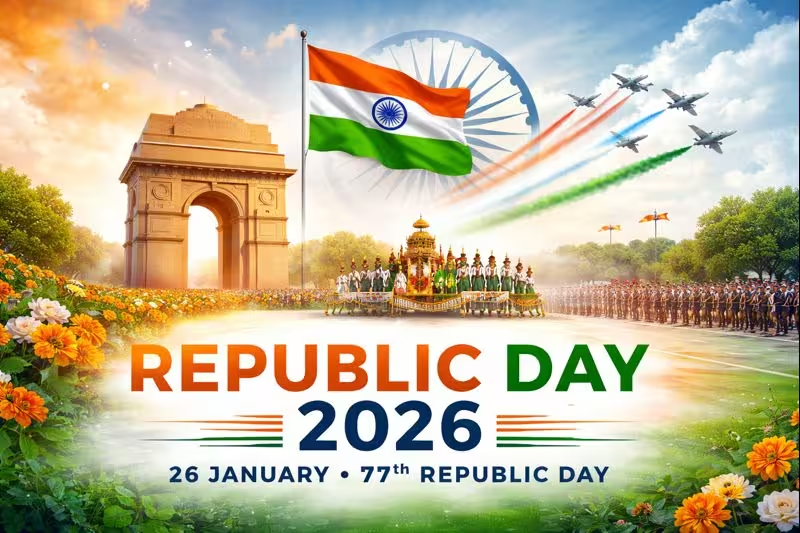
India will celebrate its 77th Republic Day on 26 January 2026. This day is much more than a national holiday—it is a powerful reminder of the moment India chose to govern itself through a written Constitution, guaranteeing justice, liberty, equality, and fraternity for every citizen.
Republic Day marks the day when the Constitution of India came into effect on 26 January 1950, transforming India into a sovereign, democratic republic. It also honors the long journey of India’s freedom movement and the ideals that shaped modern India.
In this detailed guide, you will learn the history of 26 January, the meaning and importance of Republic Day, key facts about the Indian Constitution, and how the day is celebrated across the country—especially through the iconic Republic Day Parade in New Delhi.
Table of Contents
What Is Republic Day?
A republic is a form of government in which the head of state is not a hereditary monarch. Instead, power comes from the people and is exercised through elected representatives under a system of laws.
Republic Day in India celebrates the day the country officially adopted its own Constitution and became a republic. It is the annual celebration of:
- Constitutional governance (rule of law)
- Democratic values (government by the people)
- Equal citizenship (rights and responsibilities for all)
Simply put, Republic Day is the day India began to run as a constitutional democracy, where the Constitution is supreme.
Why Is Republic Day Celebrated on 26 January?
Many people know that Independence Day is celebrated on 15 August, but Republic Day is celebrated on 26 January for a deep historical reason.
1) The “Purna Swaraj” Declaration (26 January 1930)
In December 1929, the Indian National Congress met in its Lahore Session and adopted the historic resolution of Purna Swaraj (Complete Independence).
Following that resolution, 26 January 1930 was celebrated across India as Purna Swaraj Day—a nationwide pledge to achieve complete freedom from colonial rule.
This date became a symbol of India’s uncompromising determination for self-rule.
2) Honoring the Legacy of the Freedom Movement
When India’s Constitution was ready to be implemented, leaders chose 26 January to honor the spirit of Purna Swaraj Day (1930).
So, the choice of 26 January connects:
- The dream of complete independence (1930)
- With the reality of constitutional self-governance (1950)
That is why 26 January is historically and emotionally significant for India.
The Indian Constitution: When Was It Made and Implemented?
The Constitution of India is one of the most detailed and comprehensive constitutions in the world. It was created after wide debate, deep research, and extensive consultation.
Key Timeline
- Constituent Assembly formed: 1946
- First meeting of Constituent Assembly: 9 December 1946
- Drafting Committee formed: 29 August 1947
- Chairman of Drafting Committee: Dr. B. R. Ambedkar
- Constitution adopted: 26 November 1949
- Constitution came into effect: 26 January 1950
With the Constitution coming into effect, India moved from a system under colonial laws to a sovereign republic governed by its own supreme legal document.
Why Republic Day Matters: The Real Significance
Republic Day is not only about parades and celebrations. It is a living reminder of what makes India a modern democracy.
1) The Supremacy of the Constitution
India is governed not by the will of a single ruler, but by the Constitution. Republic Day celebrates the idea that law is above everyone—citizens and leaders alike.
2) Fundamental Rights: Protecting Citizens
The Constitution gives citizens Fundamental Rights, which form the backbone of democracy. These include rights related to:
- Equality
- Freedom
- Protection against exploitation
- Freedom of religion
- Cultural and educational rights
- Constitutional remedies
These rights ensure that every citizen can live with dignity and fairness.
3) Fundamental Duties: Building Responsible Citizenship
Along with rights, citizens also have Fundamental Duties—a reminder that democracy works best when citizens are responsible.
Some key duties include:
- Respecting the National Flag and National Anthem
- Protecting national unity and integrity
- Promoting harmony and scientific temper
- Safeguarding public property
- Striving toward excellence
Republic Day encourages us to balance rights with responsibilities.
4) Unity in Diversity
Republic Day is also a celebration of India’s identity as a nation of many cultures, languages, and traditions—yet one united country.
India’s 77th Republic Day (2026): How Is It Counted?
India celebrated its first Republic Day on 26 January 1950.
- 1950 = 1st Republic Day
- 2026 = 77th Republic Day
That is why 26 January 2026 will be India’s 77th Republic Day.
Republic Day Parade 2026: What Happens in New Delhi?
The grandest Republic Day celebrations take place in New Delhi, with the iconic Republic Day Parade held on Kartavya Path (formerly Rajpath).
This parade showcases India’s:
- Military strength
- Cultural diversity
- Achievements and progress
- National pride and discipline
Major Highlights of the Parade
- President of India’s salute and ceremonial proceedings
- March-past by the Indian Army, Navy, and Air Force
- Tableaux (Jhankis) from various Indian states/UTs
- Cultural performances by school children
- NCC and other contingents participating in disciplined formations
- Air Force flypast, often one of the most thrilling moments
The parade is a vivid presentation of India’s strength—both in tradition and modern capabilities.
National Symbols and Republic Day
Republic Day celebrations emphasize respect for national symbols:
- National Flag (Tiranga): Represents courage, peace, and prosperity
- National Anthem (Jana Gana Mana): Stands for national unity and pride
- National Song (Vande Mataram): Evokes patriotic emotion and historical legacy
Across India, institutions hold flag-hoisting ceremonies, sing the national anthem, and conduct patriotic programs.
How to Celebrate Republic Day 2026 Meaningfully
Republic Day becomes more meaningful when we treat it as a day of learning, reflection, and responsible action.
1) Learn One Constitutional Value
Take 10–15 minutes to understand one constitutional concept—like fundamental rights, the Preamble, or democratic principles.
2) Do a Family Activity with a Patriotic Theme
- Make a tricolor craft with children
- Read stories of freedom fighters
- Watch a documentary or the parade together
3) Contribute to Society in a Small Way
- Keep your neighborhood clean
- Follow traffic rules
- Help someone in need
- Respect public property
True patriotism is visible in everyday actions.
Republic Day Speech/Essay Points (For Students)
If you are preparing a speech or essay for school or college, include these strong points:
- 26 January 1930: Purna Swaraj Day
- 26 November 1949: Constitution adopted
- 26 January 1950: Constitution came into effect
- Dr. B. R. Ambedkar and the Constituent Assembly
- Importance of rights and duties
- Unity, discipline, and national development
These points help create a well-structured and impactful speech.
Republic Day 2026 Wishes (Short Messages)
- Happy Republic Day 2026! Proud to be an Indian.
- Let’s honor the Constitution and strengthen our democracy.
- Freedom + Constitution = Our Real Strength. Happy 26 January!
- Unity in Diversity—Happy Republic Day to all!
Republic Day 2026 is a reminder that India’s greatness lies in its Constitution, democracy, and responsible citizens. On 26 January 1950, India made a historic choice—to be governed by the rule of law, to protect equality and justice, and to give every citizen a voice.
As India marks its 77th Republic Day on 26 January 2026, let this day inspire us to become better citizens—people who not only celebrate the nation but also contribute to it through integrity, responsibility, and unity.
Jai Hind! Vande Mataram!
Read In hindi : गणतंत्र दिवस 2026: 26 जनवरी का इतिहास, महत्व और 77वें गणतंत्र दिवस की पूरी जानकारी