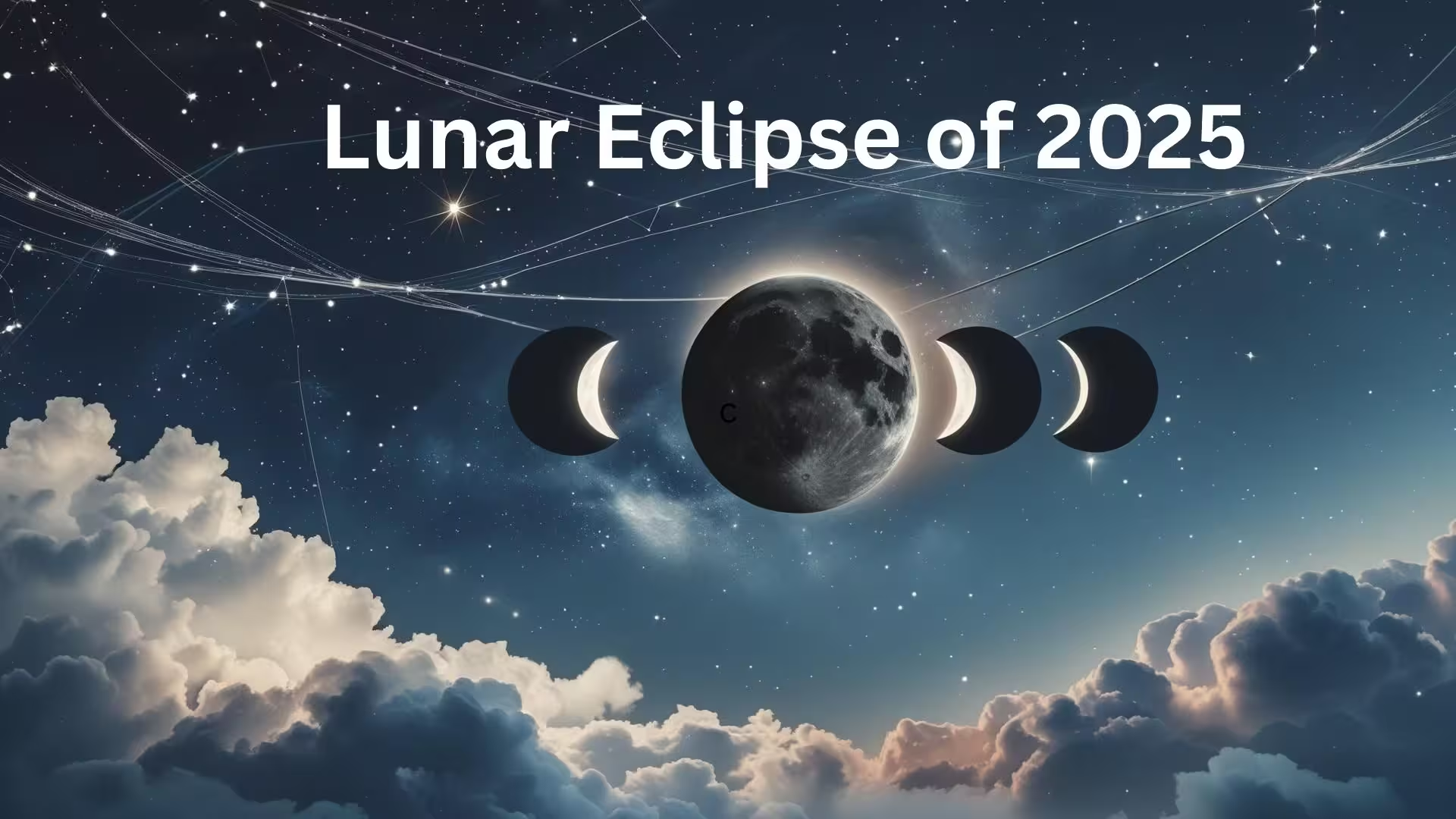
A total lunar eclipse (Chandra Grahan) falls around March 3, 2026 and overlaps with the Hindu month of Phalguna (Phalguna Purnima) — the timing may coincide with some Holi celebrations in parts of India. Always verify local timings and sutak windows with your local panchang or temple authority before planning rituals.
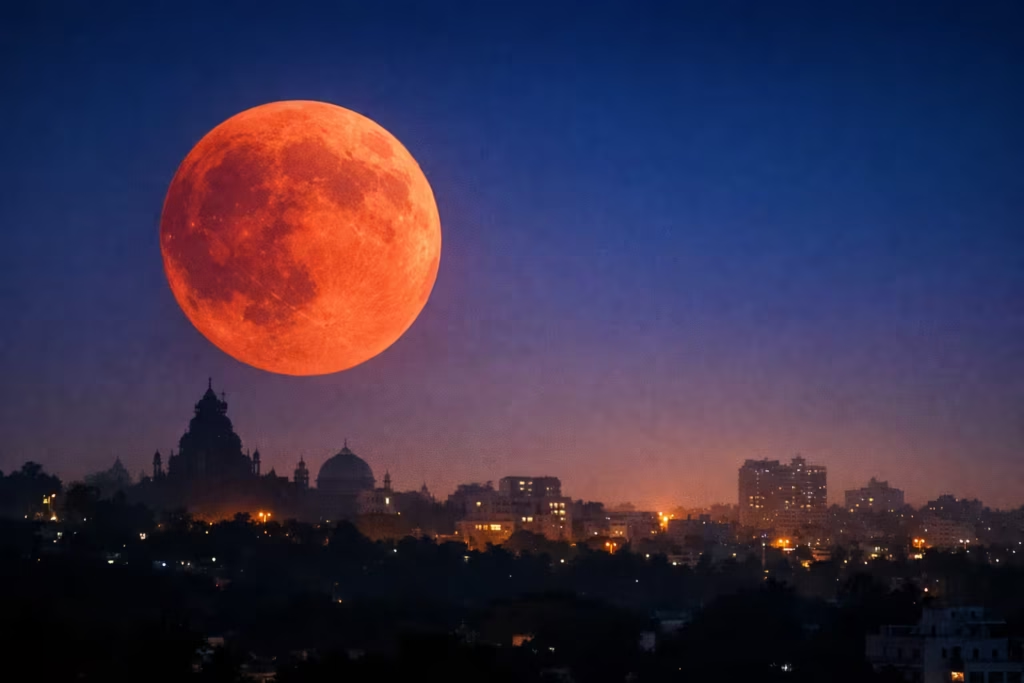
When is Chandra Grahan 2026: Date & time
The Chandra Grahan for 2026 occurs on March 3, 2026. Lunar eclipses happen when the Earth comes between the Sun and the Moon and Earth’s shadow falls on the lunar surface. Unlike solar eclipses, lunar eclipses are safe to view with the naked eye and can be observed from anywhere on Earth where the Moon is above the horizon during the event.
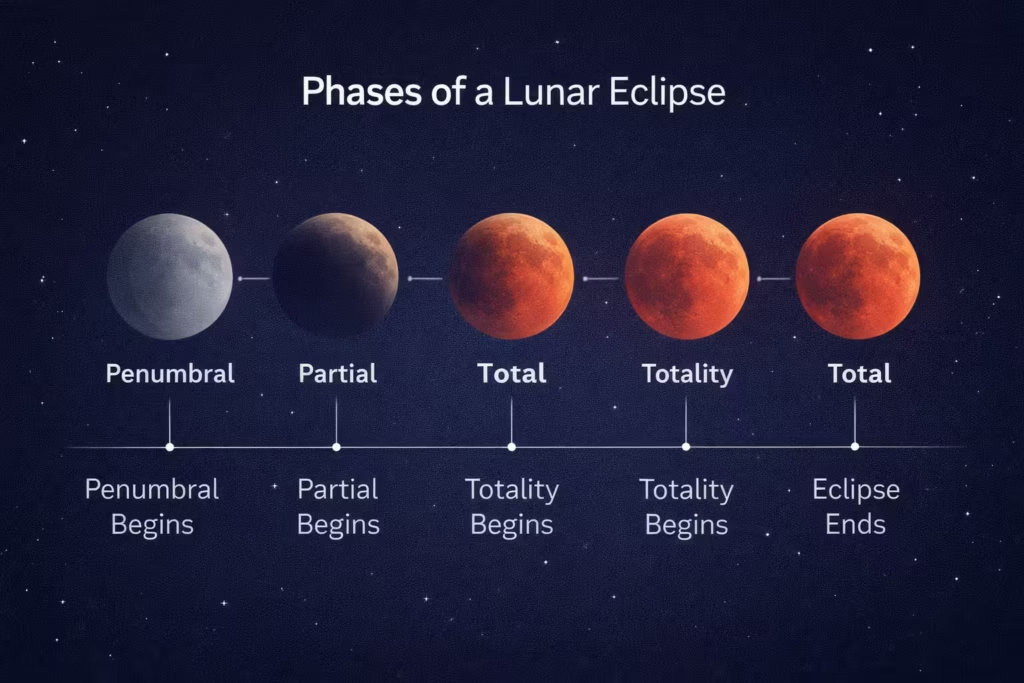
Below are the global eclipse stage times (Coordinated Universal Time, UTC) and their Indian Standard Time (IST) equivalents (UTC +5:30):
- Penumbral eclipse begins: 03 Mar 2026, 08:44:25 UTC → 14:14 IST
- Partial eclipse begins: 03 Mar 2026, 09:50:07 UTC → 15:20 IST
- Totality (full eclipse) begins: 03 Mar 2026, 11:04:34 UTC → 16:34 IST
- Maximum eclipse: 03 Mar 2026, 11:33:46 UTC → 17:03 IST
- Totality ends: 03 Mar 2026, 12:02:49 UTC → 17:32 IST
- Partial eclipse ends: 03 Mar 2026, 13:17:15 UTC → 18:47 IST
- Penumbral eclipse ends: 03 Mar 2026, 14:23:00 UTC → 19:53 IST
Important local note for India: in many parts of India the Moon will be rising while the eclipse is already in progress, so observers will typically see the later stages (totality and the ending phases) rather than the entire sequence from the penumbral start. Western and extreme western locations may miss more of the earlier phases. For exact city‑wise IST timings (and sutak windows used by priests), always consult a reliable local panchang or astronomical timing table for your city.
Where you can see it
The eclipse will be visible from large parts of Asia, Australia, the Pacific, the Americas and Africa — with some regions seeing the entire sequence from penumbral start through totality and others seeing only moonrise or moonset stages. Coastal and eastern regions typically catch moonrise views if the eclipse coincides with evening hours.
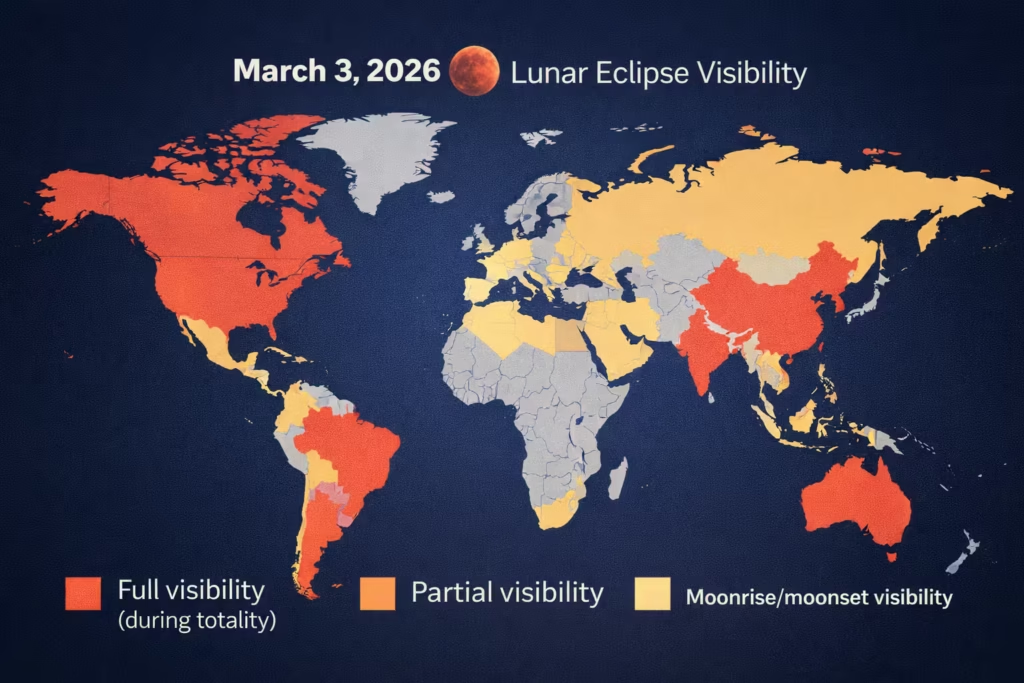
Quick takeaway: If you are in India, much of the country can view at least part of the eclipse; exact visibility depends on your city’s local timings and the Moon’s altitude at the event.
What it will look like — why the Moon can turn red
During a total lunar eclipse the Moon passes through Earth’s umbra (the central, darkest part of Earth’s shadow). While direct sunlight is blocked, sunlight refracted through Earth’s atmosphere reaches the Moon — the atmosphere scatters shorter wavelengths (blue/green) and lets longer wavelengths (red/orange) pass through. This filtered light gives the eclipsed Moon its characteristic coppery–reddish hue, often called a “Blood Moon.”
Scientists describe three principal stages:
- Penumbral phase: The Moon enters the faint outer shadow (penumbra). Changes are subtle.
- Partial phase: Part of the lunar disk moves into the darker umbra; a clear shadow is visible.
- Totality: Entire Moon in umbra — the red coloration appears and remains until the Moon exits.
No eye protection is needed to view a lunar eclipse.
Chandra Grahan & the Hindu calendar: Phalguna Purnima and festival overlap
The eclipse occurs near Phalguna Purnima (the full moon of Phalguna). When a lunar eclipse coincides with festival days such as Holi, it creates practical and ritual questions for devotees: should Holika Dahan or pujas be delayed or advanced due to sutak (an inauspicious interval around eclipses)?
Religious authorities and local panchangs may advise specific timings (for example, whether to perform Holika Dahan before sutak begins or after it ends). Because regional calendars and temple traditions vary, confirm with the local priest or panchang.
Sutak and Muhurat — what devotees should know
What is sutak? Sutak (also spelled suthak or sutaka) refers to a period traditionally considered impure or inauspicious before or during an eclipse. Customs around sutak differ across communities:
- Some observe a sutak window starting several hours before the eclipse begins and lasting until the eclipse ends or some time after.
- Others follow shorter or locally prescribed sutak intervals.
Practical guidance:
- Check local panchang: Always verify the exact sutak start and end for your city.
- If Holika Dahan is planned: Many priests recommend performing Holika Dahan at a muhurat either before sutak begins or after sutak ends. If timing is tight, consult the temple priest for a recommended muhurat.
- For daily rituals: Temporary suspension of some personal observances during sutak is traditional in some communities; others continue with normal household worship but avoid major samskaras/pujas.
This article does not replace advice from a qualified priest or panchang — when in doubt, consult local authorities.
When to perform Holika Dahan if the eclipse coincides with Holi
If Holika Dahan falls on the same day as an eclipse, there are three common approaches that temples and families may take:
- Perform Holika Dahan before sutak begins — many choose a safe muhurat in the afternoon/evening before the eclipse window starts.
- Delay Holika Dahan until sutak ends — if the eclipse timing conflicts, some communities perform the ritual after the eclipse and after sutak is declared over.
- Local custom / temple decision — prominent temples and local panchangs sometimes declare an official timing.
Myth vs. science: Some folk beliefs suggest harmful effects from eclipses; from an astronomical viewpoint, a lunar eclipse is a natural event with no physical harm to people. Respect cultural practices while relying on science for safety guidance.
FAQ
Q: Is it safe to look at a lunar eclipse?
A: Yes — lunar eclipses are safe to watch with naked eyes. No protective eyewear is needed.
Q: Can I perform puja during an eclipse?
A: Traditions differ. Many communities avoid starting major rituals during sutak; smaller personal prayers may continue. Check local guidance.
Q: What is sutak and how long does it last?
A: Sutak is a culturally defined inauspicious window around eclipses. Duration and rules vary — consult a local panchang or priest.
Q: Will Holika Dahan be postponed?
A: That depends on temple/local decisions. Many places choose a muhurat either before sutak begins or after sutak ends.