Holi this year coincides with a rare celestial occurrence: a total lunar eclipse (Chandra Grahan) that falls during the festival period. This raises questions about the correct date and the auspicious time (muhurat) to perform Holika Dahan. The following article explains the calendar details, muhurats, and practical guidance so you can observe the festival with confidence.
Chandra Grahan 2026: Date and Timings
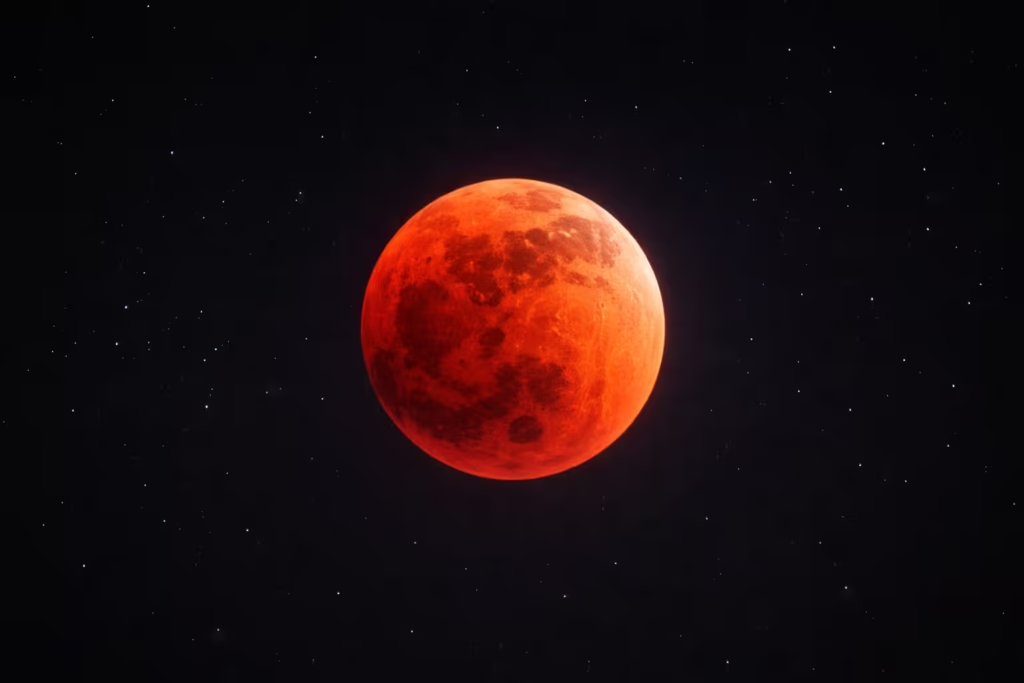
The total lunar eclipse is scheduled for March 3, 2026. Astronomically, the eclipse will be observable across large parts of Asia, Australia, the Americas and other regions. Because the eclipse coincides with the Phalguna Purnima window, many are asking whether Holika Dahan should be shifted or adjusted this year.
When is Holika Dahan? Puja Muhurat
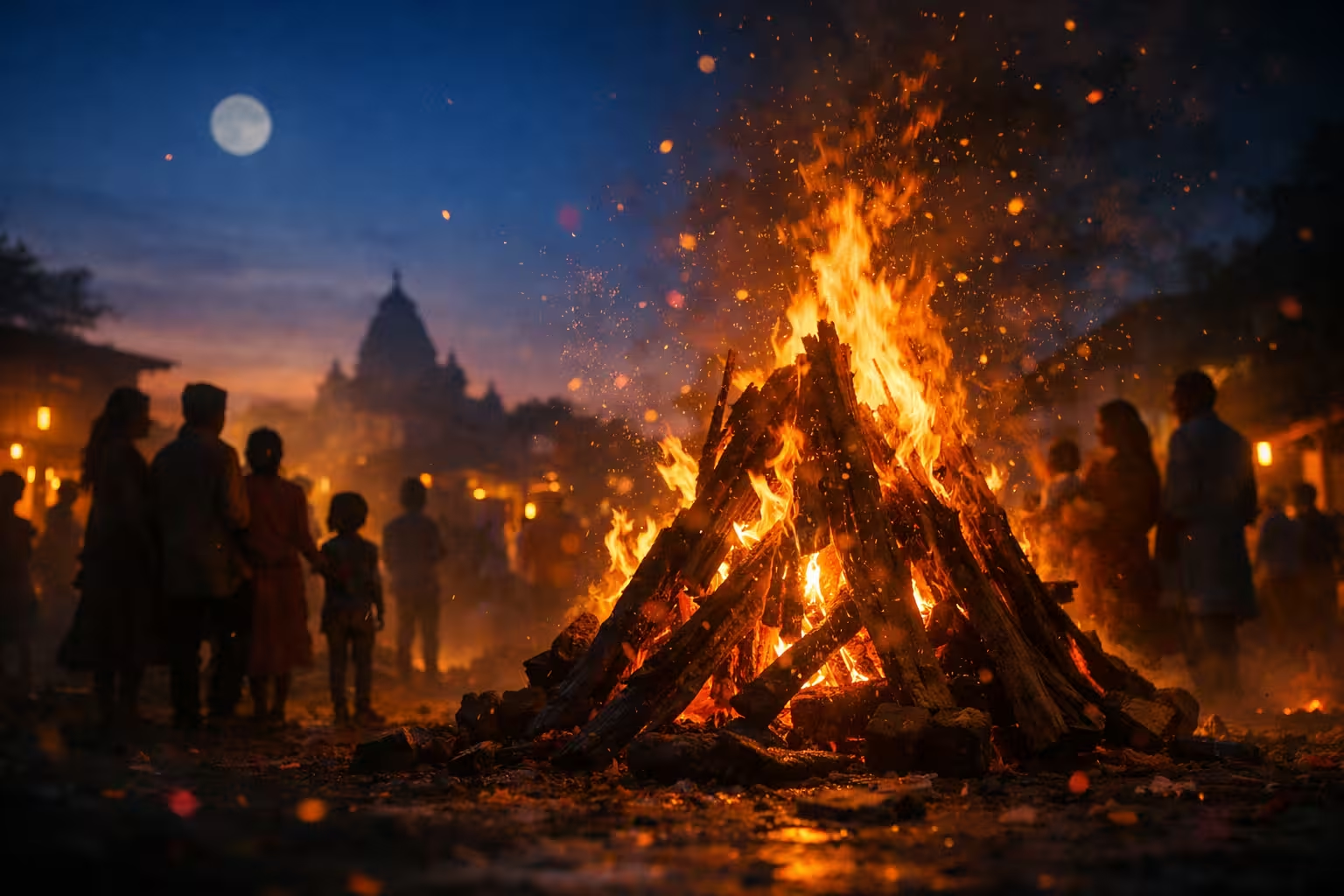
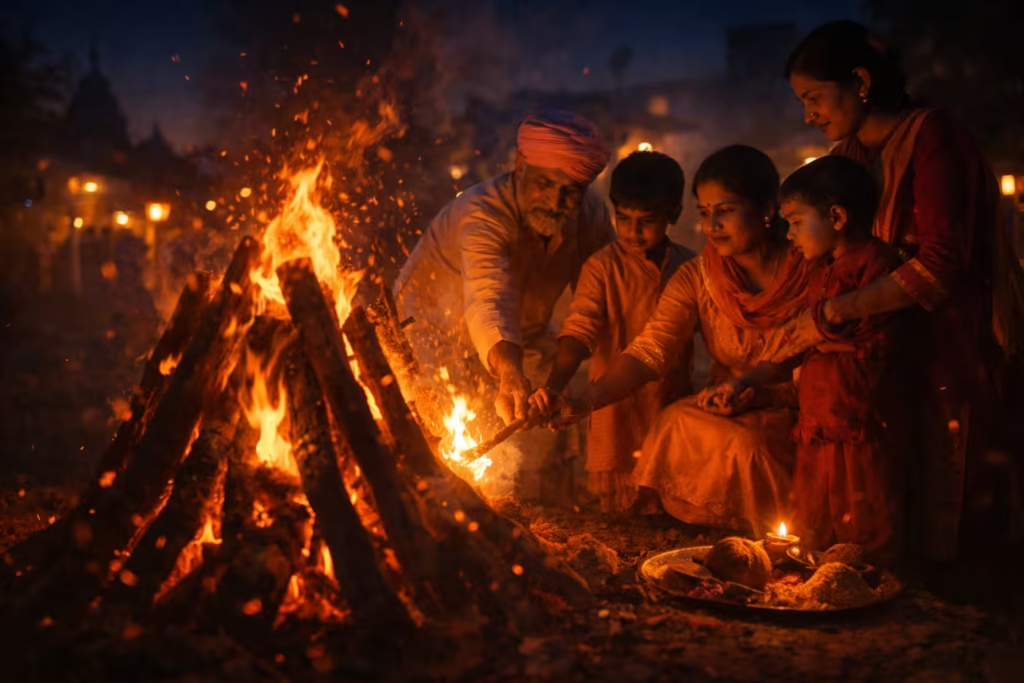
Traditionally, Holika Dahan is observed on Phalguna Purnima (the full moon night of Phalguna). In 2026 the Purnima tithi begins on the evening of March 2 and continues into March 3. Owing to the sutak (pre-eclipse period) associated with a lunar eclipse, most traditional Panchangs and astrologers advise performing Holika Dahan on the evening of March 2, 2026, before the eclipse-related sutak begins.
For households that prefer to perform rituals on the same calendar date as Purnima, there is also a narrow window early on March 3 — immediately before the official start of sutak — which some authorities accept. See the dedicated timing section below for precise windows.
Holika Dahan on Phalguna Purnima
Phalguna Purnima marks the full-moon culmination for the month of Phalguna and is the traditional occasion for Holika Dahan. When Purnima tithi overlaps with an eclipse day, practical adjustments are commonly made to avoid performing fire or sacramental rites during the sutak period.
Holika Dahan Muhurat 2026: Purnima Tithi grahan on holi 2026 time
- Purnima tithi begins: 05:55 PM on March 2, 2026
- Purnima tithi ends: 05:07 PM on March 3, 2026
These tithi boundaries indicate the formal lunar day for Purnima. For Holika Dahan, the safest and widely recommended muhurat is on the evening of March 2 — once Purnima tithi is in effect but before Bhadra or sutak constraints make ritual observance inauspicious.
Holika Dahan and Bhadra Kaal
Bhadra Kaal (inauspicious period) on the festival day can restrict the ideal window for performing the bonfire ritual. In 2026:
- Bhadra Kaal begins: 05:58 PM on March 2
- Bhadra Kaal ends: 05:30 AM on March 3
Consequently, it is recommended to light the Holika fire before the start of Bhadra Kaal on the evening of March 2. If lighting after Bhadra Kaal is unavoidable, consult a local pandit or family elder for community-custom guidance.
Chandra Grahan and Sutak Kaal
The sutak associated with a lunar eclipse is a period considered ritually impure in many traditional practices. In 2026, sutak begins at 06:23 AM on March 3. For devotees who wish to align Holika Dahan with Purnima tithi on March 3, there exists a narrow pre-sutak window — approximately between 05:30 AM and 06:23 AM — when the ritual may be performed without entering the sutak period.
To summarise: you have two practical muhurat options — the preferred evening slot on March 2 (before Bhadra begins) or the early-morning slot on March 3 just before sutak starts.
When to Do Holika Dahan: Which Option to Choose?
- Evening, March 2 (Recommended): Purnima tithi is active and the ritual can be completed before Bhadra Kaal. This option avoids eclipse-related sutak entirely.
- Early morning, March 3 (Conditional): A small pre-sutak window exists; this is acceptable to some practitioners but should be approached with guidance from local custom.
- Avoid performing Holika Dahan during the actual eclipse or during sutak. Many families postpone certain sacred recitations or refrain from specific rites while sutak is in force.
Make your choice based on family tradition, the advice of your priest, and practical convenience. Where in doubt, the evening of March 2 is the simplest and most widely accepted choice.
Lunar Eclipse 2026: Visibility in Other Countries
The total lunar eclipse of March 3, 2026 will be visible from several regions across the globe. Observers in Asia, Australia, New Zealand, the Americas, Russia, and much of Europe will be able to witness at least part of the event, subject to local weather and timing.
General Astrological Impact of the Lunar Eclipse
In astrological interpretations, the 2026 eclipse falls with the Moon placed in Leo under Purva Phalguni Nakshatra, a lunar mansion traditionally associated with Venusian themes such as love, creativity and social enjoyment. Astrologers note that eclipses can signal endings, revelations, or the resurfacing of past concerns; for Leo placements, themes around authority, self-expression and public standing may become prominent.
Readers who follow astrology should consult a trusted jyotishi for personalized advice; public interpretations vary by tradition and region.
| No. | Festival / Event | Date (2026) | Short information | Tithi (Start – End) |
|---|---|---|---|---|
| 1 | Makar Sankranti | 14 Jan 2026 | Sun’s transit into Makara (Capricorn); holy bath & charity | — (Solar event) |
| 2 | Pongal (Thai Pongal) | 15 Jan 2026 | Major harvest festival in South India | — |
| 3 | Vasant Panchami (Saraswati Puja) | 23 Jan 2026 | Worship of Goddess Saraswati; beginning of spring | Magha Shukla Panchami (07:58 AM, 23 Jan – 07:16 AM, 24 Jan) |
| 4 | Republic Day (India) | 26 Jan 2026 | National holiday of India | — |
| 5 | Maha Shivaratri | 15 Feb 2026 | Dedicated to Lord Shiva; night worship and fasting | Phalguna Krishna Chaturdashi (03:34 AM, 15 Feb – 04:04 AM, 16 Feb) |
| 6 | Holika Dahan | 2 Mar 2026 | Bonfire ritual before Holi; victory of good over evil | Phalguna Purnima (05:55 PM, 02 Mar – 05:07 PM, 03 Mar) |
| 7 | Holi (Festival of Colors) | 3 Mar 2026 | Festival of colors, joy, and togetherness | Phalguna Purnima (ends: 03 Mar 05:07 PM) |
| 8 | Chaitra Navratri / Gudi Padwa / Ugadi | 19 Mar 2026 | Navratri begins; New Year in many regions | Chaitra Shukla Pratipada (06:52 AM, 19 Mar – 04:52 AM, 20 Mar) |
| 9 | Rama Navami | 26 Mar 2026 | Birth of Lord Rama; Midday worship is considered special | Chaitra Shukla Navami (11:48 AM, 26 Mar – 10:06 AM, 27 Mar) |
| 10 | Hanuman Jayanti | 2 Apr 2026 | Birth anniversary of Lord Hanuman | Chaitra Shukla Purnima |
| 11 | Good Friday | 3 Apr 2026 | Christian observance of Jesus Christ’s crucifixion | — |
| 12 | Easter Sunday | 5 Apr 2026 | Christian festival of resurrection | — |
| 13 | Akshaya Tritiya | 19 Apr 2026 | Considered highly auspicious for new beginnings | Vaishakha Shukla Tritiya |
| 14 | Buddha Purnima | 1 May 2026 | Sacred day linked with Gautama Buddha | Vaishakha Purnima (09:12 PM, 30 Apr – 10:52 PM, 01 May) |
| 15 | Jagannath Rath Yatra | 16 Jul 2026 | Grand chariot festival of Lord Jagannath | Ashadha Shukla Dwitiya (11:50 AM, 15 Jul – 08:52 AM, 16 Jul) |
| 16 | Independence Day (India) | 15 Aug 2026 | National holiday of India | — |
| 17 | Raksha Bandhan | 28 Aug 2026 | Celebration of sibling bond (Rakhi) | Shravana Purnima |
| 18 | Krishna Janmashtami | 4 Sep 2026 | Birth of Lord Krishna | Bhadrapada Krishna Ashtami |
| 19 | Ganesh Chaturthi | 14 Sep 2026 | Birth of Lord Ganesha; Ganpati festival begins | Bhadrapada Shukla Chaturthi |
| 20 | Anant Chaturdashi | 25 Sep 2026 | Anant Vrat; commonly linked with Ganesh Visarjan | Bhadrapada Shukla Chaturdashi |
| 21 | Gandhi Jayanti | 2 Oct 2026 | Birth anniversary of Mahatma Gandhi | — |
| 22 | Sharad Navratri (Ghatasthapana) | 11 Oct 2026 | Nine-day worship of Goddess Durga begins | Ashwina Shukla Pratipada (09:19 PM, 10 Oct – 09:30 PM, 11 Oct) |
| 23 | Durga Ashtami (Maha Ashtami) | 19 Oct 2026 | A key Navratri day; Kanya Puja in many regions | Ashwina Shukla Ashtami |
| 24 | Vijayadashami (Dussehra) | 20 Oct 2026 | Victory of dharma; Ravan Dahan / Shastra Puja | Ashwina Shukla Dashami |
| 25 | Karwa Chauth | 29 Oct 2026 | Fast observed by married women; moonrise ends the vrat | Kartika Krishna Chaturthi |
| 26 | Dhanteras | 6 Nov 2026 | Dhanvantari worship; prosperity and health | Kartika Krishna Trayodashi (10:30 AM, 06 Nov – 10:47 AM, 07 Nov) |
| 27 | Naraka Chaturdashi (Chhoti Diwali) | 7 Nov 2026 | Abhyanga Snan; a key day of the Diwali season | Kartika Krishna Chaturdashi |
| 28 | Diwali (Lakshmi Puja) | 8 Nov 2026 | Main Diwali day; Lakshmi–Ganesha worship | Kartika Amavasya (11:27 AM, 08 Nov – 12:31 PM, 09 Nov) |
| 29 | Govardhan Puja (Annakut) | 9 Nov 2026 | Govardhan worship; Annakut | Kartika Shukla Pratipada |
| 30 | Bhai Dooj | 10 Nov 2026 | Brother–sister festival (Yama Dwitiya) | Kartika Shukla Dwitiya |
| 31 | Chhath Puja | 15 Nov 2026 | Sun worship; offering Arghya to rising/setting Sun | Kartika Shukla Shashthi |
| 32 | Guru Nanak Jayanti (Gurpurab) | 24 Nov 2026 | Birth anniversary of Sri Guru Nanak Dev Ji | Kartika Purnima |
| 33 | Christmas | 25 Dec 2026 | Birth of Jesus Christ; widely celebrated | — |