Nestled amidst the lush, undulating, and serene landscapes of Madhya Pradesh, the Shri Hanuman Mandir in Jam Sawli is a highly revered pilgrimage destination that attracts millions of devotees every year. Located in the Sausar tehsil of the vibrant Chhindwara district, the temple is geographically positioned right at the holy confluence (Sangam) of the Jam and Sarpa rivers. In Hindu tradition, the meeting point of two rivers is always considered highly auspicious, amplifying the spiritual resonance of the site. This temple is not just a standard place of worship; it operates as a profound center of absolute faith, physical and spiritual healing, and everyday miracles. Known primarily across the globe for its miraculous, self-manifested idol of Lord Hanuman in a remarkably rare resting posture, the temple holds immense religious importance for devotees across India. It serves as a primary spiritual epicenter particularly for the residents of Madhya Pradesh and the neighboring state of Maharashtra, from where legions of devotees travel regularly to seek the Lord’s blessings.
History and Origin: Legends of the Ramayana Era
The origins of the Shri Hanuman Mandir in Jam Sawli are deeply rooted in ancient Hindu mythology and the epic narratives of the Ramayana. According to enduring local legends passed down through countless generations, the site marks a pivotal moment during the great war of Lanka. When Lord Rama’s younger brother, Lakshmana, was fatally wounded by Indrajit’s celestial weapon, Lord Hanuman was tasked with an impossibly urgent mission: fetching the life-saving Sanjeevani Booti (a glowing, magical herb) from the distant Dronagiri mountain in the Himalayas. It is believed that while carrying the massive Sanjeevani mountain back to the battlefield of Lanka, Lord Hanuman experienced a rare moment of fatigue. He briefly paused to rest beneath the sprawling canopy of a large, ancient Peepal tree—exactly where the temple’s sanctum stands today.
Historically, the temple’s existence is not just a matter of myth but is backed by century-old land revenue records from the British colonial era. These archival documents mention a thriving shrine dedicated to “Mahavir Hanuman” located under a sacred Peepal tree, indicating that the site has been a center of organized worship for hundreds of years.
Another fascinating historical legend, deeply etched into the local consciousness, narrates that the idol was originally in a traditional standing posture. Centuries ago, some individuals—believed to be dacoits or greedy treasure hunters—suspected that immense wealth and golden artifacts were buried deep beneath the deity. In the dark of the night, they attempted to uproot the idol to claim the hidden treasure. To protect the sanctity of the holy spot and thwart their greed, the self-manifested (Swayambhu) idol miraculously laid down, transforming into a reclining pose. Locals say that the thieves, terrified by the divine intervention, fled the scene. Later, even after employing dozens of strong bulls, horses, and elephants to move the stone, the idol could not be shifted even an inch. This incredible event cemented the site’s divine reputation forever, proving the omnipresent power of the deity.
The Presiding Deity: The Resting Hanuman
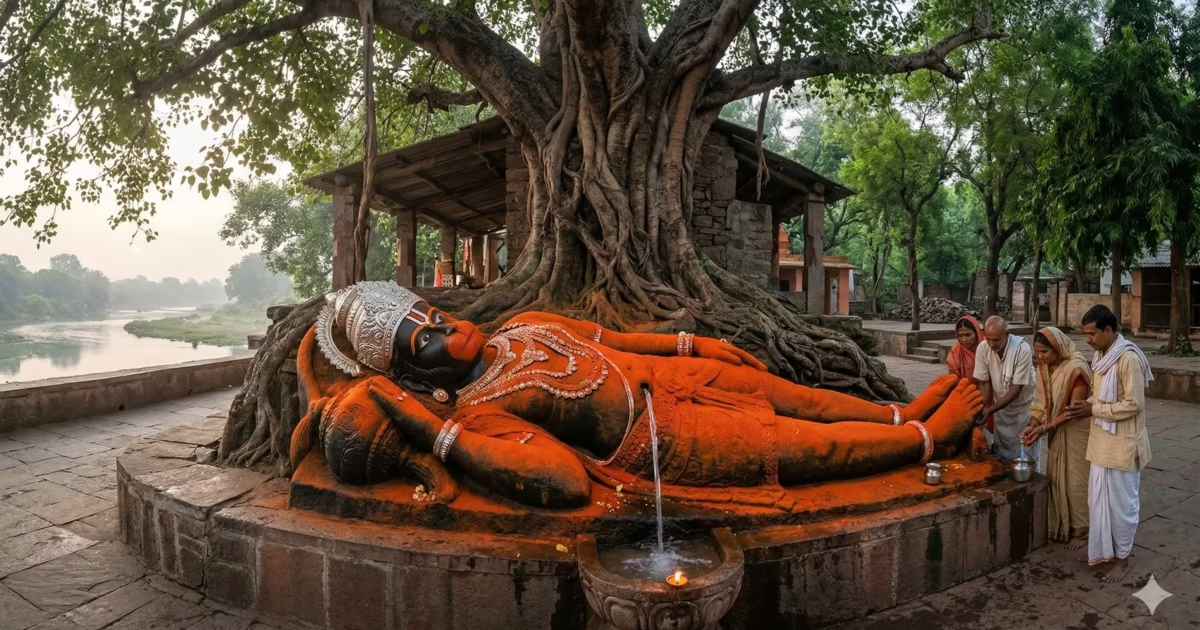
The primary deity of the temple is Lord Hanuman, worshipped here in his purest form as a Bal Brahmachari (a lifelong, celibate ascetic). What sets this temple apart from nearly every other Hanuman shrine in the world is the idol’s mesmerizing posture. Unlike the typical standing, flying, or kneeling depictions commonly found across India, the majestic black stone idol of Lord Hanuman at Jam Sawli stretches an impressive 18 feet in length and is positioned in a restful, reclining state known as Shayan Mudra.
This Shayan Mudra symbolizes a rare moment of divine rest, making the deity appear incredibly approachable, peaceful, and compassionate to the weary traveler or troubled soul. The idol is situated directly under the natural shade of the very ancient Peepal tree mentioned in the legends. The roots and branches of the tree frame the deity, adding to the unadulterated, earthy spiritual aura of the sanctum. A beautifully crafted, intricate silver crown gracefully adorns the head of the deity, while the rest of the colossal stone figure is traditionally coated in vibrant orange vermilion (Sindoor). Standing before this immense, resting figure, visitors are frequently overcome with an overwhelming sense of insignificance in the face of the divine, swiftly replaced by profound peace and devotion.
Spiritual Importance and Healing Powers
The spiritual magnetism of Jam Sawli Hanuman Mandir goes far beyond standard religious observance; it is widely celebrated across central India as a miraculous healing center. In Hindu theology, Lord Hanuman is famously revered as Sankat Mochan—the dispeller of distress, sorrow, and obstacles. True to this name, the temple holds special significance for individuals suffering from severe mental illnesses, psychological distress, chronic depression, and inexplicable ailments that are often attributed by locals to negative energies or evil spirits.
Devotees hold an unwavering, deeply rooted belief that simply praying at the feet of this resting Hanuman brings unparalleled mental clarity and wards off malevolent forces. The temple administration and local community support this by maintaining large ashrams and Dharamshalas (pilgrim rest houses) on the premises. Countless families bring their ailing loved ones here, sometimes staying for weeks or months. Their daily routine involves attending the temple’s aartis, listening to the continuous chanting of the Ramayana, and consuming the sacred temple water. It is a deeply held conviction that true faith, coupled with the immensely positive, purifying energy of the temple environment, grants miraculous recoveries. Many devotees share tearful, awe-inspiring testimonies of their family members recovering from severe psychiatric and physical conditions where modern medicine had seemingly reached its limits.
Temple Architecture and Unique Features
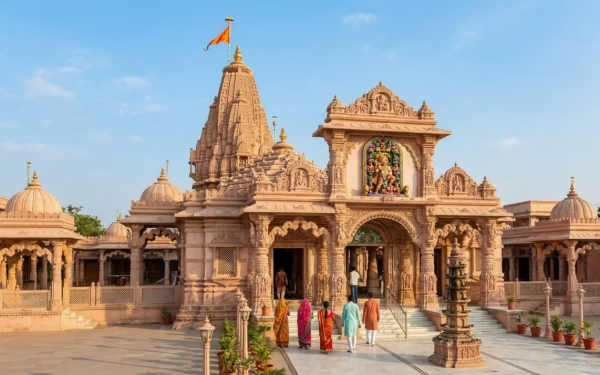
The architecture of the Jam Sawli Hanuman Mandir beautifully marries natural environmental elements with traditional, functional Hindu temple design. Spread across a sprawling, well-maintained 22-acre complex, the temple deliberately avoids relying on towering, heavily sculpted gopurams (towers) or overly opulent gold-plated structures. Instead, its core identity is tied directly to the earth and nature.
The most striking architectural feature is how the temple sanctum has been built seamlessly around the original, living Peepal tree, preserving the exact sacred spot of the deity’s manifestation without harming the environment. The temple complex has expanded over the years to include well-paved pathways, beautifully landscaped meditation gardens, a massive Bhojanalaya (community kitchen) that serves free, sanctified meals (Bhandara) to thousands daily, and smaller peripheral shrines dedicated to Lord Rama, Sita, Lakshmana, and Lord Shiva.
However, the most unique, mesmerizing, and scientifically baffling feature of the temple is a natural, continuous stream of holy water that miraculously emanates directly from the navel region of the Hanuman idol. The exact geological source of this subterranean spring remains a mystery to this day, adding a powerful layer to the site’s divine allure. This sacred water, crystal clear and cool, is meticulously collected by the temple priests and distributed among the devotees as Tirth (holy water). It is highly revered and is believed to carry potent medicinal, purifying, and spiritual properties.
Major Rituals and Daily Pooja
The daily routine at Shri Hanuman Mandir is steeped in strict, timeless Vedic traditions. From dawn to dusk, the air is thick with the fragrance of incense and the continuous, hypnotic chants of the Hanuman Chalisa, Sundara Kanda, and the epic Ramayana.
- Mangala Aarti: The spiritual day begins at the crack of dawn, precisely around 5:30 AM, with the highly auspicious Mangala Aarti. Witnessing the deity in the tranquil, pre-dawn light, accompanied by the blowing of the conch shell (Shankh), is considered deeply purifying and is a favorite time for serious spiritual seekers.
- Continuous Archana and Abhishek: Throughout the day, specialized priests perform continuous Archana—chanting specific, powerful mantras like the Hanuman Moola Mantra and Gayatri Mantra. Devotees can sponsor special Abhishekams where the deity is bathed in holy substances like milk, yogurt, honey, and sacred river water.
- Sandhya Aarti: As the sun sets over the Jam and Sarpa rivers, the entire temple complex is illuminated for the grand Sandhya Aarti. The rhythmic, thunderous beating of massive drums (Nagara), the ringing of hundreds of brass bells, and the collective, passionate singing of devotional hymns by thousands of devotees create a charged, electric spiritual atmosphere that gives goosebumps to the observers.
- Special Offerings (Chola): Devotees frequently offer traditional items to please the deity. The most significant of these is the offering of a Chola—a meticulous ritual where the deity is lovingly coated with a mixture of bright orange vermilion (Sindoor) and pure jasmine (Chameli) oil. Other common offerings include fresh coconuts, vibrant red flags (Dhwaja), garlands of sweet basil (Tulsi), and traditional Indian sweets like Boondi Laddoos.
Important Festivals and Best Time to Visit
While the temple acts as a welcoming beacon of faith year-round, its energy multiplies tenfold, and the crowds swell into the hundreds of thousands during specific times of the year:
- Hanuman Jayanti and Chaitra Navratri: The celebration of Lord Hanuman’s birth is undoubtedly the grandest festival here. The festive atmosphere usually kicks off around Ram Navami and builds up in a crescendo, culminating on Hanuman Jayanti. During this period, the entire 22-acre temple complex is beautifully decorated with miles of marigold flowers and brilliant lights. A massive rural fair (Mela) is organized around the temple, selling everything from religious texts and rudraksha beads to local handicrafts and sweets.
- The Grand Padayatra: During Hanuman Jayanti, a remarkable phenomenon occurs. Tens of thousands of devotees undertake a grueling Padayatra (pilgrimage on foot) from the city of Nagpur and surrounding districts in Maharashtra, walking over 60 kilometers under the hot sun to offer their respects, driven purely by devotion.
- Weekly Significance: In Hindu astrological tradition, Tuesdays and Saturdays are specifically dedicated to Lord Hanuman and the pacification of the planet Saturn (Shani). Naturally, these days witness a massive influx of devotees. Special Maha-Aartis and extended poojas are conducted, and the temple stays open later to accommodate the serpentine queues.
- Other Festivals: Major pan-Indian Hindu festivals like Diwali, Guru Purnima, Makar Sankranti, and Vijayadashami are also celebrated with great fervor, special community feasts, and elaborate ceremonies.
The absolute best time to visit the temple is during the winter months, between October and March. The weather in this region of Madhya Pradesh becomes incredibly cool and pleasant during this time, making the journey, the hours spent in the temple queues, and navigation around the expansive complex much more comfortable and enjoyable.
Practical Visitor Information
For those planning a spiritual journey to the divine feet of Lord Hanuman at Jam Sawli, here is some essential, detailed practical information to ensure a smooth and fulfilling visit:
Temple Timings and Crowd Management
The temple is open to devotees every single day of the week. The general visiting timings are from 5:30 AM to 9:00 PM. However, on special occasions, festivals, and particularly on Tuesdays and Saturdays, the temple administration may accommodate visitors for extended hours—sometimes late into the night—to manage the incredibly heavy crowds. Dedicated queue complexes with drinking water and seating arrangements have been built to facilitate orderly Darshan.
Dress Code and Entry Rules
- Dress Code: Visitors are highly expected to wear modest, traditional clothing. For men, formal trousers, shirts, or traditional Kurta-Pajamas are recommended. For women, Sarees, Salwar Kameez, or fully covering dresses are ideal. Garments must cover the shoulders and knees as a strict mark of respect for the sacred space.
- Footwear and Leather: As with all traditional Hindu temples, footwear must be removed at the designated shoe-racks outside the main temple complex. It is also advised to avoid carrying prominent leather items like large bags or belts into the inner sanctum.
- Darshan Rules: Because Lord Hanuman is strictly worshipped here in his Bal Brahmachari (celibate) form, there is a specific, age-old viewing tradition that is strictly enforced. Men are allowed to go closer to the idol’s feet for Darshan, while women are respectfully requested to view the deity and offer their prayers from a slightly designated, separate barricaded distance. This is a traditional custom strictly adhered to by the temple priests and administration.
How to Reach Sausar and Jam Sawli
Jam Sawli is incredibly well-connected by multiple modes of transport, making it an easy and accessible trip from major central Indian cities, especially Nagpur.
- By Air: The nearest major, well-connected airport is the Dr. Babasaheb Ambedkar International Airport in Nagpur, Maharashtra, located approximately 65 to 70 kilometers away. From the airport, one can easily hire a private prepaid taxi or use app-based cabs directly to the temple complex.
- By Train: The closest local railway stations are Sausar and Pandhurna (about 25 km away). However, the Nagpur Railway Station (60 km away) serves as the most practical major transit hub, as it is centrally located and connected to almost every corner of India. From Nagpur, one can take a local passenger train to Sausar or, more conveniently, opt for road transport.
- By Road: Jam Sawli is seamlessly situated just off the newly developed Nagpur-Chhindwara highway. It is a smooth, highly scenic one-and-a-half-hour drive from Nagpur. State-run transport buses (MSRTC and MP Roadways), private luxury coaches, and shared taxis operate very frequently between Nagpur, Sausar, and Chhindwara, making road travel the most highly recommended and convenient option.
Unique Beliefs, Miracles, and Interesting Facts
The deep lore of Jam Sawli is filled with fascinating anecdotes and deeply ingrained beliefs that leave both skeptical visitors and ardent devotees in absolute awe:
- The Healing Prasad and Sacred Thread: The continuous water flowing from the navel of the Hanuman idol is not just considered holy, but highly medicinal. Temple authorities and generations of devotees claim that a vast majority of people suffering from severe skin diseases, stomach ailments, and mental disorders have been cured simply by consuming this water. Additionally, priests tie a sacred red and yellow thread (Kalawa or Dhaaga) around the wrists of devotees after energizing it with mantras, which is believed to act as a powerful protective shield against accidents and black magic.
- The Divine Call (Bulawa): A very popular, deeply romanticized belief among the regular devotees is the concept of the “Divine Call” or Bulawa. It is firmly said that no matter how hard you plan your itinerary, book your tickets, or arrange your transport, you can only successfully set foot in the Jam Sawli temple if Lord Hanuman has explicitly called you to his doors. Conversely, if you receive the Bulawa, obstacles will magically clear, and your journey will happen effortlessly, often at a moment’s notice.
- The Unmovable Deity: The historical failed attempt to move the deity using dozens of bulls and elephants is not just a myth, but an incident still proudly and vividly recounted by the village elders. It serves as an unshakeable testament to the fact that the divine presence at Jam Sawli specifically chose this exact geographic spot to rest, anchor its energy, and bless humanity for centuries to come.