Nestled in the serene, leafy residential neighborhood of Girinagar in the southern part of Bengaluru, the Karya Siddhi Hanuman Temple stands as a vibrant spiritual oasis amidst the bustling metropolis. In a city known globally for its fast-paced IT industry, this temple offers a necessary sanctuary for reflection, peace, and spiritual rejuvenation. Dedicated to Lord Hanuman—the ultimate symbol of immense physical strength, unwavering devotion, and selfless courage in Hindu mythology—this temple has rapidly evolved from a local shrine into one of the most prominent and heavily visited places of worship in Karnataka.
The name of the temple carries profound weight. “Karya” translates to “tasks,” “endeavors,” or “duties,” while “Siddhi” translates to “attainment,” “realization,” or “fulfillment.” Together, “Karya Siddhi” means the fulfillment of one’s righteous desires or the successful completion of difficult tasks. True to its name, millions of devotees visit this temple with the firm, time-tested belief that Lord Hanuman—often revered as Sankat Mochan (the dispeller of distress)—will remove their karmic obstacles, clear their paths, and grant their noble wishes.
History and Origin of Karya Siddhi Hanuman Temple
While Bengaluru is home to ancient historical temples dating back to the Chola and Vijayanagara empires, the Karya Siddhi Hanuman Temple is a relatively modern marvel with a deeply profound spiritual background. The temple was conceptualized and established under the divine guidance and vision of Parama Pujya Sri Ganapathy Sachchidananda Swamiji, the globally revered pontiff and head of the Avadhoota Datta Peetham, an international spiritual organization based in Mysuru.
The initial inspiration for the temple took root in the late 1990s when Sri Swamiji visited the Girinagar area. He was instantly captivated by its peaceful ambiance and identified the location as a spiritually potent ground, ideal for establishing a center of Dharmic awakening. Although the vision was planted then, the meticulous planning and funding took time. Construction of the temple officially began in 2012, drawing architects and artisans from across South India.
The temple was formally inaugurated in a grand, multi-day consecration ceremony (Kumbhabhishekam) in 2015. During this inauguration, the temple etched its name in modern history and set a remarkable record. Devotees, acting under the guidance of Sri Swamiji, continuously recited the sacred Hanuman Chalisa (a 40-verse hymn dedicated to Hanuman) for 24 hours straight. A monumental 40,000 individual chants were recorded by participants from across the globe, creating one of the world’s largest online video albums of Hanuman Chalisa recitations. This massive synchronized chanting charged the temple’s atmosphere with incredible vibratory energy, which devotees claim can still be felt today.
The Presiding Deity and Spiritual Importance
The primary deity of the temple is Lord Hanuman, worshipped here specifically in his “Karya Siddhi Anjaneya” form. Hanuman is universally revered as the ultimate devotee (Parama Bhakta) of Lord Rama. He represents the pinnacle of Karma Yoga (the yoga of selfless action) and Bhakti Yoga (the yoga of devotion), known for his absolute readiness to help those in distress without expecting anything in return.
The main idol inside the sanctum is an absolute masterpiece of traditional Indian sculpting. It is a breathtaking 200-tonne monolithic (carved from a single piece of stone) sculpture of Lord Hanuman in a standing, benevolent posture. His right hand is raised in the Abhaya Mudra, a gesture that assures protection and dispels fear, while his left hand rests near his mace (Gada), symbolizing his readiness to destroy evil and ignorance. It took a highly dedicated team of 18 master sculptors approximately ten months of continuous, rigorous labor to carefully carve this magnificent deity out of premium black granite. The sheer monumental size, combined with the incredibly serene and compassionate expression carved into the idol’s face, evokes an immediate sense of deep peace and reverence among visitors.
Spiritually, Hanuman occupies a unique space in the Hindu pantheon. He is believed to possess the combined divine powers of Lord Shiva (as he is considered an avatar or manifestation of Shiva’s Rudra energy) and Lord Vishnu (through his unwavering dedication to Rama, Vishnu’s avatar). Consequently, devotees flock to this temple during times of intense personal or professional hardship, seeking success in stalled career paths, harmony in fractured families, financial stability, and miraculous healing from chronic illnesses.
Alongside the towering main deity, the temple complex serves as a holistic spiritual center. It houses beautifully adorned, smaller subordinate shrines dedicated to Anagha Devi Sameta Sri Dattatreya (representing the holy trinity of Brahma, Vishnu, and Shiva), Lord Shiva (in the form of a Lingam), Lord Ganapathy (the remover of obstacles), Lord Subramanya Swamy (the god of war and victory), and the Navagrahas (the nine planetary deities whose cosmic alignments are believed to influence human destiny).
Temple Architecture and Unique Features
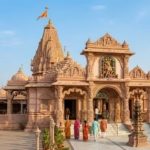
The architecture of the Karya Siddhi Hanuman Temple is a fascinating study in spiritual geometry. It beautifully blends traditional South Indian Dravidian temple aesthetics—such as intricate stone carvings and towering pillars—with highly practical modern design elements built to accommodate massive urban crowds.
- Octagonal Layout: Unlike traditional square or rectangular temple structures, the main sanctum is built in a highly unique octagonal (eight-sided) shape. In Hindu Agama Shastras (temple building manuals), the octagon represents the Ashtadikpalakas (the guardian deities of the eight directions) and the Ashta Lakshmis (the eight forms of wealth and prosperity). Practically, this shape creates a remarkably spacious, naturally well-lit, and airy environment that allows positive energy—and cooling breezes—to flow freely through the space.
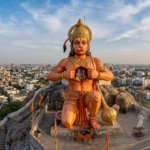
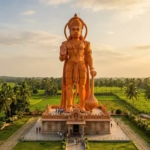
- Monumental Entrance: Visitors are welcomed by a towering, breathtaking 40-foot-tall statue of Lord Hanuman right at the main entrance gate. Painted in vivid traditional hues, this colossal figure sets a majestic, awe-inspiring tone before one even steps inside the inner courtyard. It has become a landmark in Girinagar, visible from several streets away.
- Intricate 3D Murals: The inner and outer circumferences of the temple walls serve as a massive visual storybook. They are decorated with intricate, highly detailed, and brightly colored 3D murals. These murals depict various esoteric forms of Lord Hanuman (such as the multi-armed Veera Hanuman and the meditative Shanthi Hanuman) alongside vivid, dramatic scenes from the epic Ramayana, such as Hanuman lifting the Sanjeevani mountain and the burning of Lanka. These murals act as an engaging educational tool for younger generations to connect with their heritage.
- Stadium-Style Seating: Recognizing that modern temples must safely manage large congregations, the architects included a brilliant innovation: a three-level, semi-circular stadium-style seating area right in front of the main sanctum. This acoustically optimized amphitheater-like design ensures that during massive mass chanting events, musical concerts, and elaborate poojas, every single devotee gets an unobstructed view of the deities and the rituals, regardless of where they are seated.
Major Rituals and Ceremonies
The temple hums with intense spiritual energy from the crack of dawn until late at night. The daily schedule is meticulously maintained, featuring traditional rituals such as the Suprabhata Seva (waking the deity with morning hymns), the Sahasranama Archana (chanting a thousand names of the Lord), the Abhishekam (ritual bathing of the idol with sacred items like milk, honey, turmeric, and sandalwood paste), and the mesmerizing evening Mangala Aarti, where the chanting of priests is accompanied by the rhythmic beating of traditional drums and bells.
However, the temple’s fame across India is largely tied to a highly specific, transformative, and powerful spiritual vow called the Poorna Phala Samarpana Pooja.
The Poorna Phala Deeksha (16-Day Coconut Vow)
This signature ritual is performed by devotees seeking the ultimate fulfillment of a specific, pressing wish—be it finding a life partner, securing a visa, passing a crucial exam, or recovering from a severe ailment. The rigorous process is designed not just as a prayer, but as a test of the devotee’s physical and mental discipline. The process involves:
- The Vow (Sankalpa): A devotee approaches the temple priests, mentally states their intention in front of the deity, and receives a Poorna Phala—a complete coconut with its outer fibrous husk fully intact. The coconut symbolizes the human ego (the hard shell) and the pure consciousness within (the water).
- Tying the Coconut: The devotee ties the coconut to designated, alphabetically and numerically organized steel racks that line the outer corridors of the temple premises. The temple currently houses thousands of such hanging coconuts at any given time.
- Daily Chants: The core of the vow requires intense mental focus. The devotee must chant the specific Karya Siddhi Hanuman Mantra (“Om Sri Karya Siddhi Anjaneya Swamine Namah”) or the traditional Sanskrit shloka (“Tvamasmin Karyaniryoge Pramanam Hari Sattama…”) exactly 108 times daily using a rudimentary rosary or mala.
- Circumambulation (Pradakshina): Devotees must visit the temple and perform 41 Pradakshinas (clockwise rounds) of the inner sanctum twice a week for the duration of the vow. Walking barefoot on the stone floors is believed to stimulate acupressure points and ground the body’s energy.
- Strict Discipline: For the entire 16-day period, the devotee must adopt a lifestyle of purity (Sattvic living). They must strictly adhere to a vegetarian diet, practice celibacy, and absolutely avoid alcohol, tobacco, or any intoxicants. This detoxifies both the body and the mind, making the devotee a clear vessel for divine grace.
- Completion: On the 16th day, the devotee returns to the temple to formally untie their specific coconut. They take it home, break it, and prepare a sweet dish (usually a traditional coconut mithai or payasam) from its flesh. This is then distributed as Prasadam (blessed food) to family, friends, and neighbors, sharing the merit of their successfully completed vow.
Important Festivals and the Best Time to Visit
The temple transitions from a quiet sanctuary to an absolute spectacle of devotion and color during major Hindu festivals, drawing tens of thousands of pilgrims from across Karnataka and neighboring states.
- Hanuman Jayanti: This is undeniably the most significant and grandiose festival celebrated here. Occurring typically in December (according to the regional calendar), Hanuman Jayanti is observed not just for a single day, but as a grand 12-day spiritual extravaganza. The entire temple complex is lavishly decorated with tons of fresh marigolds, jasmine, and dazzling light displays. Over 35,000 devotees visit daily during this period to partake in special fire rituals (Homas), massive Indian classical music concerts featuring renowned artists, and Annadanam (the continuous serving of free, sanctified meals to all visitors, regardless of caste or creed).
- Sri Rama Navami: Celebrating the birth of Lord Rama, this festival sees the temple awash in devotion, as Hanuman’s existence is deeply intertwined with his service to Rama. Elaborate Sita Rama Kalyanam (the divine marriage ceremony of Rama and Sita) is performed, accompanied by continuous recitations of the Ramayana.
- Weekly Auspicious Days: In the Hindu tradition, Tuesdays and Saturdays are considered the most auspicious days to worship Lord Hanuman to pacify planetary afflictions, particularly those caused by Mars (Mangal) and Saturn (Shani). The temple sees a massive surge of devotees on these days, with lines frequently spilling out onto the surrounding streets.
If you are a tourist or a seeker looking for a quiet, deeply meditative experience where you can sit and absorb the architecture and the silence, it is highly recommended to visit on weekday mornings (between 7:00 AM and 10:00 AM) or early afternoons.
Practical Visitor Information
Planning a visit to the Karya Siddhi Hanuman Temple is highly convenient due to its central yet peaceful location and the exceptionally well-managed facilities provided by the temple trust. The premises are kept immaculately clean, and volunteer staff are always on hand to guide newcomers.
- Temple Timings: The temple maintains strict operating hours to allow for deity rest and ritual preparation. It is generally open every day from 6:30 AM to 1:00 PM in the morning, and 5:30 PM to 9:00 PM in the evening.
- Dress Code: As with most traditional South Indian temples, visitors are expected to dress modestly and respectfully. Traditional clothing like sarees, salwar kameez, dhotis, or modest shirts and trousers are encouraged. Shorts, mini-skirts, ripped jeans, and sleeveless tops should be avoided to respect the cultural sanctity of the religious space.
- Entry Rules and Facilities: General entry to the temple is completely free, though special queue tickets can sometimes be purchased during major festivals. Photography inside the main sanctum is strictly restricted to maintain the meditative environment, though photos of the exterior architecture are allowed. Visitors must leave their footwear at the designated, highly organized free shoe counters located outside the main gates. The temple also provides clean drinking water facilities, well-maintained washrooms, and a dedicated counter for purchasing authentic prasadam like laddus and puliyogare (tamarind rice).
- How to Reach: * By Metro: The introduction of the Namma Metro has made the temple highly accessible. The closest metro stations are Deepanjali Nagar and Rajarajeshwari Nagar on the Purple Line. From either station, you can easily hire an auto-rickshaw for a short, inexpensive 10-15 minute ride directly to the temple gates.
- By Bus: The Bengaluru Metropolitan Transport Corporation (BMTC) operates an excellent network of buses that frequently run to Girinagar from major hubs like Majestic (Kempegowda Bus Station) and KR Market. Bus routes like 36-A and 36-B drop passengers very close to the temple. Stops like Girinagara Cross or Avalahalli BDA Park are merely a 5-minute walking distance away.
- By Car/Cab: The temple is clearly marked and well-mapped on all major GPS and ride-hailing applications like Uber and Ola. While there is a designated parking area available, the residential streets leading to the temple are quite narrow and can become heavily congested, especially on weekends and festival days. Therefore, taking a cab, relying on a driver, or using an auto-rickshaw is often the most hassle-free option.
Unique Beliefs, Miracles, and Interesting Facts
The core of the Karya Siddhi Hanuman Temple’s massive and ever-growing popularity stems from the countless personal testimonies of its visitors. It is widely known in local lore as a genuine “miracle temple,” a place where seemingly impossible situations are resolved through unwavering faith and divine intervention.
- The Sacred Orange Thread (Raksha Bandhana): When a devotee officially begins the 16-day coconut vow, the temple priests chant protective mantras and firmly tie a sacred, bright orange thread around the right wrist of men and the left wrist of women. This thread serves as a constant, tangible physical reminder of their spiritual commitment. More importantly, it is believed to act as an energetic shield, warding off the evil eye, negative energy, and worldly temptations for the duration of the 16 days.
- A Hub of Social Welfare: Beyond its purely spiritual and religious activities, the temple operates as a powerful center for community upliftment. Guided by Sri Swamiji’s philosophy that “Service to humanity is service to God,” the temple trust actively runs several charitable initiatives. It regularly funds and organizes low-cost healthcare clinics, frequent blood donation drives, and provides educational scholarships and free school supplies for underprivileged students residing in the surrounding socio-economically weaker neighborhoods.
- The Protective Power of Panchamukhi Hanuman: The presence of a prominent five-faced (Panchamukhi) Hanuman mural and smaller idols within the temple holds immense esoteric significance. According to legend, Hanuman assumed this massive, terrifying form to kill the demon Ahiravana in the underworld. It is believed that praying to this highly specific form simultaneously appeases five major deities, offering supreme, 360-degree protection. The five faces include:
- Lord Hanuman (East): Grants purity of mind and success.
- Lord Narasimha (South): The lion-faced avatar of Vishnu, who eradicates fear and protects from enemies.
- Lord Garuda (West): The eagle mount of Vishnu, who removes toxic influences, black magic, and physical ailments.
- Lord Varaha (North): The boar avatar, who showers the devotee with financial prosperity and wealth.
- Lord Hayagriva (Upwards): The horse-faced avatar, who bestows supreme knowledge, wisdom, and victory in intellectual pursuits.