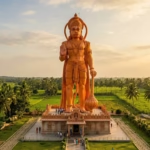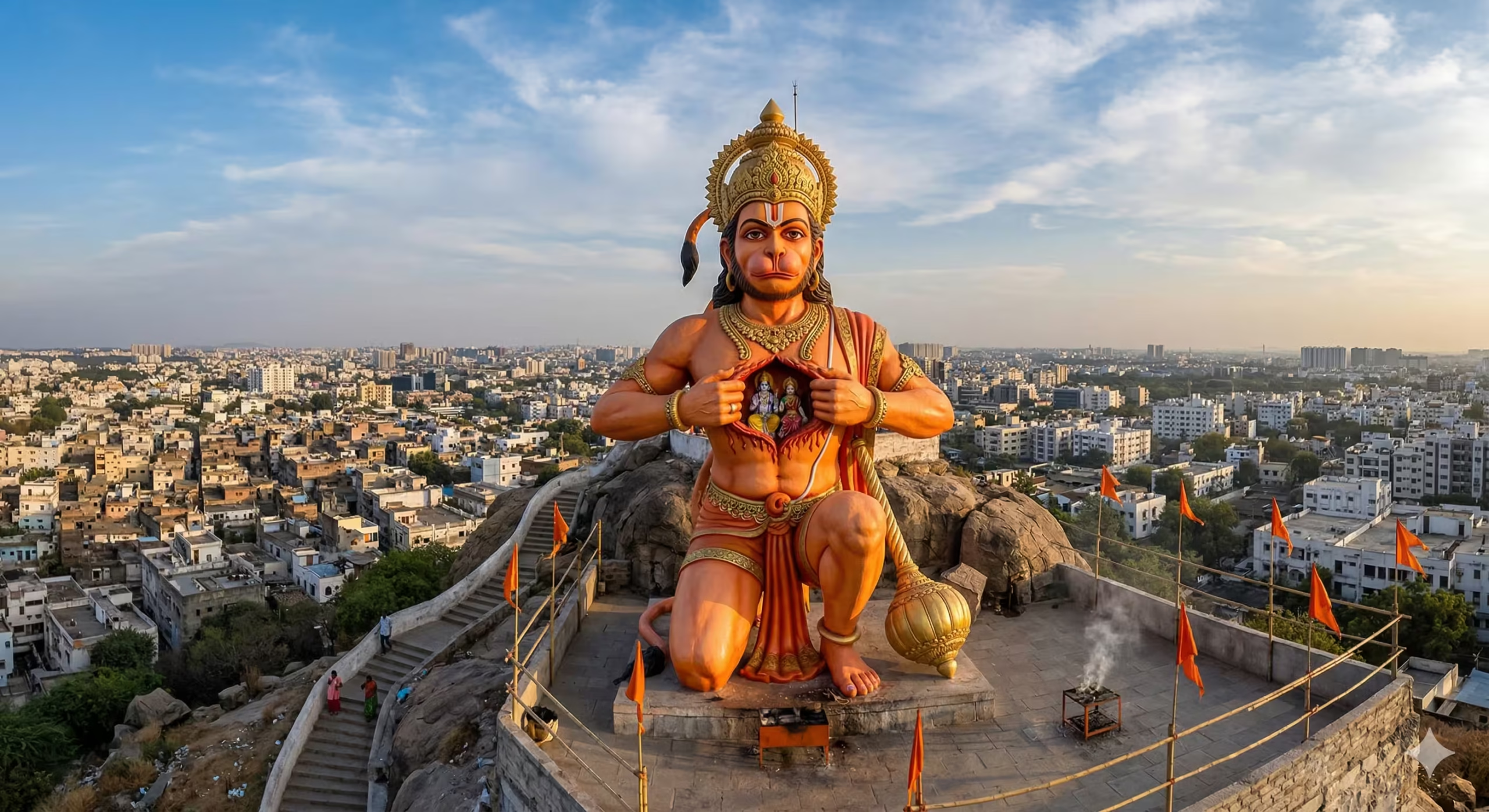
Nestled in the bustling, densely populated, and historically rich neighborhood of Dhoolpet in Hyderabad, the Akashpuri Hanuman Temple stands as a monumental beacon of faith, strength, and unwavering devotion. Renowned for its colossal 51-foot statue of Lord Hanuman, the temple has rapidly become one of the most prominent, visually striking, and spiritually vibrant landmarks in the state of Telangana.
Perched majestically atop an elevated hillock, the temple not only offers a divine, serene retreat for devotees but also provides sweeping, panoramic views of the historic city. The sheer scale of the deity is such that the saffron-hued figure of Hanuman can be seen from several vantage points across the city, acting as a guiding spiritual star. For locals and tourists alike, Akashpuri Hanuman Temple has transcended being just a neighborhood shrine; it is a vibrant epicenter of Hindu spirituality, attracting thousands of worshippers daily who seek the blessings, boundless courage, and fierce protection of the mighty monkey god. Whether you are a spiritual seeker, a student of Hindu architecture, or a curious traveler exploring Hyderabad’s diverse heritage, this temple offers a deeply immersive experience.
History and Origin of Akashpuri Hanuman Temple
Unlike the ancient, centuries-old heritage temples of South India that carry the architectural signatures of the Kakatiya or Vijayanagara empires, the Akashpuri Hanuman Temple is a relatively modern marvel of devotion. It stands as a profound symbol of the collective faith, resilience, and unity of the contemporary Hindu community in Hyderabad, specifically representing the cultural heartbeat of the Dhoolpet area.
Dhoolpet has long been home to the Lodha (or Lodh) community, a martial and artisanal group that migrated from North India to Hyderabad centuries ago. Known for their intricate craftsmanship—particularly in making majestic Ganesha and Durga idols—the community has a deep-rooted, ancestral devotion to Lord Rama and Hanuman. The grand development of the Akashpuri temple was heavily championed by local devotees, community elders, and most notably, local MLA T. Raja Singh, who played a pivotal role in transforming the site into a major pilgrimage destination and a hub for cultural revival.
The foundational idea behind the temple was to create a unifying, towering spiritual center that would elevate the identity of Dhoolpet and the wider old city of Hyderabad. The crowning glory of the temple—the massive 51-foot idol of Lord Hanuman—was a labor of profound dedication, patience, and community fundraising. Skilled artisans, structural engineers, and traditional sculptors worked tirelessly over a painstaking period of nine years to carve, shape, and perfect the breathtaking statue. Since its completion in the early 2010s, the temple has grown exponentially in prominence, evolving from a localized hilltop shrine into a major socio-religious hub that now hosts some of the largest and most spectacular religious processions in Southern India.
The Presiding Deity: The Ultimate Symbol of Devotion
The presiding deity of the temple is Lord Hanuman, revered in Hindu theology as the supreme devotee (Parama Bhakta) of Lord Rama, the son of the wind god Vayu, and the ultimate embodiment of raw physical strength, strict celibacy (Brahmacharya), and selfless, ego-less service.
The awe-inspiring 51-foot statue at Akashpuri depicts Lord Hanuman in one of his most powerful, dramatic, and emotive mythological postures: tearing open his own chest with his bare hands to reveal Lord Rama and Goddess Sita residing eternally within his heart. This specific iconography is deeply rooted in the Ramayana. According to legend, when Mother Sita gifted Hanuman a precious pearl necklace, he began breaking the pearls one by one, listening closely to them. When questioned why he was destroying the precious gift, Hanuman replied that anything that did not contain the name or presence of Rama was worthless to him. To prove his point to the skeptical courtiers, he tore open his chest, revealing the divine couple seated in his glowing heart.
This imagery illustrates the absolute peak of Bhakti (devotion), proving that Hanuman’s entire existence and life force are dedicated to the divine couple. The massive scale of the deity at Akashpuri amplifies this profound message. The detailed facial expressions of the idol—a mesmerizing blend of fierce loyalty, immense physical exertion, and gentle, divine love—evoke a deep sense of awe, reverence, and emotional surrender among visitors. His majestic crown (Mukut), heavy jewelry, and the gigantic mace (Gada) resting beside him further emphasize his dual role as both a loving devotee and a fearsome warrior.
Spiritual Importance and Devotional Atmosphere
In Hindu tradition, Lord Hanuman is universally worshipped as a Sankat Mochan—the ultimate dispeller of distress, sorrow, and insurmountable obstacles. The Akashpuri Hanuman Temple holds immense spiritual and psychological significance for people going through challenging phases in life, be it health crises, financial instability, or deep personal anxieties. Devotees flock to the temple seeking physical vitality, mental fortitude, and a protective shield against negative energies and malevolent forces.
The atmosphere within the temple complex is highly charged with a palpable spiritual energy. From the moment you begin the ascent up the hillock, the secular noise of the city begins to fade. The continuous, rhythmic chanting of the Hanuman Chalisa over the temple speakers, the resonant ringing of heavy brass temple bells, and the thick, purifying fragrance of camphor, sandalwood, and incense create a deeply meditative and grounding environment.
Tuesdays and Saturdays are traditionally dedicated to the worship of Lord Hanuman and the pacification of planetary deities like Mars (Mangal) and Saturn (Shani). On these days, the temple witnesses a massive surge in footfall, transforming the serene hillock into a vibrant, echoing sea of devotion. Many devotees undertake strict 41-day Mandala fasts, visiting the temple daily barefoot to complete their vows and seek the deity’s grace.
Architecture, Design Style, and Unique Features
The architecture of Akashpuri Hanuman Temple is defined by its open-air grandeur, structural prominence, and deliberate departure from enclosed, orthodox temple designs. Situated on a rocky hillock approximately 150 feet above the surrounding ground level, the temple is ingeniously designed to make the presiding deity the undisputed focal point of the local skyline.
Unique Architectural Features:
- The 51-Foot Colossus: The massive statue is the heart and soul of the complex. It is meticulously constructed using a complex inner framework of reinforced steel and concrete, overlaid with sculpted stone and weather-resistant stucco. It is routinely painted with vibrant, specialized, weather-proof colors to maintain its brilliant saffron-orange glow against the harsh Indian summers and torrential monsoons.
- Hilltop Elevation and Stairway: Visitors must ascend a moderately steep flight of stairs to reach the main viewing platform. This physical climb is deeply integrated into the spiritual experience; it is viewed by devotees as a symbolic pilgrimage—a conscious shedding of worldly burdens, ego, and fatigue with every step taken toward the divine.
- Open Courtyard Design: Unlike traditional Dravidian temples characterized by dark, closed inner sanctums (Garbhagriha) and towering, multi-tiered gateway towers (Gopurams), Akashpuri Hanuman is a liberating, open-air shrine. This architectural choice allows devotees to view the majestic idol bathed in natural sunlight or under a canopy of stars (hence the fitting name Akashpuri, meaning “City of the Sky”).
- Panoramic Vistas: The temple’s expansive, elevated courtyard doubles as one of the best public viewpoints in the city. It offers visitors uninterrupted, sweeping views of Hyderabad’s sprawling urban landscape, creating a striking contrast between the timeless spiritual peace of the hilltop and the fast-paced modern metropolis bustling below.
Major Rituals and Daily Puja
The temple operates with a deep sense of discipline, following strict daily rituals in accordance with traditional Vedic and Agama practices. The daily schedule begins before dawn with the morning Suprabhatam (the ceremonial waking of the deity with sacred hymns), followed by the sacred Abhishekam. Since the main 51-foot idol is too large for daily bathing, the Abhishekam (ritual bathing using milk, honey, ghee, curd, and holy water) is performed on a smaller, consecration idol (Utsava Murti) housed nearby.
- Sindoor Offering (Chola): Devotees frequently offer vibrant orange Sindoor (vermilion) mixed with jasmine oil. According to legend, Hanuman once saw Sita applying sindoor to her forehead to ensure Rama’s long life. In his innocent, boundless devotion, Hanuman covered his entire body in sindoor to grant Rama immortality. Offering this sacred orange paste is believed to bring immense blessings and protection.
- Special Garlands (Vadamala and Tamalapaku): It is a highly auspicious ritual to offer Lord Hanuman Vadamala—a garland made of 108 savory, deep-fried vadas. This is specifically done to appease the planetary deity Rahu and remove astrological obstacles. Additionally, garlands made of fresh, green betel leaves (Tamalapaku) are offered, symbolizing prosperity, victory, and the cooling of the deity’s fierce energy.
- Maha Aarti: The evening Maha Aarti is a spectacular, soul-stirring daily event. As the sun sets over Hyderabad, priests perform the grand light offering using multi-tiered brass lamps. The visual of the towering, illuminated Hanuman against the night sky, accompanied by the thunderous beating of traditional drums (Nagara), the blowing of conch shells (Shankha), and the deafening, unison chants of “Jai Shri Ram” and “Bajrang Bali Ki Jai,” leaves an indelible mark on every visitor’s soul.
Grand Festivals and Celebrations
While the temple enjoys a steady stream of devotees year-round, it truly comes alive during its grand religious festivals, drawing unprecedented crowds from across Telangana, Andhra Pradesh, and neighboring states like Maharashtra and Karnataka.
- Sri Rama Navami: This spring festival is arguably the most important and monumental occasion at the temple. Since 2010, the Akashpuri temple has served as the sacred starting point for Hyderabad’s massive Sri Rama Navami Shobha Yatra (a grand, city-wide procession). The event attracts hundreds of thousands of devotees. The streets transform into a sea of saffron flags. The yatra features traditional folk dancers, heavy drum bands, beautifully decorated chariots carrying idols of Rama, Sita, Lakshmana, and Hanuman, and youth from local Akharas (traditional gymnasiums) showcasing jaw-dropping martial arts, sword fighting, and fire-breathing displays as they navigate through a historic seven-kilometer route.
- Hanuman Jayanti: Celebrating the birth anniversary of Lord Hanuman, this festival sees the entire temple complex adorned with tens of thousands of marigold flowers, mango leaves, and brilliant electrical illuminations. Special Maha Homas (elaborate fire rituals) are conducted by head priests to ensure global peace and community welfare. Continuous, non-stop recitations (Akhanda Path) of the Sundara Kanda (the chapter of the Ramayana detailing Hanuman’s heroic journey to Lanka) are performed by groups of devotees throughout the day and night.
- Diwali and Dussehra: During the festival of lights and the celebration of Rama’s victory over Ravana, the temple is brightly lit with thousands of earthen lamps (Diyas). Special prayers and offerings of new clothes are made to the deity, celebrating the ultimate triumph of Dharma (righteousness) and the eradication of evil.
Essential Visitor Information
For pilgrims, tourists, and photography enthusiasts planning to visit this magnificent spiritual site, here are the detailed practical guidelines to ensure a smooth experience:
- Temple Timings: The temple gates are generally open to visitors every day from 6:00 AM to 8:00 PM. However, during major festivals like Hanuman Jayanti or Sri Rama Navami, timings are significantly extended, often remaining open late into the night to accommodate the massive rush.
- Best Time to Visit: Because the main courtyard is entirely open to the sky, early mornings (between 6:30 AM and 8:30 AM) or late afternoons (after 4:30 PM) are the ideal times to visit to avoid the harsh midday sun. Tuesdays and Saturdays are highly recommended if you wish to experience the temple’s vibrant devotional energy and witness the elaborate rituals, though you should be prepared for larger crowds.
- Dress Code: While there is no rigid, strictly enforced dress code, Akashpuri Hanuman is a highly revered Hindu place of worship. Visitors are strongly advised to wear modest, respectful clothing. Traditional Indian attire (like kurtas for men and sarees or salwar kameez for women) is deeply appreciated, and shoulders and knees should ideally be covered.
- Entry Fee: There is absolutely no entry fee. The temple is a community space, open and accessible to people of all walks of life.
- How to Reach: * By Metro: The most convenient way to avoid old city traffic is the Hyderabad Metro. The nearest stations are Nampally and Gandhi Bhavan on the Red Line. From either station, one can easily hire an auto-rickshaw or a shared cab for the short 10-minute ride to Dhoolpet.
- By Bus: The Telangana State Road Transport Corporation (TSRTC) operates numerous city buses that ply to Dhoolpet and surrounding traditional areas like Mangalhat, Begum Bazar, and Jiyaguda.
- By Road: For those driving, Dhoolpet is centrally located in the historic quarters of the city and is accessible via cabs and private vehicles. However, navigating the narrow, bustling lanes can be challenging, and parking near the temple base can be quite limited, especially on weekends and peak festival days. Taking a cab or auto-rickshaw is generally the most stress-free option. As a bonus, navigating these lanes offers a glimpse into the local workshops where towering clay idols for various festivals are crafted year-round.
Unique Beliefs and Interesting Facts
The Akashpuri Hanuman Temple is surrounded by an aura of deep, unshakeable faith and intriguing local trivia that add immense cultural weight to its towering physical presence:
- The 9-Year Dedication: It is a well-known and highly respected fact among Hyderabad’s residents that the awe-inspiring 51-foot statue was not assembled overnight using prefabricated parts. It took exactly nine continuous years of relentless dedication, community-driven grassroots fundraising, and painstaking, millimeter-by-millimeter craftsmanship by dedicated artisans to bring this colossal vision to life.
- A Beacon of Protection: Many residents of Dhoolpet, as well as the surrounding historical neighborhoods, firmly believe that the towering, watchful presence of Lord Hanuman on the hillock acts as a literal and spiritual protective shield. Locals often attribute the area’s resilience against natural calamities, severe storms, and communal discord to the protective aura radiating from the temple.
- The Chest-Tearing Iconography: The specific depiction of Hanuman tearing his chest is surprisingly rare for statues of this massive, monumental scale. Across India, most giant, open-air Hanuman statues depict him either standing guard with a resting mace, flying through the air while carrying the Sanjeevani mountain, or sitting in a meditative posture. Akashpuri’s dynamic, action-oriented, and deeply emotional design—capturing the exact climax of his ultimate act of devotion—makes its architectural and artistic execution highly unique on a national scale.
- Engineering Against the Elements: From an engineering standpoint, creating a 51-foot statue with the hands actively pulling apart the chest presented significant weight-distribution challenges. The arms of the statue had to be heavily reinforced with industrial-grade steel to ensure they could support their own weight and withstand the high wind speeds at the top of the 150-foot hillock without structural fatigue over the decades.