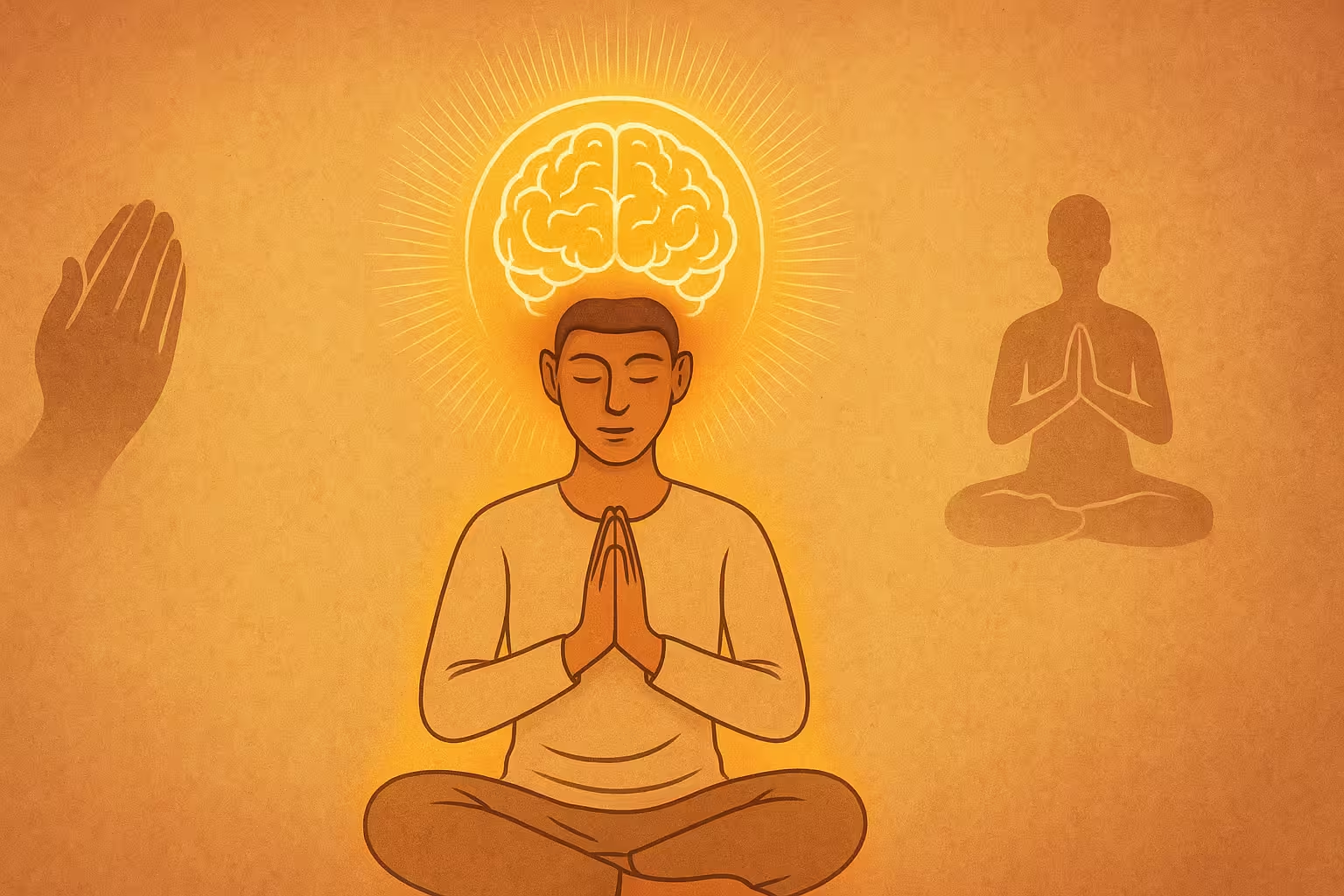

Human life is not limited merely to the fulfillment of material desires and worldly successes; it is a profound spiritual journey. “Practical inspirational spiritual thoughts filled with divine virtues” are those high-order reflections and values that awaken the dormant divine consciousness within us. These are not just theoretical knowledge or philosophical principles, but practical formulas that we can implement in our daily lives to experience peace, joy, and fulfillment. These thoughts hold immense importance in spiritual life because they cleanse the dust of ego and selfishness accumulated on the mirror of our mind, allowing the true nature of the soul—which is pure, awakened, and free—to reveal itself.
Deep Meaning, Philosophy, and Relevance in Sanatana Dharma
In Hindu philosophy and spirituality, divine virtues are referred to as ‘Daivi Sampatti’ (Divine Wealth). In the 16th chapter of the Shrimad Bhagavad Gita (Daivasurasampadvibhaga Yoga), Lord Krishna describes these divine qualities in detail. They include virtues such as Abhaya (fearlessness), purification of the inner self, steadfastness in knowledge and yoga, charity, Dama (self-control), sacrifice, Swadhyaya (study of scriptures), austerity, and simplicity.
The deeper meaning of these virtues is that the fundamental nature of a human being is divine. When we adopt inspirational thoughts like compassion, forgiveness, truth, and love, we are not learning something new from the outside, but rather uncovering the divinity that already exists within us. Spiritual philosophy maintains that every individual has a spark of the Supreme. Therefore, when our thoughts are inspired by divine virtues, our life automatically becomes a living prayer and meditation.
Spiritual Significance
The greatest spiritual significance of thoughts filled with divine virtues is the purification of the Antahkarana (the inner instruments: mind, intellect, consciousness, and ego). When a person generates thoughts of compassion, contentment, and gratitude instead of lust, anger, and greed, the level of their consciousness rises.
- Freedom from Karmic Bonds: When our actions are selfless and inspired by divine love, they do not create new karmic bonds. This is what is called ‘Nishkama Karma’ (selfless action).
- Helpful in Self-Realization: A disturbed mind can never perceive the soul. Divine virtues like forgiveness and peace stabilize the lake of the mind, allowing the clear reflection of the soul to be seen within it.
- Connection with God: Like attracts like. When divine qualities such as love and compassion develop within us, we naturally draw closer to the Supreme Being (God).
Practical Importance in Daily Life
The true test of spirituality does not take place in mountain caves, but amidst the daily challenges of our homes, families, and workplaces. Divine thoughts have immense practical importance in daily life:
- Purification of Thoughts: When you start your morning with the thought, “I will hold love and goodwill towards everyone,” the negative thoughts that arise throughout the day automatically begin to weaken.
- Positive Change in Behavior: In a situation of anger or provocation, the divine virtue of forgiveness prevents you from reacting immediately. It shifts your behavior from being reactive to being proactive and thoughtful.
- Sweetness in Relationships: When we hold feelings of empathy and unconditional love towards others, our mutual relationships become stronger and free from stress.
Simple Teachings of the Scriptures
Texts like the Upanishads and the Gita have explained this in very simple language:
- “Ahimsa Paramo Dharma” (Mahabharata): Not causing harm to anyone through mind, speech, or action is the greatest religion and divine virtue.
- “Vasudhaiva Kutumbakam” (Maha Upanishad): The entire earth is one family. This thought eradicates narrow-mindedness and expands the heart.
- Truth (Satyameva Jayate): This aphorism from the Mundaka Upanishad teaches that truth is not a rule, but the very nature of the soul. By speaking the truth and walking the path of truth, the mind always remains free from fear.
How to Practice These Virtues in Real Life (Practical Application)
Merely reading about divine virtues does not change life; their continuous practice is essential. Here are some simple steps and habits:
- Morning Intentions: As soon as you wake up, sit quietly for 5 minutes and make a resolve—”Whatever work I do today, it will be with truth, love, and honesty. I will not criticize anyone today.”
- Gratitude Journal: Before going to sleep at night, remember three things or people for whom you are grateful. This develops the virtue of contentment and positivity.
- Selfless Service (Seva): Help someone at least once a week without expecting any benefit in return. This could be feeding the hungry, listening to a troubled person, or taking care of the environment. This is the best path to dissolve the ego.
- Pause before Reacting: Whenever someone makes you angry, instead of responding immediately, take a deep breath and wait for 5 seconds. This short gap will save you from demonic wealth (anger) and lead you towards divine wealth (peace and forgiveness).
Common Misconceptions About This Topic and Their Clarification
People often harbor misunderstandings about spirituality and divine virtues, which need to be clarified:
- Myth 1: Spirituality means abandoning the world.
- Clarification: Absolutely not. True spirituality is not running away from the world, but living in the world and remaining detached like a lotus leaf in water. You can live a divine life even as a doctor, engineer, or businessman by fulfilling your duties with honesty and a spirit of service.
- Myth 2: Forgiveness and kindness make a person weak.
- Clarification: Forgiving is not a trait of the weak, but of the bravest person. It is very easy to shout in anger, but it takes immense inner strength to remain calm inside and forgive.
- Myth 3: Divine virtues are only for saints and ascetics.
- Clarification: The seed of divinity lies within every human being. Even an ordinary householder can fully develop these virtues by selflessly caring for their family and fulfilling their responsibilities towards society.
Mental, Emotional, and Spiritual Benefits
Incorporating these divine and inspirational thoughts into life has countless benefits:
- Mental Benefits: The problem of overthinking reduces. Clarity comes to the mind, and the levels of stress, anxiety, and depression drop significantly.
- Emotional Benefits: A person begins to understand their own and others’ emotions better. Self-confidence, love, and emotional stability replace jealousy, hatred, and inferiority complexes.
- Spiritual Benefits: Consciousness expands. A person begins to experience themselves as a pure soul separate from the body and mind, leading to the realization of cosmic truth and supreme bliss.
Associated Practices and Disciplines
To establish these virtues deeply within oneself, following certain spiritual disciplines proves highly beneficial:
- Swadhyaya (Self-Study): Spend some time every day reading inspirational texts, Upanishads, the Gita, or the thoughts of great saints. This constantly provides a ‘Sattvic’ (pure) diet to the mind.
- Meditation (Dhyana): Practice sitting in silence. Meditation calms the turbulence of our minds and connects us with the divine peace present within us.
- Satsang (Good Company): Spend time with people who have spiritual and positive mindsets. The company of good people (Satsang) helps the divine virtues within us to blossom and flourish quickly.