You sit down at your desk, open your laptop, and before you’ve even typed a single word, your phone buzzes. An email pops up. Three different browser tabs are demanding your attention. It’s only 9:00 AM, but your brain already feels scattered.
If you usually start your workday feeling reactive and a step behind, you aren’t alone. Maintaining concentration is incredibly difficult right now. But what if you could take control of your attention before the day even begins?
That is exactly what morning meditation does. Whether you’re a professional managing heavy workloads or a student trying to study for exams, taking just a few minutes to sit quietly each morning can completely change how your day unfolds.
In this guide, we’ll walk through exactly how to set up a morning meditation routine for focus and productivity—without the complicated jargon.
Why Morning Meditation Actually Works
It helps to know what’s happening in your brain when you meditate. It’s not just about “relaxing”; it’s a very practical tool for mental performance.
When you first wake up, your brain is transitioning slowly from deep sleep waves to the active, alert waves of normal daytime thinking. If your first instinct is to grab your phone and scroll through the news or work messages, you jolt your nervous system into a state of stress right out of bed.
Starting with a short meditation does the exact opposite. Here is how it directly improves your output:
1. It Lowers Your Morning Stress
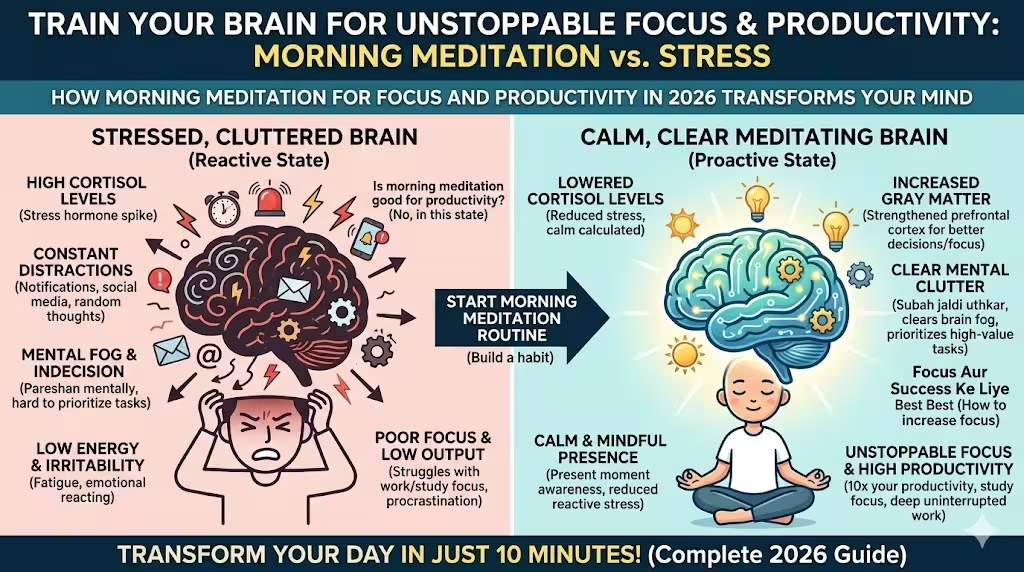
Waking up and immediately stressing about your to-do list spikes your cortisol (the stress hormone). Meditation keeps those levels low. When you aren’t anxious, you can approach your work calmly and make better decisions.
2. It Acts Like a Workout for Your Brain
Consistent meditation physically strengthens your prefrontal cortex. This is the part of your brain responsible for planning, problem-solving, and sustained focus. Every time you meditate, you are essentially lifting weights for your attention span.
3. It Clears the Mental Fog
Have you ever stared at a screen, unable to figure out what task to tackle first? A quick morning session clears out that lingering mental clutter, making it much easier to prioritize what actually matters today.
Setting Up Your Morning Practice
You don’t need a perfectly decorated Zen room or an hour of free time. The best routine is the one you can actually stick to.
Finding Your Time and Space
In many traditions, the pre-dawn hours (known as Brahmamuhurta, roughly between 4:00 AM and 6:00 AM) are considered the best time to meditate because the world is quiet. But realistically, the “best” time is simply the moment you wake up, before you look at any screens.
Find a comfortable spot. You can sit cross-legged on the floor or just sit normally in a chair. The only real rule is to keep your back relatively straight so you don’t fall back asleep.
The 10-Minute Routine for Maximum Focus
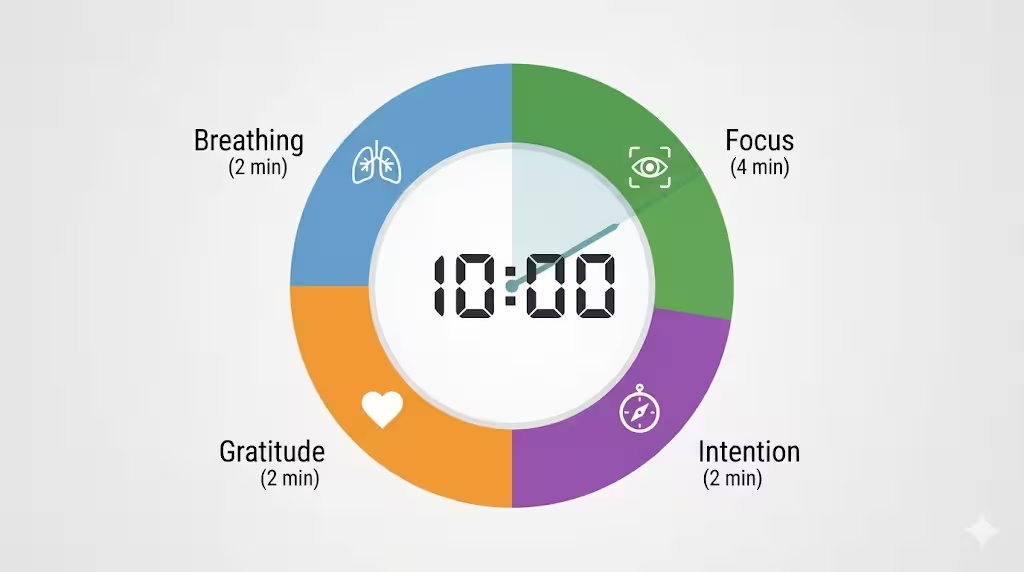
If you are short on time but want to build serious concentration, try this simple 10-minute breakdown.
Minutes 1-2: Settle Your Nerves
Close your eyes and take a few deep breaths to settle in. A great way to start is the 4-7-8 breathing method:
- Breathe in through your nose for 4 seconds.
- Hold it for 7 seconds.
- Exhale slowly through your mouth for 8 seconds. Do this three or four times. It acts like a quick reset button for your body.
Minutes 3-7: The Core Focus Workout
This is where the real work happens. Shift your attention entirely to your breathing. Notice the physical feeling of the air going in and out of your nose.
Here is the most important thing to remember: your mind is going to wander. You will suddenly start thinking about breakfast or an upcoming meeting. That is normal. The actual “focus training” happens in the exact moment you catch yourself getting distracted and choose to bring your attention back to your breath. Every time you pull your focus back, your brain gets a little stronger.
Minutes 8-9: Set Your Intention
Keep your eyes closed, and think about the single most important task you need to get done today. Picture yourself sitting down and doing it easily, without getting distracted. This simple visualization preps your brain to actually do the work later on.
Minute 10: Find One Good Thing
Before you get up, spend 60 seconds thinking about one thing you are grateful for today. Starting on a positive note gives you a solid emotional foundation to handle whatever stress pops up later.
Tips to Make the Habit Stick in 2026
Knowing what to do is the easy part. Doing it every day is where most people struggle. Here is how to keep it going:
- Link it to a current habit: Tell yourself, “I will meditate for 5 minutes right after I brush my teeth,” or “Right before I turn on the coffee maker.”
- Keep it brief: Don’t try to sit for 30 minutes on day one. A 5-minute session is highly effective. Once 5 minutes feels too easy, bump it to 10.
- Use guided audio: If sitting in total silence is driving you crazy, look up a guided morning meditation for focus on YouTube. Having someone talk you through it helps a lot when you are just starting.
- Don’t stress over skipped days: If you oversleep and miss a morning, it’s fine. Just try again the next day. Consistency over a month matters way more than being perfect for a week.
Training your brain to focus takes a little bit of time, but the payoff is huge. Try it out tomorrow morning. Take just five minutes for yourself before the world demands your attention, and see how much more you get done by the afternoon.
Frequently Asked Questions (FAQs)
How many minutes of morning meditation is enough for focus? If you are just starting, 5 to 10 minutes is plenty. It’s much better to do 5 minutes every single day than 30 minutes once a week.
What is the best time for morning meditation? The best time is right after you wake up, before you check your phone or read the news. This stops you from getting stressed out by emails before your day even begins.
Does morning meditation actually improve productivity? Yes. Meditation trains you to notice when you get distracted. When you practice pulling your focus back to your breath every morning, you become much better at pulling your focus back to your work when you get distracted at your desk.
What is the best type of morning meditation for beginners? Simply focusing on your breath is the easiest and most effective way to start. It doesn’t require any special knowledge, just a quiet room and your attention.
What happens if I meditate every morning for 30 days? People who stick with it for a month usually notice they feel less anxious, they don’t procrastinate as much, and it becomes noticeably easier to sit down and do deep, focused work for longer stretches of time.