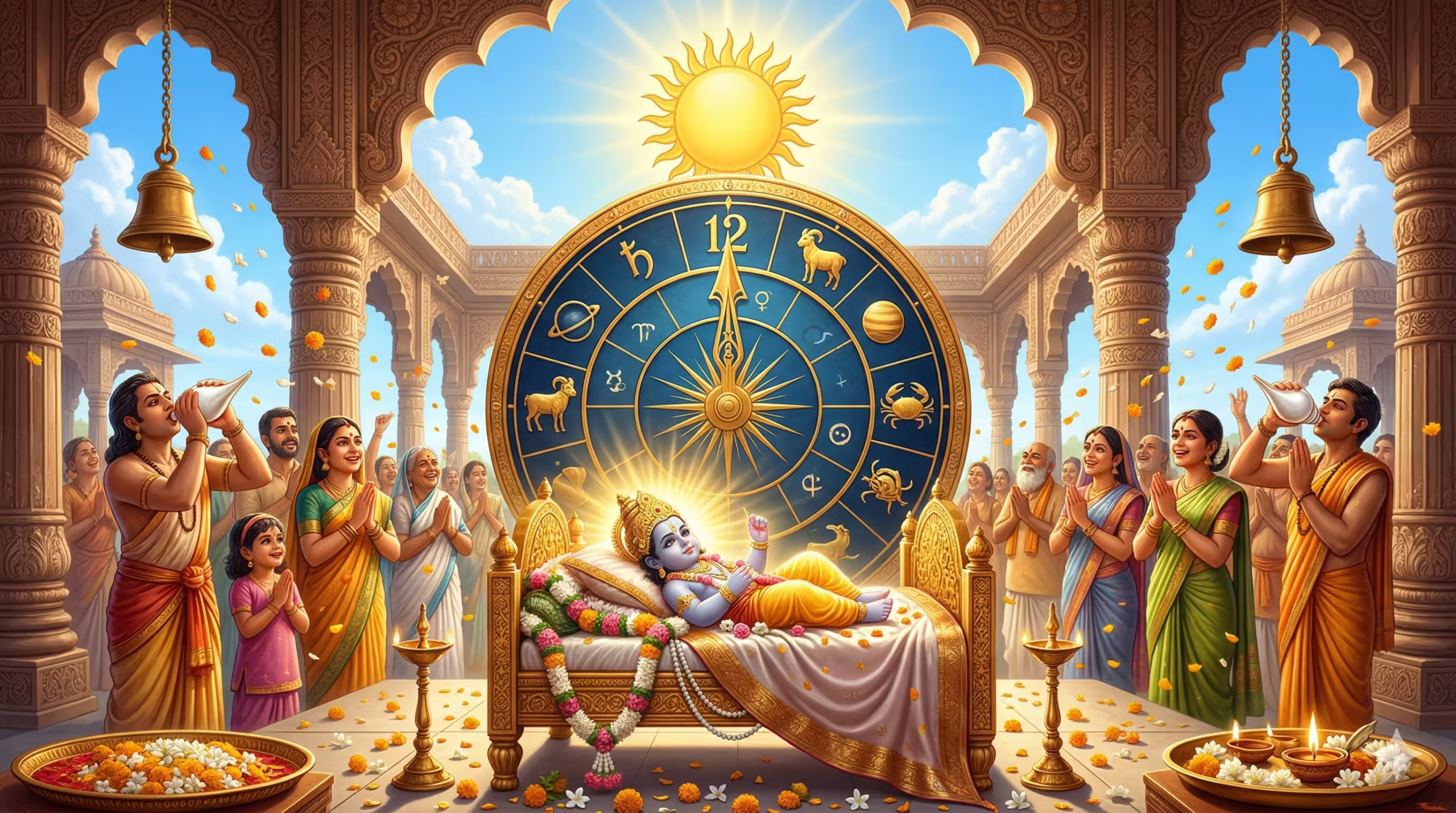
Every year on Chaitra Shukla Navami, millions of devotees gather in temples and homes, their eyes fixed on the clock. As the hands align exactly at 12:00 PM (midday), conch shells blow, bells ring, and chants of “Jai Shri Ram” fill the air to mark the birth of Lord Rama. But why is this specific moment chosen? Unlike other Hindu festivals that are celebrated at sunrise, midnight (like Janmashtami), or during evening twilight, Ram Navami is strictly a midday celebration.
The reason for this precise timing is not a mere coincidence or a modern convenience. It is deeply rooted in ancient Vedic astrology, the specific planetary alignments described by Maharishi Valmiki, and the profound spiritual symbolism of the Solar Dynasty.
Here is the exact astrological and spiritual breakdown of why Lord Rama’s appearance is celebrated exactly at 12 noon.
The Core Astrological Reason: The Alignment of the Stars at Noon
Maharishi Valmiki, in the Bala Kanda of the Ramayana, provides a highly precise astrological chart for the moment of Lord Rama’s birth. The specific planetary configuration he describes can only occur at midday during the month of Chaitra.
1. The Cancer Ascendant (Karka Lagna) and the Exalted Sun
According to the Ramayana, Lord Rama was born on the ninth day (Navami) of the waxing moon (Shukla Paksha) in the Chaitra month, under the Punarvasu Nakshatra. Crucially, He was born when Karka Lagna (Cancer Ascendant) was rising in the eastern horizon.
During the Hindu month of Chaitra (mid-April), the Sun is positioned in the zodiac sign of Aries (Mesha), where it is in its exalted (Uchcha) or most powerful state. Astrologically, when the Sun is in Aries and the Ascendant rising is Cancer, the Sun is positioned exactly in the 10th House of the astrological chart.
The 10th House represents the zenith—the highest point in the sky directly overhead. The Sun reaches this exact position only at midday (Madhyahna). Therefore, for the specific planetary alignment of Lord Rama’s birth to be accurate, the time of birth had to be exactly at noon.
2. The Power of Abhijit Muhurta
In Vedic timekeeping, the day is divided into various Muhurtas (auspicious and inauspicious time windows). The eighth Muhurta of the day, which occurs exactly around local solar noon, is known as Abhijit Muhurta.
- The Meaning of Abhijit: The word “Abhijit” translates to “Victorious” or “The one who cannot be defeated.”
- Astrological Power: Abhijit Muhurta is considered the most powerful and auspicious time of the day. It is believed that the immense power of the Sun at its zenith during this 48-minute window burns away all negative energies and doshas (flaws).
Lord Rama was born precisely during the Abhijit Muhurta. Celebrating His birth exactly at 12 noon allows devotees to tap into this invincible, auspicious cosmic energy.
The Spiritual Significance of the Midday Sun
Beyond the mathematical calculations of astrology, the 12 noon timing holds profound spiritual and symbolic meaning directly tied to Lord Rama’s lineage and life mission.
The Glory of the Suryavansha (Solar Dynasty)
Lord Rama took birth in the Ikshvaku Kula, famously known as the Suryavansha or the Solar Dynasty. As a direct descendant of Surya (the Sun God), it is poetically and spiritually fitting that the greatest king of this dynasty was born when the Sun was at the absolute peak of its daily glory and power—exactly at 12 noon.
The Dispeller of Darkness
The Sun at midday leaves no shadows; it illuminates everything with complete clarity. Lord Rama’s incarnation was meant to establish Dharma (righteousness) and entirely eradicate the darkness of Adharma (unrighteousness) represented by Ravana. His birth at the brightest moment of the day symbolizes the arrival of absolute truth and the complete dispelling of spiritual and societal darkness.
Puja Vidhi: Rituals Specific to the 12 Noon Celebration
Because the timing is the most critical aspect of Ram Navami, the Puja is structured specifically around the midday hour. To correctly honor the astrological timing, devotees should observe the following practices:
- The Build-up (11:00 AM – 11:59 AM): Devotees gather and begin singing bhajans, reading the Bala Kanda of the Ramayana, or chanting the Vishnu Sahasranama. The deity of baby Rama (Ram Lalla) is often kept hidden behind a curtain or placed in a covered cradle.
- The Exact Moment (12:00 PM): Exactly at noon, the curtain is drawn back, or the covering is removed. This represents the precise moment the exalted Sun reached its zenith and Lord Rama manifested.
- The Welcoming Sounds: This moment is greeted with the blowing of conch shells (Shankh), ringing of temple bells, and joyous chants to signify the arrival of the divine light.
- Offering of Arghya and Bhog: Immediately following the birth moment, a special offering of Panjiri (sweetened coriander powder) and Charanamrit (a holy mixture of milk, curd, honey, sugar, and ghee) is offered to the Lord.
The 12 Noon Mantra
As the clock strikes twelve, it is highly beneficial to chant the fundamental mantra of Lord Rama to align with the Abhijit Muhurta:
“Om Shri Ramaya Namah” (ॐ श्री रामाय नमः) or “Shri Ram Jai Ram Jai Jai Ram” (श्री राम जय राम जय जय राम)
The Spiritual Benefits of Celebrating Exactly at Noon
Aligning your prayers strictly with the 12 noon timing on Ram Navami yields specific spiritual benefits:
- Maximizing the Abhijit Energy: Prayers offered during the Abhijit Muhurta on this day are said to bring victory over internal enemies (anger, greed, ego) and external life obstacles.
- Solar Healing: Meditating on Lord Rama at the time when the Sun is strongest invokes vitality, health, and profound mental clarity.
- Perfect Resonance: By celebrating at the exact hour of His arrival, devotees synchronize their personal spiritual vibrations with the cosmic timeline of the universe, deepening their devotional connection (Bhakti).