Mahashivratri is one of the most important festivals dedicated to Lord Shiva. Observed every year on the Chaturdashi tithi of Krishna Paksha in the month of Phalguna (or sometimes Magha depending on the lunar cycle), Mahashivratri is a night of prayer, austerity, meditation and remembrance of Shiva’s greatness. In 2026 devotees around the world are searching for “mahashivratri 2026” and “mahashivratri vrat” — this article answers those queries with clear, practical, and scripturally-aligned guidance.
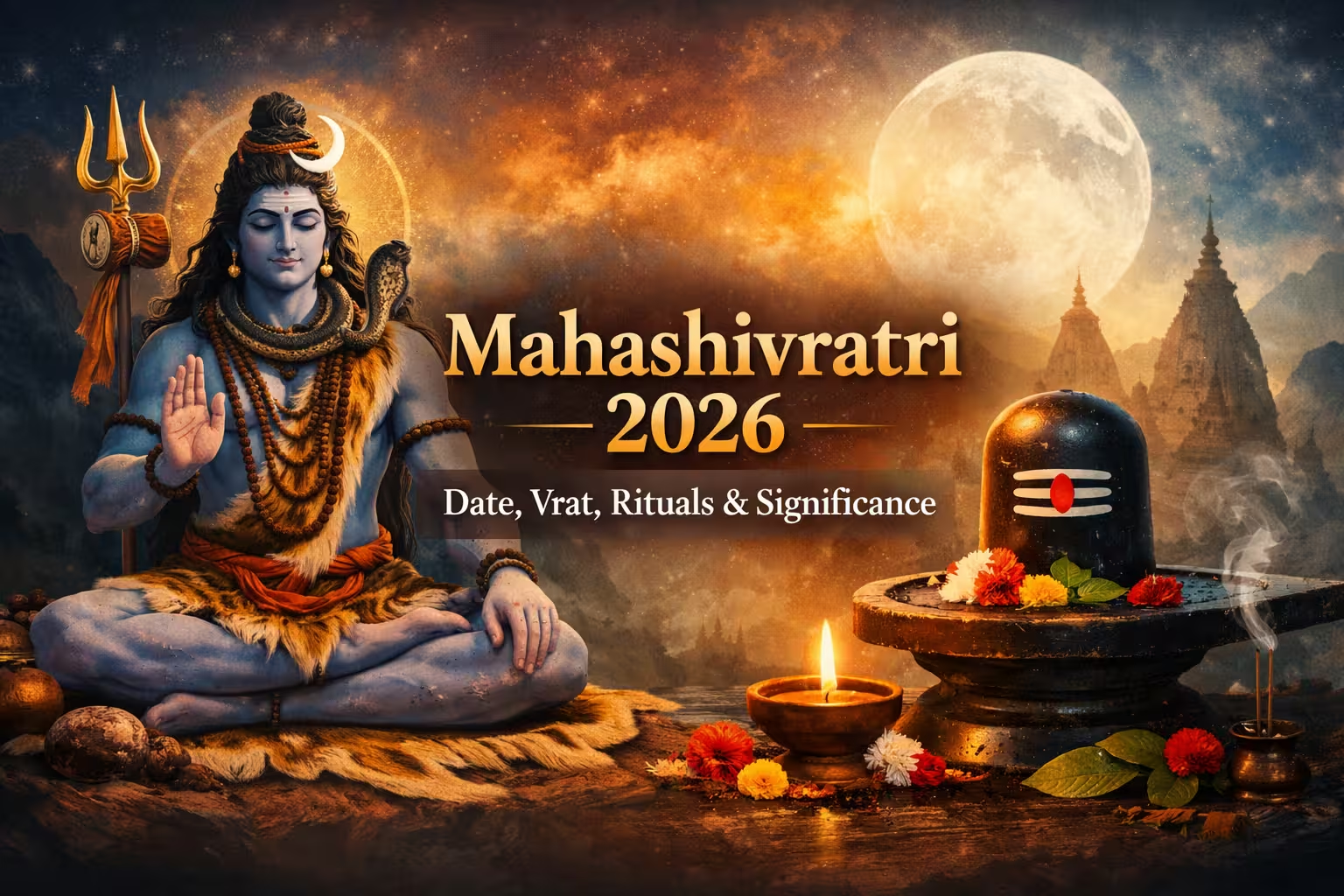
Mahashivratri 2026 Date
- Calendar date (commonly observed): 15 February 2026 (Sunday) — Mahashivratri falls on the Chaturdashi tithi of Krishna Paksha in Phalguna.
- Why confusion occurs: Because the lunar tithi may start on one civil day and end on the next, some panchangs show parts of Chaturdashi on 15–16 February. For correct observance, many pandits advise checking whether Nishita Kaal (the midnight/late-night period) falls within Chaturdashi — if yes, that night is the Mahashivratri night to observe.
Practical rule for devotees: Follow the local panchang or trusted temple authority. If Nishita Kaal of Chaturdashi lies in the late-night hours (midnight), offer the main puja then. If using a generic guideline, observe the main puja on the night of 15 February, giving special emphasis to the midnight (Nishita) worship.
Important Timings
Timings differ slightly by location. Below are indicative muhurats reported for 2026 — confirm with your local panchang for exact minutes.
- Chaturdashi begins: 15 February 2026 (evening, according to Drik panchang ranges).
- Four Prahars for pooja:
- First prahar: evening to late-evening (approx. 18:11–21:23 on 15 Feb)
- Second prahar: late-evening to midnight (approx. 21:23–00:36)
- Third prahar: midnight (Nishita begins) to early morning (approx. 00:36–03:47)
- Fourth prahar: early morning (approx. 03:47–06:59 on 16 Feb)
- Nishita Kaal (most auspicious for Shiva puja): around midnight — devotees commonly observe puja between ~12:00 AM and 1:00 AM when possible.
- Parana (breaking the fast): Preferably after sunrise of the following day and before Chaturdashi ends; exact parana window differs by panchang and location.
Why Mahashivratri is celebrated
- Divine union: Celebrates the cosmic union of Shiva and Shakti (Shiva-Parvati), symbolizing balance and creation.
- Overcoming darkness: Spiritually Mahashivratri represents the overcoming of ignorance and the awakening of consciousness.
- Penance & liberation: It is a night for introspection, meditation, austerity and seeking moksha (liberation) through devotion.
Mahashivratri Vrat
- Who can observe: Anyone — men, women, students, householders and sadhakas. Fasting is recommended but not compulsory.
- Types of vrat: Full day strict fast (no food, sometimes water), partial fast (fruits and milk), or nirjal vrat (no water) practiced by some.
Step-by-step Vrat Vidhi
- Preparation (daytime): Clean home and puja area. Keep Shiva-linga or picture ready, flowers (especially bilva/bel leaves), fresh water, milk, honey, yogurt, ghee, and incense.
- Morning: Take a light satvik meal if you are not observing nirjal fast. Otherwise, begin the day with meditation and chanting.
- Evening: Perform aarti and light lamp. Begin the four-prahar puja cycle if possible.
- Midnight Puja (Nishita): Offer abhishek (milk, water, honey), bilva leaves, flowers; chant Om Namah Shivaya and the Maha Mrityunjaya or Shiva Gayatri mantras if learned.
- Throughout the night: Recite Shiva stotras, read Shiva-related stories or Shiv Purana passages, meditate.
- Parana (breaking the fast): After sunrise or within the parana window specified by local panchang.
Important Mantras & Stotras
- Om Namah Shivaya (simple, powerful)
- Maha Mrityunjaya Mantra — for health & protection
- Shiva Chalisa or Rudram (Namakam Chamakam) for advanced recitation
Do’s and Don’ts
Do’s: Keep the night awake in prayer; offer bel leaves and water; maintain sattvic food if eating; chant and meditate. Visit a Shiva temple for darshan if possible.
Don’ts: Avoid non-vegetarian food, alcohol, arguments, and unnecessary travel during the vrat. Avoid sleeping lightly during the night if you can keep vigil.
FAQs
Q: When is Mahashivratri 2026? A: Observed on 15 February 2026 (Chaturdashi of Krishna Paksha), with main night puja around midnight.
Q: When should I break the fast? A: Parana preferably after sunrise on 16 Feb or within your panchang’s specified parana window.
Q: Is fasting mandatory? A: No — it is recommended for spiritual focus, but one may observe as per capacity.
Mahashivratri is a powerful opportunity for spiritual renewal. Follow local panchang for exact muhurats, perform the puja with devotion, and share this guide with family and friends preparing for Mahashivratri 2026.
महाशिवरात्रि 2026: तिथि, शुभ मुहूर्त, व्रत विधि और आध्यात्मिक महत्व