Category: Goddesses and Gods

Welcome to our dedicated Goddesses and Gods category. Here, you will find detailed, factual, and authentic information about the major deities of Hinduism. Rather than mythological stories, this section is focused on providing clear knowledge about the divine. In this category, you will explore:

  • Introduction & Forms: A comprehensive introduction to various Goddesses and Gods, their different avatars, and the profound meaning behind their physical forms, weapons, and symbolism.

  • Spiritual Significance: Their sacred position in Hinduism, their unique divine powers, and the specific importance of worshipping them.

  • Important Mantras: The most essential and powerful root mantras (Mool Mantras) used for the invocation and daily worship of these deities.

  • Devotional Images: Beautiful, high-quality HD images and artwork of the deities for your reference and daily devotion.

If you are looking for clear, accurate, and complete information about the divine forms, browse our collection of well-researched articles below.

  • Lord Ram: The Ideal Avatar

    Lord Ram: The Ideal Avatar

    Lord Ram, also known as Shri Rama, is one of the most widely worshipped deities in Hinduism. Revered as the seventh incarnation (avatar) of Lord Vishnu, he is the central figure of the great Hindu epic, the Ramayana. For millions of devotees, Lord Ram is not just a mythological king but the ultimate embodiment of truth, morality, and the ideal way of living. He is celebrated as Maryada Purushottamโ€”the perfect man or the lord of self-control and virtue. His life story serves as a timeless guide on how to uphold Dharma (righteousness) in the face of immense adversity, making his legacy foundational to Hindu philosophy and culture.

    Origin and Birth Story

    The story of Lord Ram begins in the ancient city of Ayodhya, the capital of the Kosala Kingdom. The kingdom was ruled by the noble King Dasharatha, who had three wivesโ€”Kausalya, Kaikeyi, and Sumitraโ€”but no heir to the throne. To seek the blessings of the gods for a child, King Dasharatha performed the Putrakameshti Yajna (a sacred fire ritual) under the guidance of Sage Rishyasringa.
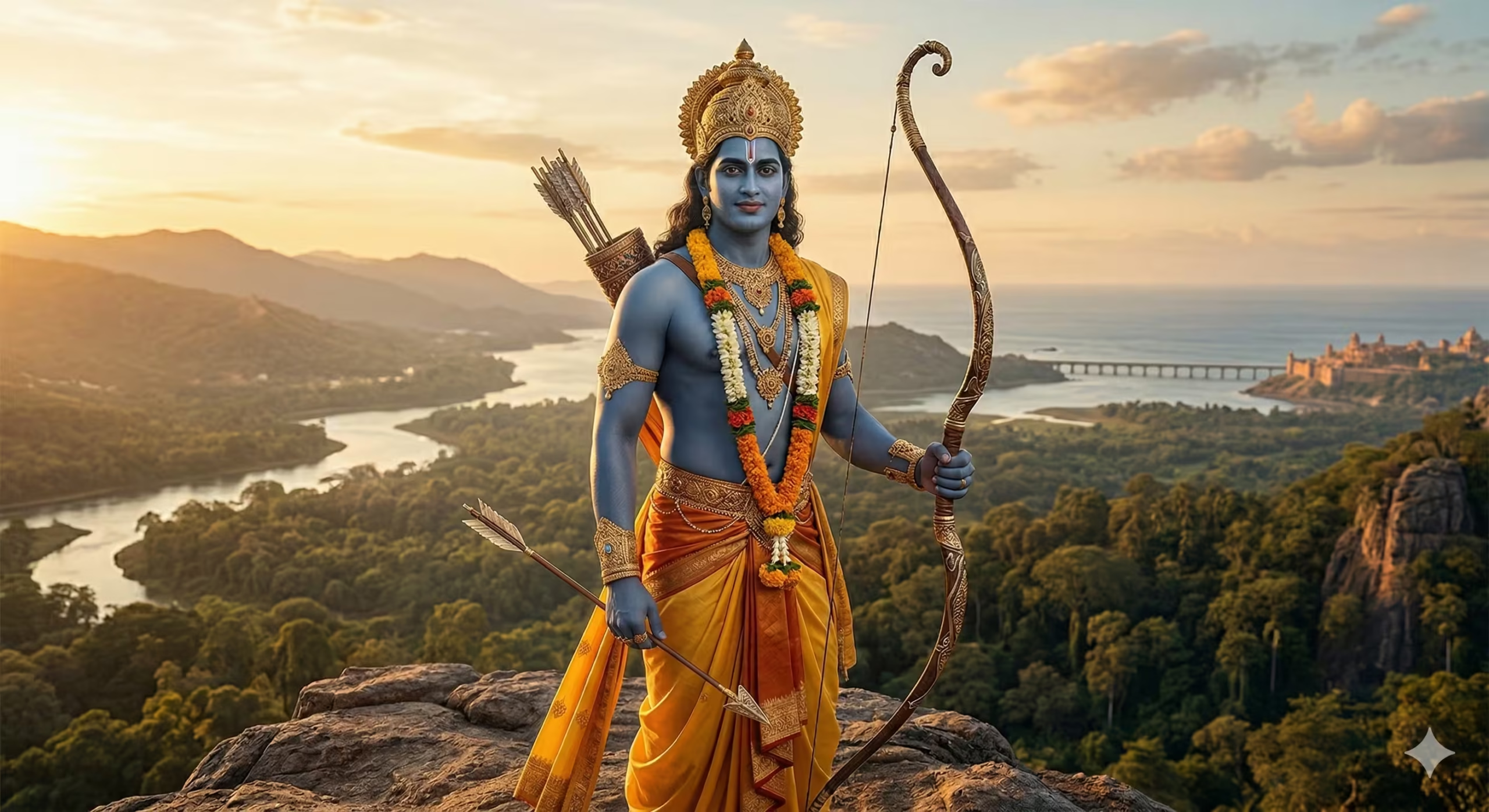
    A detailed portrait of blue-skinned Hindu deity Lord Rama on a mountain peak with a bow and arrow, overlooking a valley.

    Pleased with the ritual, Agni, the god of fire, emerged from the sacrificial kunda offering a bowl of divine dessert (payasam). King Dasharatha distributed this among his wives. As a result, Queen Kausalya gave birth to Ram, Queen Kaikeyi to Bharata, and Queen Sumitra to the twins Lakshmana and Shatrughna.

    Lord Ram was born on the ninth day of the Hindu lunar month of Chaitra, a highly auspicious day that is globally celebrated by Hindus today as Ram Navami. From a young age, Ram displayed extraordinary valor, deep compassion, and a profound understanding of the scriptures, marking him as a divine child destined for greatness.

    Significance, Roles, and Powers

    Lord Ramโ€™s primary role in the cosmic order was to restore Dharma (cosmic balance and righteousness) during a time when the world was tormented by the invincible demon king, Ravana. Unlike other avatars who displayed overt divine miracles, Ram’s power lay in his unwavering adherence to human limitations, ethics, and duties.

    • Maryada Purushottam: Ram is the personification of strict adherence to rules and moral boundaries (maryada). He exemplifies the ideal son, the ideal brother, the ideal husband, the ideal friend, and the ideal king.
    • Ram Rajya: His reign over Ayodhya is referred to as Ram Rajya, a utopian concept of governance characterized by absolute justice, peace, equality, and prosperity. It remains the ultimate benchmark for political and social administration in Indian thought.
    • Destroyer of Evil: Though gentle by nature, Ram was a fiercely capable warrior. His power was not rooted in anger, but in the righteous necessity to protect the innocent and annihilate tyranny.

    Symbolism: Appearance, Weapons, and Attributes

    The iconography of Lord Ram is rich with spiritual symbolism, reflecting his divine nature and earthly mission.

    Appearance

    Lord Ram is typically depicted with a dark, bluish complexion (like a dark rain cloud). This blue skin represents his affinity with Lord Vishnu and symbolizes the infinite, akin to the boundless sky and the deep ocean. He is usually shown wearing yellow garments (Pitambara), symbolizing purity and auspiciousness, and adorned with princely jewelry, a floral garland, and a subtle, serene smile that indicates inner peace and supreme confidence.

    Weapons and Symbols

    • The Bow (Kodanda): Ram is almost always depicted holding a majestic bow in his left hand and an arrow in his right. The bow, known as Kodanda, symbolizes his readiness to defend the weak, uphold justice, and destroy evil.
    • The Quiver: He carries a quiver of arrows on his back, representing infinite resources and the ultimate truth that his actions always hit their righteous mark.

    Attributes

    Ram is uniquely characterized by his calmness. Even in moments of extreme betrayal (like his sudden exile) or profound grief (like the abduction of his wife), he maintains his composure, illustrating the spiritual ideal of emotional equilibrium (Sthitaprajna).

    Important Stories and Legends

    The life of Lord Ram is chronicled primarily in Valmikiโ€™s Ramayana and Tulsidas’s Ramcharitmanas. His journey is marked by several defining events:

    The Swayamvar of Sita

    Ram accompanied Sage Vishwamitra to the kingdom of Mithila, ruled by King Janaka. To win the hand of King Janaka’s daughter, Sita, a suitor had to lift and string the massive bow of Lord Shiva (Pinaka). Many mighty kings failed, but Ram not only lifted it with ease but broke it while stringing it, thus winning Sita as his eternal consort.

    The Fourteen-Year Exile (Vanavas)

    On the eve of Ramโ€™s coronation as the king of Ayodhya, his stepmother Kaikeyi, influenced by her maid Manthara, invoked two boons promised to her by King Dasharatha. She demanded that her son Bharata be crowned king and that Ram be exiled to the forest for fourteen years. To honor his father’s word, Ram accepted the exile without a moment’s hesitation. His devoted wife Sita and loyal brother Lakshmana insisted on accompanying him.

    The Abduction of Sita

    While living in the Dandaka forest, the demon king Ravana of Lanka used deceit to abduct Sita. He sent a magical golden deer to distract Ram and Lakshmana, allowing him to kidnap Sita and carry her off to his island kingdom.

    The Search and the Alliance

    Ramโ€™s grief-stricken search for Sita led him to Kishkindha, the kingdom of the Vanaras (monkey race). Here, he met his greatest devotee, Hanuman, and forged an alliance with the Vanara king, Sugriva. Hanuman leaped across the ocean, discovered Sita in Lanka, and brought back news to Ram.

    The Epic War and Return to Ayodhya

    With the help of the Vanara army, Ram built a bridge (Ram Setu) across the ocean to Lanka. A colossal war ensued, culminating in Ram defeating and killing Ravana, symbolizing the ultimate triumph of good over evil. After completing his fourteen-year exile, Ram returned to Ayodhya with Sita and Lakshmana. The citizens of Ayodhya welcomed them by lighting thousands of oil lamps, an event that gave birth to the festival of Diwali.

    Avatars, Forms, and Associated Deities

    Lord Ram does not exist in isolation in Hindu theology; he is part of a divine collective that represents different facets of the supreme reality.

    • Lord Vishnu: Ram is the seventh manifestation of the preserver god, Vishnu, descending to earth to restore cosmic order.
    • Goddess Sita: The eternal consort of Ram, Sita is an avatar of Goddess Lakshmi. She embodies devotion, purity, and the resilience of the earth (having been born from the earth itself).
    • Lakshmana, Bharata, and Shatrughna: Ramโ€™s brothers are also divine incarnations. Lakshmana is the avatar of Shesha Naga (the cosmic serpent on whom Vishnu rests), Bharata represents the Sudarshana Chakra (Vishnuโ€™s divine weapon), and Shatrughna embodies the Panchajanya (Vishnuโ€™s conch).
    • Lord Hanuman: The supreme devotee of Lord Ram, Hanuman is an avatar of Lord Shiva (Rudra) and the wind god (Vayu). He represents selfless service, strength, and unwavering devotion (Bhakti).
    • Luv and Kush: The twin sons of Ram and Sita, who grew up in Sage Valmiki’s ashram and later became the heirs to the Kosala Kingdom, propagating the story of the Ramayana.

    Major Temples

    The worship of Lord Ram is deeply entrenched in the geography of the Indian subcontinent. Several highly revered shrines are dedicated to him:

    • Ram Janmabhoomi Temple, Ayodhya (Uttar Pradesh): The most sacred site for Ram devotees, believed to be the exact birthplace of Lord Ram.
    • Ramanathaswamy Temple, Rameswaram (Tamil Nadu): A major pilgrimage site where Lord Ram is said to have worshipped Lord Shiva to absolve the sin of killing Ravana (a Brahmin). It is one of the Char Dham pilgrimage destinations.
    • Sita Ramachandraswamy Temple, Bhadrachalam (Telangana): Often referred to as the “Ayodhya of the South,” this temple on the banks of the Godavari River is famous for its intricate architecture and spiritual significance.
    • Kalaram Temple, Nashik (Maharashtra): Situated in the Panchavati area where Ram, Sita, and Lakshmana spent a significant portion of their exile, this temple houses a unique black stone idol of Lord Ram.

    Festivals and Worship Practices

    The adoration of Lord Ram permeates daily Hindu life, reaching its peak during several major annual festivals.

    • Ram Navami: Celebrated in the spring month of Chaitra, this festival marks the birth of Lord Ram. Devotees observe fasts, sing devotional songs (bhajans), and perform special pujas.
    • Diwali (Deepavali): The festival of lights commemorates the return of Lord Ram, Sita, and Lakshmana to Ayodhya after 14 years of exile and the defeat of Ravana. Houses are decorated with earthen lamps (diyas) to symbolize the victory of light over darkness.
    • Dussehra (Vijayadashami): This festival falls immediately after Navaratri and celebrates Ram’s victory over the demon king Ravana. Effigies of Ravana, his brother Kumbhakarna, and son Meghanada are burnt to signify the destruction of evil.
    • Reading the Epics: A common worship practice is the continuous recitation (Akhand Paath) of the Ramcharitmanas by Tulsidas or Valmiki’s Ramayana.
    • Chanting the Taraka Mantra: The simple chanting of the name “Ram” (known as the Taraka Mantra) is considered one of the most powerful spiritual practices in Hinduism, believed to liberate the soul from the cycle of birth and death.
  • Ekvira Devi: The Divine Mother, Protector, and Kuldevi of Maharashtra

    Ekvira Devi: The Divine Mother, Protector, and Kuldevi of Maharashtra

    Goddess Ekvira, affectionately revered as Ekvira Aai (Mother Ekvira), is a highly venerated Hindu deity, particularly in the western Indian state of Maharashtra. Widely recognized as an incarnation of Goddess Renukaโ€”the mother of Lord Parashurama (the sixth avatar of Lord Vishnu)โ€”Ekvira Devi occupies a central place in Maharashtrian folk and Vedic traditions.

    She is predominantly worshipped as the Kuldaivat (family deity) by several indigenous and historical communities, most notably the Koli (fisherfolk), Agri, and Chandraseniya Kayastha Prabhu (CKP) communities. For her devotees, Ekvira Devi is not just a mythological figure but a living, breathing mother who fiercely protects her children, blesses them with prosperity, and guides them safely through the turbulent waters of life.

    The Origin and Birth Story of Ekvira Devi

    The origin of Ekvira Devi is intrinsically linked to the ancient Puranic legends of Goddess Renuka and Sage Jamadagni. According to Hindu mythology, Renuka was the devoted wife of the great sage Jamadagni and the mother of five sons, the youngest being Lord Parashurama.

    Renuka possessed immense spiritual power derived from her unwavering chastity and devotion to her husband, which allowed her to fetch water from the river in unbaked clay pots. However, one day, while observing a celestial being (Gandharva), she experienced a momentary lapse in her focus. Losing her spiritual power, the unbaked pot dissolved in the river. Enraged by this slight deviation, the quick-tempered Sage Jamadagni ordered his sons to behead their mother. While the elder sons refused, Parashurama, bound by filial duty, obeyed and severed her head.

    Pleased with Parashuramaโ€™s obedience, Jamadagni granted him a boon. Parashurama immediately asked for his mother’s life to be restored. Through divine intervention and the sage’s powers, Renuka was resurrected. In regional folklore, it is believed that during this resurrection, Goddess Renuka manifested in various divine forms across India to bless her devotees. Ekvira Devi is celebrated as one of these potent and primary manifestations of Goddess Renuka, embodying her eternal motherly love and fierce protective energy.

    Significance, Roles, and Powers

    Ekvira Devi holds immense sociological and spiritual significance. Her roles and powers are multifaceted, catering to the diverse needs of the communities that worship her:

    • Protector of the Seas: For the Koli community, whose livelihoods depend entirely on the unpredictable Arabian Sea, Ekvira Devi is the ultimate protector. She is believed to calm the storms, ensure a bountiful catch, and guide the fishermen safely back to the shores.
    • Bestower of Fertility and Prosperity: Ekvira Devi is revered as a symbol of cosmic fertility. Newlyweds and childless couples frequently visit her shrines to seek blessings for healthy progeny and domestic harmony.
    • Remover of Obstacles: Known for her fierce yet compassionate nature, devotees pray to Ekvira Aai to ward off evil eyes, cure illnesses, and remove insurmountable obstacles from their personal and professional lives.

    Symbolism: Appearance, Weapons, and Attributes

    The iconography of Ekvira Devi is rich in symbolism, reflecting her dual nature as a nurturing mother and a fierce warrior against evil.

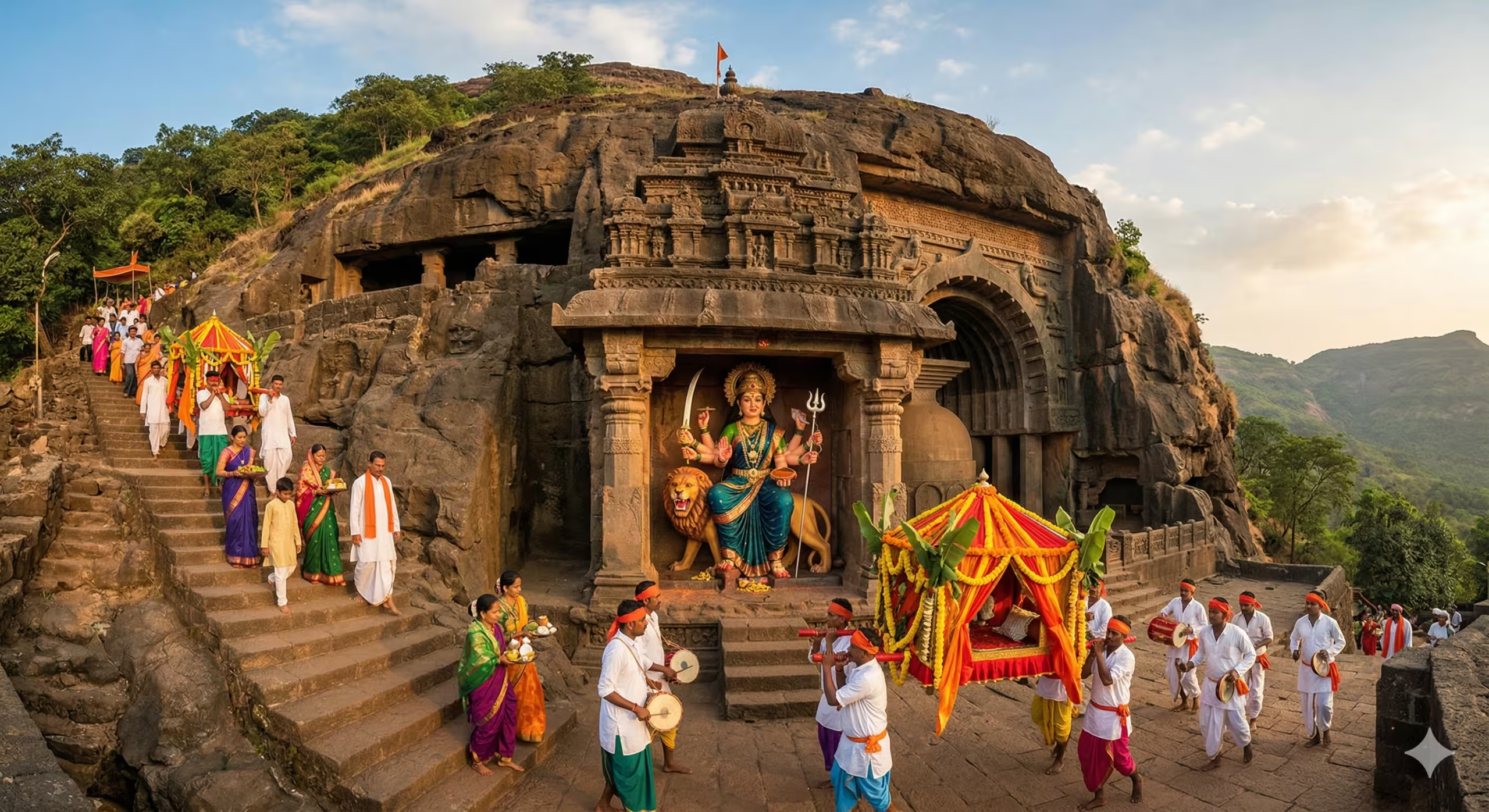
    • Appearance: In her primary sanctums, she is often represented by a radiant, self-manifested (Swayambhu) stone mask or mukhavata adorned with a prominent nose ring (nath), expressive eyes, and bright vermilion (sindoor) and turmeric (haldi). When depicted in full form, she is shown as a beautiful, commanding goddess draped in a traditional Maharashtrian Navvari (nine-yard) saree.
    • Weapons: She is typically visualized with four arms (Chaturbhuja). She holds a sword (Khadga) representing the severance of ego and ignorance, a trident (Trishul) symbolizing control over the three realms (physical, mental, and spiritual), a drum (Damaru) signifying the cosmic sound of creation, and a bowl or lotus representing nourishment and purity.
    • Vehicle (Vahana): Ekvira Devi rides a lion, which symbolizes raw power, courage, and sovereignty. The lion represents her mastery over animalistic instincts and her readiness to fiercely defend dharma (righteousness).

    Legends and Stories Associated with Ekvira Devi

    The Pandavas and the Karla Caves

    The most famous legend associated with Ekvira Devi intertwines with the epic Mahabharata. During their harsh Vanavasa (forest exile), the five Pandava brothers, along with their wife Draupadi, wandered into the dense forests of the Sahyadri mountains. Seeking a safe haven, they prayed to Goddess Ekvira.

    Pleased with their devotion, the Goddess appeared before them. She instructed the Pandavas to carve a magnificent shrine out of the rocky mountainside, but laid down a divine condition: the entire temple complex had to be built overnight, before the break of dawn. Empowered by the Goddess’s blessings, the Pandavas worked with superhuman speed and carved the breathtaking Karla Caves. In return for their monumental effort, Ekvira Devi granted them a boon of protection, ensuring that their true identities would remain entirely concealed during their impending Agyatavasa (the final year of living incognito).

    Associated Deities and Forms

    Ekvira Devi does not exist in theological isolation. She is part of a broader network of deities and divine forms, structured hierarchically in regional worship:

    1. Goddess Renuka (The Supreme Form)

    Ekvira is fundamentally an avatar of Renuka. While Ekvira is the localized, accessible form worshipped in Maharashtra, Renuka is the universal mother figure in the broader Puranic text. The Mahur temple in Maharashtra is dedicated directly to Renuka Mata.

    2. Lord Parashurama (The Divine Son)

    As the son of Renuka, Parashurama is intrinsically linked to Ekvira Devi. In many folk traditions, honoring the mother also involves invoking the blessings of her warrior-sage son, who is revered for ridding the earth of tyrannical rulers.

    3. Goddess Yellamma (The Southern Counterpart)

    In the neighboring states of Karnataka, Telangana, and Andhra Pradesh, the same divine energy of Renuka is worshipped as Goddess Yellamma. The mythologies of Ekvira and Yellamma share striking parallels, both representing the rural, earthy manifestations of the divine feminine.

    4. Lord Shiva / Bhairava (The Guardian)

    In traditional Maharashtrian goddess worship, the divine mother is often accompanied by a fierce guardian deity. Lord Shiva, often in his localized forms like Jyotiba or Khandoba, is worshipped as a protector of the Goddess’s realm.

    Major Temples, Festivals, and Worship Practices

    The Karla Caves Temple

    The spiritual epicenter of Ekvira Devi worship is her ancient temple located just outside the Karla Caves near Lonavala, Maharashtra. Situated high on a hill, devotees must climb hundreds of steep steps to reach the main shrine. The temple uniquely stands right next to a massive, ancient Buddhist Chaitya (prayer hall), showcasing a beautiful syncretism of India’s historical religious traditions.

    Festivals and Celebrations

    The atmosphere around the Ekvira Devi temple becomes highly electrifying during her major festivals:

    • Chaitra Navratri (Spring Navratri): This is the grandest festival for Ekvira Devi. Millions of devotees converge at the Lonavala temple. The Koli community arrives in large, colorful processions.
    • Ashwin Navratri (Autumn Navratri): The traditional nine nights of Goddess worship are celebrated with elaborate rituals, Ghatasthapana (installation of the sacred pot), and continuous chanting.

    Worship Practices and Rituals

    The worship of Ekvira Aai is characterized by deep emotional fervor and traditional folk practices.

    • The Koli Dance: Fisherfolk dress in their traditional, vibrant attire and perform the energetic Koli dance to the beats of the dhol (drums) as an offering of joy to the Mother Goddess.
    • Palkhi (Palanquin) Processions: Devotees carry beautifully decorated palanquins housing the Goddessโ€™s symbolic representations from their coastal villages all the way up the hill to the Karla temple.
    • Offerings: Traditional offerings include Puran Poli (a sweet flatbread), coconuts, flower garlands (especially jasmine and marigold), and turmeric. In certain localized folk traditions practiced outside the main Vedic sanctum, symbolic sacrifices or specific regional delicacies are also offered to appease her fierce aspect.
  • Lord Brahma: The Creator of the Universe in Hinduism

    Lord Brahma: The Creator of the Universe in Hinduism

    In the vast and intricate pantheon of Hinduism, the cosmos is governed by the Trimurti (the Hindu Trinity), which represents the three fundamental forces of the universe: creation, preservation, and destruction. At the helm of creation is Lord Brahma, the architect of the cosmos and all living beings.

    While he is one of the most prominent deities in Hindu scriptures, Lord Brahma occupies a unique and somewhat paradoxical position. Despite his supreme role as the creator, he has very few temples dedicated to him. To truly understand Hindu cosmology, one must explore the origins, symbolism, and profound legends associated with Lord Brahma.

    Origin and Birth Story of Lord Brahma

    The origins of Lord Brahma are described in various Hindu scriptures, primarily the Puranas and the Upanishads, which offer deeply philosophical and symbolic accounts of his birth.

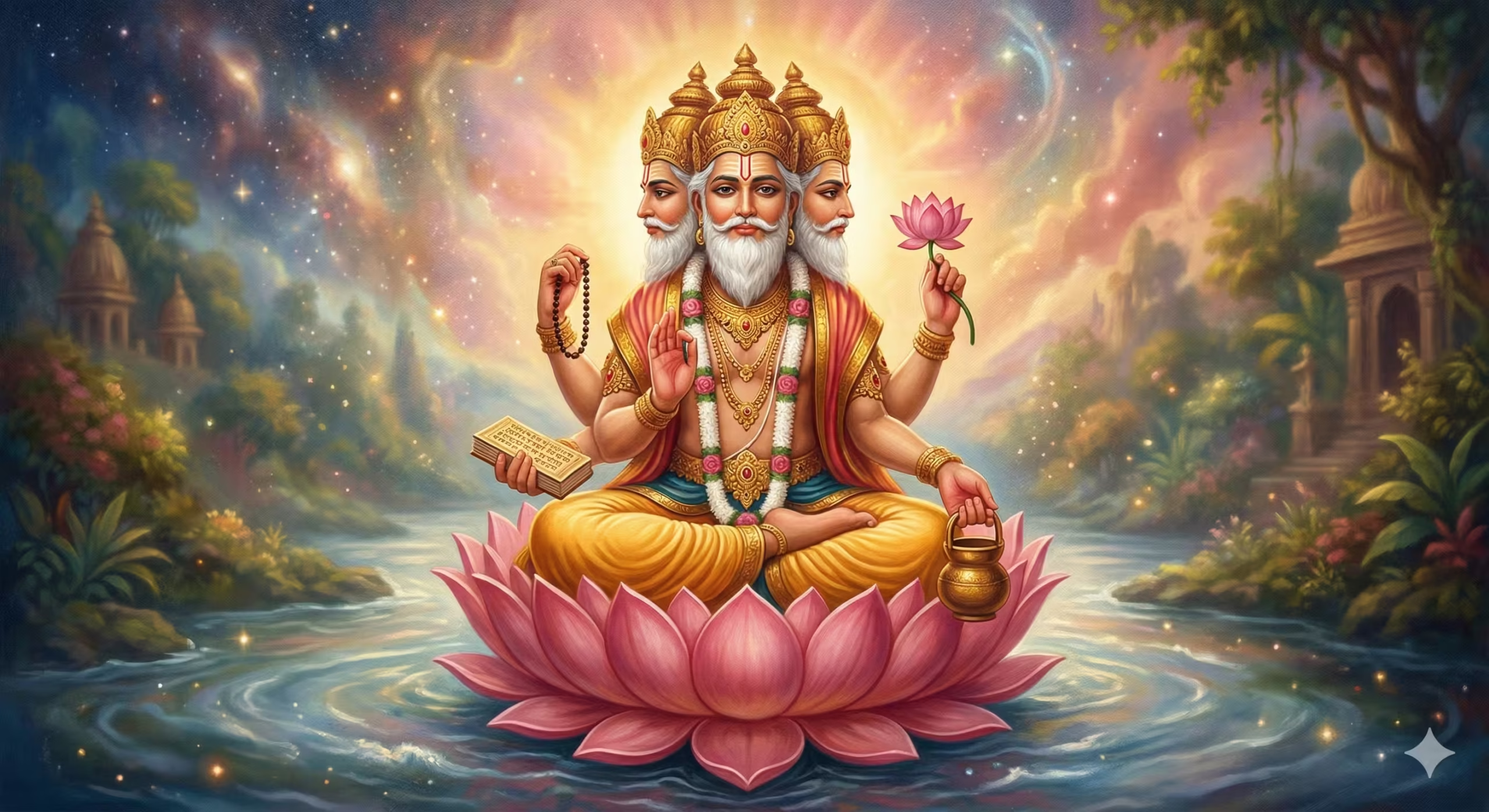
    • The Lotus Origin (Padmaja): According to Vaishnava Puranas, before the creation of the universe, Lord Vishnu was resting on the great serpent Ananta Shesha in the cosmic ocean (Kshira Sagara). From Vishnu’s navel, a magnificent lotus flower emerged. Seated at the center of this blooming lotus was Lord Brahma. Due to this origin, he is often referred to as Padmaja (the lotus-born) or Nabhija (born from the navel).
    Detailed painting of Lord Brahma with four faces and multiple arms, sitting on a large pink lotus on water, holding a Veda, prayer beads, and a water pot against a mystical cosmic landscape with temples.
    • The Golden Egg (Hiranyagarbha): The Vedas and Manu Smriti offer a different perspective. They state that the supreme, unmanifested reality placed a seed in the cosmic waters. This seed turned into a brilliant golden egg known as Hiranyagarbha. After residing in this egg for a divine year, Brahma expanded it into two halves, creating the heavens and the earth, effectively birthing himself as Swayambhu (the self-born).

    Significance in Hinduism

    Lord Brahmaโ€™s primary significance lies in his role as the initiator of the cycle of life. If Lord Vishnu is the preserver who maintains cosmic order, and Lord Shiva is the destroyer who paves the way for renewal, Lord Brahma is the visionary who brings form to the unmanifested. He represents the physical universe, intellect, and the creative power of the mind. Furthermore, he is revered as the ultimate source of all spiritual and secular knowledge.

    Roles and Powers

    As the creator, Lord Brahma possesses distinct roles and immense cosmic powers that govern the functioning of the universe:

    • Creation of Life and Matter: Brahma is responsible for crafting all forms of life, from the highest celestial beings to the smallest insects, as well as the physical matter of the universe.
    • Source of the Vedas: He is considered the author and revealer of the four Vedas (Rigveda, Yajurveda, Samaveda, and Atharvaveda), which contain the supreme knowledge of the universe.
    • Keeper of Cosmic Time: In Hindu cosmology, time is cyclical, and its scale is intimately tied to Lord Brahma. A single day in the life of Brahma is called a Kalpa, which equals 4.32 billion human years. During his day, the universe exists, and during his night, it is absorbed back into a state of rest (partial dissolution). His full lifespan is said to be 100 “Brahma years,” after which the entire universe is dissolved (Maha Pralaya), and a new Brahma is born.

    Symbolism and Iconography

    Hindu deities are highly symbolic, and every aspect of Lord Brahmaโ€™s appearance carries profound philosophical meaning. He is traditionally depicted as an elderly man with a red or golden complexion, symbolizing his eternal wisdom and the fiery energy of creation.

    The Four Heads

    Lord Brahma originally had five heads, but is now universally depicted with four. These four heads represent:

    • The four Vedas (Rig, Yajur, Sama, Atharva).
    • The four Yugas (epochs) of cosmic time.
    • The four Varnas (social orders).
    • The four cardinal directions, signifying that his creative vision encompasses the entire universe.

    The Four Arms and Weapons

    Unlike other major deities, Brahma does not carry weapons of war. His four arms represent the four aspects of human personality: the mind (Manas), the intellect (Buddhi), the ego (Ahamkara), and the conditioned consciousness (Chitta). In his hands, he holds:

    1. The Vedas: Symbolizing knowledge and intellect as the foundation of creation.
    2. A Japa Mala (Rosary): Made of Rudraksha beads, representing the spiritual dimension of time, focus, and meditation.
    3. A Kamandalu (Water Pot): Containing the cosmic water, ether, or the primeval soup from which all creation springs.
    4. A Lotus Flower: Representing nature, living reality, and the supreme truth unfolding.

    The Vehicle (Vahana): The Hamsa

    Lord Brahmaโ€™s mount is the Hamsa, a divine swan or goose. In Hindu symbolism, the swan represents grace and discernment. It is believed that a mythical swan possesses Neer-Ksheer Vivekaโ€”the ability to separate pure milk from a mixture of milk and water. This signifies that the creator, and by extension humanity, must possess the wisdom to distinguish between good and evil, truth and illusion.

    Important Stories and Legends

    The mythology surrounding Lord Brahma is rich with tales that explain his nature, his relationship with other gods, and his unique status in modern worship.

    Why is Lord Brahma Rarely Worshipped?

    Despite being the creator, Lord Brahma is notably absent from widespread domestic worship. Two primary legends explain this phenomenon:

    1. The Curse of Lord Shiva: According to the Shiva Purana, Brahma and Vishnu once argued over who was supreme. Suddenly, a towering, infinite pillar of fire (the Jyotirlinga) appeared between them. They agreed that whoever found the end of the pillar would be declared supreme. Vishnu took the form of a boar and dug downward, while Brahma took the form of a swan and flew upward. Neither could find the end. Vishnu honestly admitted defeat, but Brahma found a Ketaki flower falling from the top and convinced it to falsely testify that he had reached the summit. Enraged by this lie, Lord Shiva emerged from the pillar, cut off Brahma’s fifth head (which had uttered the lie), and cursed him that he would never be widely worshipped by humanity.
    2. The Curse of Goddess Saraswati: In another legend, Lord Brahma was preparing to conduct a grand Yagna (fire sacrifice) at Pushkar. The presence of his wife, Goddess Saraswati, was mandatory for the rituals. When she was delayed, an impatient Brahma married a local milkmaid, Gayatri, to complete the ceremony on time. Upon arriving and seeing another woman taking her rightful place, a furious Saraswati cursed Brahma, decreeing that he would only ever be worshipped in Pushkar.

    Associated Deities, Consorts, and Progeny

    Lord Brahmaโ€™s creative process involves various divine entities who assist in manifesting and populating the universe.

    Goddess Saraswati (The Consort)

    Goddess Saraswati is the divine consort of Lord Brahma. She is the goddess of wisdom, learning, music, and the arts. Her association with Brahma is deeply symbolic: to create the universe, Brahma requires intelligence and knowledge. Saraswati provides the divine wisdom necessary to execute the complex task of creation.

    The Mind-Born Sons (Manas Putras)

    Unlike Vishnu or Shiva, Brahma does not traditionally have earthly “avatars” or incarnations. Instead, he manifests his creative will through his progeny. By the sheer power of his mind, he created the Manas Putras (mind-born sons).

    • The Prajapatis: These are the patriarchs or the “lords of creatures” (including figures like Daksha, Bhrigu, and Marichi) tasked with populating the cosmos with gods, demons, humans, and animals.
    • The Four Kumaras: Sanaka, Sanandana, Sanatana, and Sanatkumara were created to assist in creation, but they refused to procreate, choosing instead a path of lifelong celibacy and spiritual devotion.
    • Narada Muni: The divine sage and messenger of the gods, known for his devotion to Lord Vishnu, was also born from the mind of Lord Brahma.

    Temples, Festivals, and Worship Practices

    Because of the mythological curses, dedicated temples to Lord Brahma are exceedingly rare, especially when compared to the thousands of shrines dedicated to Shiva, Vishnu, and various Goddesses.

    Major Temples

    • Brahma Temple, Pushkar (Rajasthan): This is the most famous and prominent Brahma temple in the world. Situated near the sacred Pushkar Lake, it dates back to the 14th century and remains the primary center of Brahma worship globally.
    • Asotra Brahma Temple (Rajasthan): Located in the Barmer district, this is another significant temple built in the 20th century.
    • Thirunavaya Navamukunda Temple (Kerala): While primarily a Vishnu temple, it holds significant importance for the rites performed for ancestors, where Lord Brahma, Vishnu, and Shiva are jointly honored.
    • Carambolim Brahma Temple (Goa): An ancient shrine housing an exquisite, intricately carved stone idol of Lord Brahma dating back to the Kadamba period.
    • Kumbakonam Brahma Temple (Tamil Nadu): Here, he is worshipped alongside Lord Vishnu and Lord Shiva, signifying his ongoing relevance in the holy triad.

    Festivals and Worship

    The most significant time for worshipping Lord Brahma is during Kartik Poornima, the full moon night in the Hindu month of Kartik (usually October/November). During this time, the world-famous Pushkar Fair takes place. Millions of pilgrims gather to take a holy dip in Pushkar Lake, which is believed to have been formed by a lotus dropped by Lord Brahma, and offer special prayers at his temple.

    While everyday devotion to him is rare, Lord Brahma is intrinsically invoked during almost all major Hindu rituals. During Yagnas (fire sacrifices) and Kumbhabhishekams (temple consecrations), a space is always reserved for Brahma, and specific Vedic chants are recited to seek his blessings for a successful outcome. He remains a foundational, respected, and indispensable pillar of Hindu theology and ritual practice.

  • Hindu Gods Goddesses and Their Avatars

    Hindu Gods Goddesses and Their Avatars

    Hinduism, one of the world’s oldest religions, features a vast and rich pantheon of deities. Rather than being strictly polytheistic, many Hindu traditions view these numerous Hindu god and goddesses as diverse manifestations of a single, formless Supreme Reality known as Brahman.

    This article provides a systematically organized guide to the major deities, their avatars, and associated forms, offering a clear understanding of the divine hierarchy in Hindu theology.

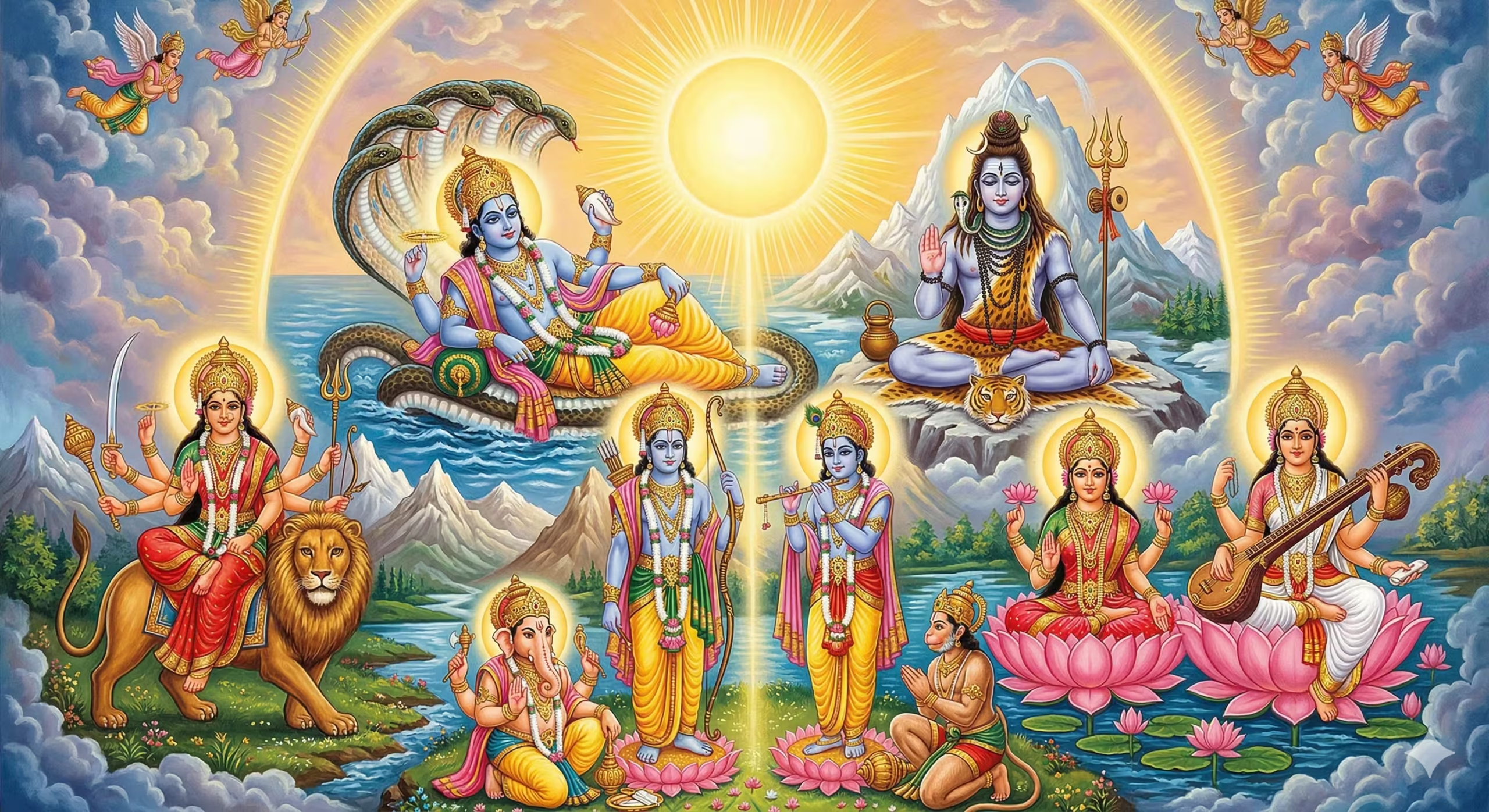
    A richly detailed traditional Hindu painting depicting Lord Vishnu reclining on Shesha, Lord Shiva meditating on a mountain, flanked by the ten avatars including Rama and Krishna, and goddesses Durga, Lakshmi, and Saraswati. Ganesha and Hanuman are in the foreground.

    1. The Supreme Reality: Brahman

    In Hindu philosophy, Brahman is the ultimate, formless, infinite, and eternal cosmic power that constitutes the fabric of the universe. Brahman is not a personified god but the underlying truth and soul of all existence. Every deity listed below is considered a physical manifestation or a specific aspect of this infinite Supreme Reality.

    2. The Trimurti: The Divine Trinity

    The Trimurti represents the three fundamental cosmic forces of the universe: creation, preservation, and destruction. These roles are personified by three major male deities.

    Lord Brahma: The Creator

    Lord Brahma is the creator of the universe and all living beings. He is traditionally depicted with four faces, representing the four Vedas, and sits on a lotus that emerges from Lord Vishnu’s navel. Despite his supreme role in creation, Brahma is rarely worshipped in daily rituals, with only a few dedicated temples existing in India, most notably in Pushkar.

    Lord Vishnu: The Preserver

    Lord Vishnu is the protector and preserver of the universe, tasked with maintaining cosmic order (Dharma). Whenever the world is threatened by chaos, evil, or demonic forces, Vishnu incarnates upon the earth in various forms (avatars) to restore peace.

    The Dashavatara (Ten Avatars of Lord Vishnu)

    1. Matsya (The Fish): The first avatar, who took the form of a giant fish to save the first man (Manu), the sages, and the sacred Vedas from a catastrophic cosmic flood.
    2. Kurma (The Tortoise): Vishnu took this form to support Mount Mandara on his shell during the Samudra Manthan (churning of the cosmic ocean), helping the gods obtain the nectar of immortality.
    3. Varaha (The Boar): When the demon Hiranyaksha dragged the earth (Bhudevi) to the bottom of the cosmic ocean, Vishnu appeared as a mighty boar to defeat the demon and rescue the planet on his tusks.
    4. Narasimha (The Half-Man, Half-Lion): This fierce avatar was assumed to bypass a complex boon of invincibility held by the demon king Hiranyakashipu, slaying him to protect the young devotee Prahlada.
    5. Vamana (The Dwarf): Appearing as a dwarf Brahmin, Vishnu tricked the arrogant demon king Bali into granting him three paces of land, subsequently expanding to cosmic proportions to reclaim the three worlds.
    6. Parashurama (The Warrior with an Axe): A fierce sage-warrior who incarnated to rid the earth of corrupt and tyrannical Kshatriya (warrior) kings who were abusing their immense power and harming the innocent.
    7. Lord Rama: The noble prince of Ayodhya and the hero of the epic Ramayana. He embodies the ideal man, husband, and king, famously defeating the demon king Ravana to rescue his wife, Sita.
    8. Lord Krishna: The charismatic deity of the epic Mahabharata and speaker of the Bhagavad Gita. He is revered as a supreme statesman, a divine lover, and the destroyer of the tyrannical King Kamsa.
    9. Gautama Buddha: In many later Vaishnava traditions, Buddha is recognized as the ninth avatar, incarnating to promote non-violence (Ahimsa) and to steer people away from excessive ritualistic sacrifices. (Note: Some regional traditions list Balarama, Krishna’s brother, as the eighth or ninth avatar).
    10. Kalki (The Future Avatar): The prophesied final incarnation who is expected to appear at the end of the current age (Kali Yuga). Riding a white horse and wielding a blazing sword, Kalki will destroy all evil and usher in a new era of purity.

    Lord Shiva: The Destroyer and Transformer

    Lord Shiva is the dynamic force of destruction, which in Hinduism is viewed as a necessary precursor to recreation and transformation. He is a complex deityโ€”both a supreme ascetic meditating on Mount Kailash and a fierce warrior. He is commonly worshipped in the abstract form of the Shiva Linga.

    Associated Deities and Incarnations of Lord Shiva

    • Lord Hanuman: Widely revered as an incarnation (or partial incarnation) of Lord Shiva’s divine energy (Rudra). Hanuman is the ultimate symbol of strength, perseverance, and selfless devotion, renowned for his crucial role in aiding Lord Rama in the Ramayana.
    • Nataraja: This is Lord Shiva in his form as the cosmic dancer. His dance, the Tandava, represents the rhythmic cycle of creation, preservation, and destruction of the universe.
    • Bhairava: A fierce, terrifying manifestation of Shiva associated with annihilation. He is often depicted guarding Hindu temples and is worshipped for protection against enemies and supreme fears.

    3. The Tridevi: The Divine Goddesses

    Just as the Trimurti governs the cosmic functions, the Tridevi consists of three supreme goddesses who represent the vital energies (Shakti) required by the male deities to perform their cosmic duties.

    Goddess Saraswati

    The goddess of knowledge, music, arts, wisdom, and learning. She is the divine consort of Lord Brahma and is depicted playing the Veena (a musical instrument) while dressed in pure white, symbolizing absolute purity and the light of true knowledge.

    Goddess Lakshmi

    The goddess of wealth, fortune, prosperity, and beauty. As the consort of Lord Vishnu, she provides the abundance necessary to sustain the universe. She is famously known to incarnate alongside Vishnu whenever he descends to earth.

    Avatars and Forms of Goddess Lakshmi

    • Goddess Sita: The consort of Lord Rama and the central female figure of the Ramayana. She represents extreme devotion, purity, self-sacrifice, and courage in the face of immense adversity.
    • Goddess Radha: The eternal consort and greatest devotee of Lord Krishna in his youth. The relationship between Radha and Krishna represents the highest form of spiritual love and the soul’s longing for the divine.
    • Goddess Rukmini: The principal wife and queen of Lord Krishna in the kingdom of Dwarka. She is revered as a direct incarnation of Lakshmi, embodying elegance, duty, and royal grace.
    • Ashtalakshmi: The eight secondary manifestations of Goddess Lakshmi, each presiding over a specific source of wealth, such as agriculture, courage, progeny, victory, and knowledge.

    Goddess Parvati / Shakti

    The goddess of power, love, and spiritual fulfillment. She is the consort of Lord Shiva and the mother of Ganesha and Kartikeya. Parvati is the gentle aspect of Mahadevi (the Great Goddess), but she can take on terrifying forms to destroy evil.

    Fierce Forms of Parvati (Shakti)

    • Goddess Durga: A warrior goddess created by the combined anger of all the gods to slay the invincible buffalo demon, Mahishasura. She rides a lion or tiger and wields multiple weapons in her many arms.
    • Goddess Kali: The most fearsome manifestation of cosmic power and time. She destroys ignorance and ultimate evil, often depicted with a dark complexion, a garland of skulls, and a fiercely protruding tongue.
    • Goddess Sati: The first incarnation of Shiva’s consort. She famously self-immolated in a sacrificial fire to protest her father’s profound disrespect toward Lord Shiva, leading to Shiva’s world-shattering grief.

    4. Other Major Deities

    Lord Ganesha

    The elephant-headed son of Lord Shiva and Goddess Parvati. Ganesha is universally worshipped as the remover of obstacles (Vighnaharta), the patron of arts and sciences, and the deity of intellect and wisdom. He is traditionally honored before any new venture or religious ceremony.

    Lord Kartikeya (Murugan)

    The elder brother of Ganesha and the son of Shiva and Parvati. Known as the God of War, he was born specifically to command the divine army of the gods and defeat the powerful demon Taraka. He is exceptionally popular in South India under the name Lord Murugan.

    5. The Vedic Deities (Dikpalas and Elements)

    These gods, prominent in the ancient Vedic texts, govern the forces of nature and the cardinal directions. While they are subordinate to the Trimurti in classical Hinduism, they hold crucial roles in maintaining the earthly realm.

    • Lord Indra: The king of the heavens (Swarga) and the leader of the Devas. He is the god of lightning, thunder, storms, and rain, wielding a mighty weapon known as the Vajra (thunderbolt).
    • Lord Agni: The god of fire and the acceptor of sacrifices. He acts as the essential messenger between humans and the gods, carrying the offerings made in fire rituals (Yajnas) to the heavens.
    • Lord Varuna: The god of the oceans, water, and the celestial law (Rita). He is a profound moral authority who oversees truth and justice, originally holding a supreme position in the early Vedic pantheon.
    • Lord Vayu: The god of the wind and the vital breath of life (Prana). He is celebrated for his incredible speed and power, and is acknowledged as the spiritual father of both Lord Hanuman and the mighty warrior Bhima.
    • Lord Surya: The Sun god, worshipped as the ultimate source of light, warmth, and life on earth. He is depicted riding a magnificent chariot driven by seven horses, which represent the colors of the rainbow or the days of the week.
    • Lord Yama: The god of death, dharma (justice), and the underworld. He is the first mortal who died and now acts as the impartial judge of departing souls, assigning them to heaven or hell based on their earthly karma.
    • Lord Chandra (Soma): The moon god, associated with the night, plants, and vegetation. In Vedic traditions, “Soma” also refers to the divine nectar of immortality that provides strength to the gods.

    6. Other Notable Divinities

    • Lord Kamadeva: The Hindu god of human love, desire, and passion. He famously wields a bow made of sugarcane with arrows made of fragrant flowers, and is comparable to the Western deity Cupid.
    • Lord Kubera: The god of wealth and the treasurer of the gods. A devout follower of Lord Shiva, he governs the distribution of riches and is the guardian of the northern direction.
    • Lord Vishwakarma: The divine architect, engineer, and craftsman of the gods. He is credited with designing the flying chariots (Vimanas) and forging the powerful weapons wielded by the principal deities.
    • Lord Dhanvantari: The god of Ayurvedic medicine and healing. He emerged from the churning of the cosmic ocean holding the pot of Amrita (the nectar of immortality) and is worshipped for good health and immunity.

    A Note on Lord Shiva’s Avatars

    Please note: While Lord Vishnu’s ten primary avatars (Dashavatara) are universally standardized, Lord Shiva’s incarnations and manifestations are vast and vary significantly across different ancient texts (Puranas). For the sake of brevity and clarity, this guide highlights only his most prominent and widely worshipped forms.

    Conclusion

    The Hindu pantheon is an intricately layered system where the singular ultimate reality (Brahman) expresses itself through numerous deities, each serving specific cosmic, natural, or moral functions. From the supreme Trimurti and Tridevi to their various earthly avatars and the elemental gods, this hierarchical structure reflects the rich, accommodating, and diverse spiritual tapestry of Hinduism.

  • Maharshi Valmiki: The Author of the Ramayana. Learn More About Him.

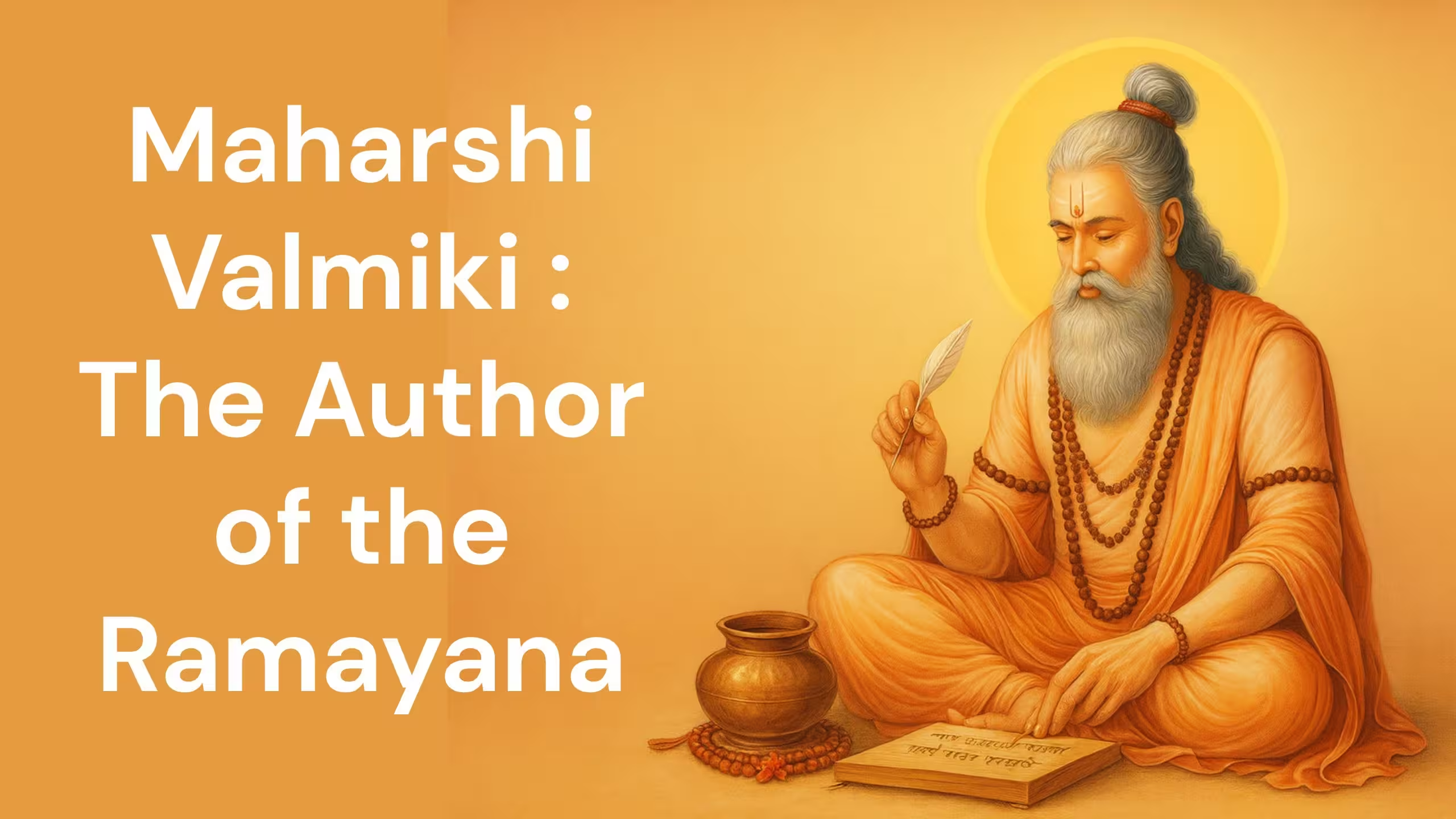
    Maharshi Valmiki: The Author of the Ramayana. Learn More About Him.

    Who is Maharshi Valmiki (Adi-Kavi) โ€” Purpose and Source-Scope

    In the Indian poetic tradition, Maharshi Valmiki is revered as the Adiโ€‘Kavi (the first poet). The aim of this lifeโ€‘sketch is to include only those episodes and narrative strands that are explicitly attested in the Puranic corpus itself; therefore, widely known folk legends, later traditional accretions, or modern imaginative reconstructions are intentionally excluded here. Specifically, the presentation is based on references available in the Skanda Purana, the Brahmanda Purana (particularly the Adhyatma Ramayana embedded within it), and the Vishnudharmottara Purana. In this sense, the lifeโ€‘account attempts not only devotion but sourceโ€‘awareness and textual fidelity, so that readers receive a Puranic, reliable, and SEOโ€‘friendly synthesis in one place.

    โ€œOnly Puranic Evidenceโ€: Clear Separation from Folklore

    Many popular folkโ€‘stories about Valmikiโ€”such as assorted versions of the banditโ€‘toโ€‘sage motif or anecdotes added by later Ramayana traditionsโ€”are widespread in Indian literature. However, this article admits only those facts that are directly mentioned in the Puranas. For example, various sections of the Skanda Purana discuss Valmikiโ€™s birth, conversion, the episode of Valmikaโ€‘udbhava (the emergence from an anthill after long meditation), the Valmikesvara linga in the Avanti region, and the progression from Ramaโ€‘name initiation to poetic perfection. Likewise, the Adhyatma Ramayana (traditionally regarded as embedded in the Brahmanda Purana) clearly narrates Sitaโ€™s refuge in Valmikiโ€™s hermitage, the upbringing of Lavaโ€‘Kusha, and their singing of the Ramakatha. By contrast, certain oftโ€‘repeated talesโ€”e.g., nudeโ€‘narrative motifs or late poetโ€‘loreโ€”if not Puranically attested, will be mentioned only for comparison, not treated as decisive history.

    Puranic Attestations: Where Valmiki is Mentioned

    The Skanda Purana mentions Valmiki in at least three prominent places: (1) the Vaishakhamasaโ€‘Mahatmya (within the Vishnu/Vaishnava section), which speaks of Ramaโ€‘name initiation and the seed of rebirth/nameโ€‘emergence; (2) the Avantikshetraโ€‘Mahatmya (Avantiโ€‘khanda), which extols the Valmikesvara linga in the Avanti region, recounts Valmikaโ€‘udbhava, and describes the fruitive promise related to poetic inspiration; and (3) the Nagaraโ€‘khanda (Tirthaโ€‘Mahatmya) chapter on Mukhara tirtha, where the narrative of the Brahmana Loharjangha and his conversion up to becoming Valmiki is presented clearly. The Adhyatma Ramayana (embedded in the Brahmanda Purana) contains the Sitaโ€‘refuge and Lavaโ€‘Kusha episodes. The Vishnudharmottara Purana mentions Valmikiโ€™s greatness in discussions on avataraโ€‘tattva and divine portions, which some traditions interpret as a Brahmaโ€‘portion (or other divine portion).

    Birth and Lineage โ€” Puranic Narratives

    Puranic accounts present Valmikiโ€™s manifestation in varied narrative frames, yet a consistent line emerges: his samskaraโ€‘identity is rooted in a Brahmana lineage. In the Avantikshetraโ€‘Mahatmya, we read of a Brahmana Sumati and his wife Kaushiki (of the Bhrigu tradition), whose son Agnisharma strays due to calamities such as famine/drought into a life entangled with brigands, and is eventually led to conversion by the Saptarishis. By contrast, in the Nagaraโ€‘khanda chapter on Mukhara tirtha, we encounter the story of a Brahmanaโ€™s son named Loharjanghaโ€”who, pressed by the dire need to support aged parents and his wife, inclines to theft, receives admonition from the Saptarishis (especially Pulaha), and after prolonged mantraโ€‘japa and meditation undergoes Valmikaโ€‘udbhava. Across these variant readings/adaptations, names such as Agnisharma/Loharjangha/Vaishakha, the Bhrigu lineage, and Brahmana birth appear at their respective places, indicating that in Puranic schools the Valmikiโ€‘charita traveled through multiple local and manuscript traditions.

    The Etymology of โ€œValmikiโ€ (Valmikaโ€‘udbhava)

    The name Valmiki is linked to valmikaโ€”an anthill. In the Avantikshetraโ€‘Mahatmya, after the Saptarishisโ€”especially Atriโ€”initiate Agnisharma into Ramaโ€‘name japa, he sits motionless for years in meditation; in that span, a vast anthill forms over him. When the rishis return and clear the anthill, the reborn ascetic becomes renowned as โ€œValmiki.โ€ The Nagaraโ€‘khandaโ€™s Loharjangha episode conveys the same motif strongly: during long japaโ€‘meditation an anthill encases him; when the sages split it and bring the ascetic out, they bless himโ€”โ€œSince you dwelt within a valmika, your name shall be Valmiki.โ€ This etymological framing unites the tapasโ€‘siddhi (accomplishment through austerity) and namaโ€‘sadhana (nameโ€‘meditation) that the Puranas foreground for the Adiโ€‘Kavi.

    Read Also: Maa Kushmanda โ€” A Puranic Lifeโ€‘Sketch (Hindi)

    Turning Away from Sin (Dialogue with the Saptarishis)

    In both Skandaโ€‘Puranic narrativesโ€”Avanti and Mukhara tirthaโ€”the Saptarishi dialogue becomes the crucial turning point. When Agnisharma or Loharjangha becomes entangled in adharmic acts due to livelihood pressures, the sages awaken his conscience with a pointed ethical question: โ€œIf you rob us of garments/wealth and thus incur sin, will your father, mother, wife, or son share your sin?โ€ Each of them answers plainly that karmic fruit accrues to the doer alone; they will not share the sin. This is a sharp assertion of the karmaโ€‘phala doctrine. Moved by this selfโ€‘realization, he asks for initiation, receives the Ramaโ€‘name, engages in unceasing japaโ€‘dhyana, abandons tamasic acts, and ultimately attains poetic perfection. Thus, with Puranic warrant, the conversion narrative also becomes a potent lesson in moral philosophy.

    The Glory of the Ramaโ€‘Name (Puranic)

    In the Vaishakhamasaโ€‘Mahatmya, the glory of the Ramaโ€‘name is portrayed as unparalleled: the narrative states that the merit of Vishnuโ€‘Sahasranama equals the fruit of chanting โ€œRama.โ€ Consequently, the Puranas explicitly commend namaโ€‘smarana (remembrance of the divine name) and exclusive japa as a path of sadhana. Therefore, in their initiatory counsel, the sages affirm that stable realization arises through Ramaโ€‘japa; over prolonged meditation, that japa becomes the seed of poetic inspiration, later blossoming as the Ramayana, the first of narrative poems.

    Poetic Attainment and the Composition of the Ramayana โ€” A Puranically Supported View

    The Avanti account adds a crucial thread: after conversion, Valmiki proceeds to Kushasthali, receives the grace of Maheshvara (Shiva), and there composes the Ramayana. The chapter itself declares that โ€œthis narrative poem, the Ramayana, is the first among storyโ€‘poems,โ€ providing a Puranic basis for Valmikiโ€™s title as Adiโ€‘Kavi. Thus, from Ramaโ€‘bhakti through namaโ€‘sadhana to kavitaโ€‘utpatti (the birth of poetry) and finally kavyaโ€‘srishti (poemโ€‘creation), the path aligns closely with the Skandaโ€‘Puranic portrayal.

    Valmikesvara and Related Tirthas

    In Avanti (Ujjayini), the Valmikesvara Shivaโ€‘linga is praised in the Skanda Purana. Its phalaโ€‘shruti (promised fruit) states that darshana and worship of this linga awaken poetic power. The narrative links Agnisharmaโ€™s (or, in other readings, Loharjangha/Vaishakhaโ€™s) conversion and Valmikaโ€‘udbhava up through poemโ€‘composition with this very tirtha. A parallel form occurs at Mukhara tirtha in the Nagaraโ€‘khanda, where the sagesโ€™ admonition, jataโ€‘ghota (a chant type akin to a sama/japa form), and prolonged austerity culminate in poetic genius. These tirthaโ€‘frames are not mere geographic markers; they assert that through the confluence of sacred place and nameโ€‘sadhana, genuine moralโ€‘spiritual transformation is possible.

    Ashram Life: Sitaโ€™s Refuge and the Upbringing of Lavaโ€“Kusha (Puranically Supported Ramayana Episodes)

    In the Uttarakanda of the Adhyatma Ramayana within the Brahmanda Purana, we find the renowned episode where Sita, owing to fear of public reproach in Ayodhya, is left in the forest and finds refuge in Maharshi Valmikiโ€™s ashram. There Lava and Kusha are born; the ashram becomes the center of their samskara, education, and ethical formation. With its Vaishnavaโ€‘spiritual perspective, the Adhyatmaโ€‘Ramayana interprets the story through bhakti and jnanaโ€”affirming Ramaโ€™s Parabrahman nature, the power of namaโ€‘smarana/shravana, and Sitaโ€™s pativrata purity. In this ashram setting, Lavaโ€‘Kusha receive not only doctrinal grounding in divine character but also a systematic initiation into poetic recitation and dharmaโ€‘education, later bearing fruit in Ramakathaโ€‘gana.

    Lavaโ€“Kusha and the Singing of the Ramakatha (Puranic Tradition)

    According to the Adhyatma Ramayana and related Puranically supported traditions, Lavaโ€“Kusha, under Valmikiโ€™s initiation, learn to recite/sing the Ramakatha. During the Ashvamedha sequences in Ayodhya, this public recitation attains special significanceโ€”its complete hearing leads to Ramaโ€™s transformation of heart and the recognition of his sons. Artistically, this reflects the Puranic traditionโ€™s emphasis on listening to sacred narrative as a form of worship and as a means to dharmaโ€‘insight and grace. Thus Valmiki stands not only as kaviโ€‘rishi but also as acharya, with Lavaโ€“Kusha carrying forward a living poetic lineage.

    Ethical Outlook and Teachings

    Four threads deserve emphasis in the Puranic episodes of Valmikiโ€™s life: tapas, namaโ€‘smarana, ahimsa/penitence, and the guruโ€‘shishya tradition. The Saptarishisโ€™ teaching on karmaโ€‘phala and the Ramaโ€‘name initiation together show that guileless remembrance and long austerity can lead a person out of the maze of sin. The prolonged, nearly motionless meditation during Valmikaโ€‘udbhava is portrayed as a form of interiorized religion. In both Avanti and Mukhara tirtha narratives, we encounter a practical ethic of ahimsa and prayaschitta: renouncing violenceโ€‘based brigandage, confessing fault, and transforming life through worship. Finally, the acharyaโ€‘paramparaโ€”with Valmiki as the guardianโ€‘teacher of Sita and the educator of Lavaโ€“Kushaโ€”affirm the lived and transmitted form of dharma.

    Valmiki and the Question of a Divine Portion/Avatar (Where Puranas Bear Witness)

    In the Vishnudharmottara Purana, amidst discussions of avataraโ€‘tattva and divine portions, Valmiki appears with a divine share. Some traditions interpret this as a Brahmaโ€‘portion, while other Vaishnava readings hint at a Bhagavadโ€‘portion/Vishnuโ€‘related manifestation. The variety shows how Upapurana traditions, lineages of teachers, and manuscript families produced differing expositions. The broad consensus remains: Valmiki is a divinely favored kaviโ€‘rishi, whose poetic creation is celebrated by Puranic authors as mahimagana (hymning of greatness).

    Poetic Style, Sense of Metre, and the Puranic View of the Ramayana

    Within the Puranic ambit, the Ramayana is seen as a narrative poem; the Avanti account labels it โ€œfirst among storyโ€‘poems.โ€ The Puranas do not delve into technical poetics (chandasโ€‘sutras, metrical gaNas, etc.) here; instead, they foreground auditory appeal and ethicalโ€‘religious orientation as the poemโ€™s core. The rise of poetry from nameโ€‘sadhana mirrors a Puranic image of inner ascetic discipline ripening into kavya. Holding together the divine awareness of the Adhyatmaโ€‘Ramayana and the human ideals of the epicโ€™s narrative frame, the tradition presents Valmiki as both rishi and kavi.

    Associated Sites/Peethas (Puranicโ€‘Based, Brief List)

    • Valmikesvara at Avanti (Ujjayini): Linked to promises of poetic inspiration; the narrative arc runs through conversion, Valmikaโ€‘udbhava, and worship of Maheshvara at Kushasthali, culminating in composition.
    • Mukhara tirtha (Nagaraโ€‘khanda): Presents the Loharjangha account with Saptarishi dialogue, karmaโ€‘phala doctrine, jataโ€‘ghota/japa, Valmikaโ€‘udbhava, and the final recognition of Valmiki. Some readings also mention a figure Vaishakha, underscoring how the banditโ€‘toโ€‘sage motif is embraced as a model of moral redemption.

    Popular Tales vs. Puranic Evidence (A Clear Distinction)

    Later literature and folk tradition often circulate names like โ€œdaku Ratnakaraโ€ (the bandit Ratnakara) or other highly dramatized motifs; yet, the Puranic textual witnesses emphasize names such as Agnisharma/Loharjangha/Vaishakha, Brahmana birth, and the decisive Saptarishi dialogue. Likewise, the phonetic trope of โ€œmaraโ€“Ramaโ€ is alluded to as a poetic hint in the Avanti chapter, while in Mukhara the japaโ€‘mode is framed as jataโ€‘ghota (a sama/mantraโ€‘like chant). Where there are variant notes or scholia, they should be received as commentary, not as the primary historical thread. The decisive basis remains the Puranic evidence.

    Significance and Legacy

    Valmikiโ€™s legacy stands on three storeysโ€”dharma, poetry, and the Sanskrit tradition. In dharma, he exemplifies penitence and nameโ€‘sadhana; in poetry, he is the first creator of narrative kavya, a status the Puranas themselves affirm; and in the Sanskrit tradition, he embodies the guruโ€‘shishya idealโ€”offering refuge and education to Sita, Lava, and Kusha, and bequeathing a living tradition of Ramakathaโ€‘gana. Even today, at tirthas like Valmikesvara, the promise of poetic grace remains a feature of worship, testifying that Puranic narratives are not mere archives of the past but inspirations for conduct and sadhana in the present.

    FAQs (Puranicโ€‘Based Answers)

    Q. Was Maharshi Valmiki born a Brahmana?
    A. In Skandaโ€‘Puranic variants, the Avanti chapter names Agnisharma, son of Sumatiโ€“Kaushiki (of the Bhrigu line), while the Nagaraโ€‘khanda at Mukhara tirtha narrates Loharjanghaโ€”both signal a Brahmana birth.

    Q. What is the Puranic source behind the โ€œbanditโ€‘toโ€‘sageโ€ conversion?
    A. Both Avanti and Mukhara tirtha present Saptarishi dialogues leading to conversion. In Avanti, sages like Atri instruct Ramaโ€‘japa; in Mukhara, the Saptarishis (especially Pulaha) enjoin jataโ€‘ghota japa, culminating in Valmikaโ€‘udbhavaโ€”all within the Skanda Purana.

    Q. Where is the teaching on the Ramaโ€‘name located?
    A. In the Vaishakhamasaโ€‘Mahatmya, the Rama name is declared equal in fruit to the Vishnuโ€‘Sahasranama; the Avanti chapter likewise prescribes Ramaโ€‘japa as part of the initiation.

    Q. What is the Puranic basis for Sitaโ€™s refuge and the birth of Lavaโ€“Kusha?
    A. The Uttarakanda of the Adhyatma Ramayana (embedded in the Brahmanda Purana) narrates Sitaโ€™s refuge in Valmikiโ€™s ashram, the birth and upbringing of Lavaโ€“Kusha, and their later recitation leading to recognition before Rama during the Ashvamedha.

    Sourceโ€‘List (Puranas/Critical Translations Only)

    • Skanda Purana โ€” Vaishakhamasaโ€‘Mahatmya (Vaishnava/Vishnuโ€‘khanda), ch. 21: the glory of Ramaโ€‘name, initiation, and the hint of rebirth/nameโ€‘emergence (paralleling Vishnuโ€‘Sahasranama merit).
    • Skanda Purana โ€” Avantikshetraโ€‘Mahatmya (Avantiโ€‘khanda), ch. 24: the greatness of Valmikesvara; the conversion of Agnisharma (Sumatiโ€“Kaushiki; Bhrigu line); Valmikaโ€‘udbhava; going to Kushasthali to compose the Ramayana; the epithet โ€œfirst among storyโ€‘poems.โ€
    • Skanda Purana โ€” Nagaraโ€‘khanda (Tirthaโ€‘Mahatmya), ch. 124 โ€œOrigin of Mukhara tirthaโ€: the narrative of Loharjangha (a Brahmana), the Saptarishi dialogue, jataโ€‘ghota/japa, Valmikaโ€‘udbhava, poetic attainment, and the establishment of Valmiki.
    • Brahmanda Purana โ€” Adhyatma Ramayana (primarily Uttarakanda): Sita in Valmikiโ€™s ashram; the birth/upbringing of Lavaโ€“Kusha; Ramakatha recitation; recognition before Rama during the Ashvamedha. (Tradition holds Adhyatmaโ€‘Ramayana to be embedded in the Brahmanda Purana; this is the form widely received in accepted editions/translations.)
    • Vishnudharmottara Purana (Book 3; avataraโ€‘tattva/divineโ€‘portion discussions, ca. chs. 118โ€“121): reference to Valmiki in terms of a divine share; some traditions read this as a Brahmaโ€‘portion, while Vaishnava readings suggest a devaโ€‘avatar relation.

    Conclusion

    This Puranic reconstruction of Valmikiโ€™s life brings together conduct, devotion, and study. The threadsโ€”memory of Brahmana birth; the descent into brigandage due to famine and hardship; the Saptarishisโ€™ unbending rule of karmaโ€‘phala; the inner journey through Ramaโ€‘japa; long, motionless tapas culminating in Valmikaโ€‘udbhava; worship at Valmikesvara and Kushasthali; and the ashram life where Sita finds refuge and Lavaโ€“Kusha are formed and taught to sing the Ramakathaโ€”together weave the lifeโ€‘cycle of a rishiโ€‘poet with explicit Puranic threads. In this cycle Valmikiโ€™s legacy takes shape: by casting the human story of moral redemption into poetry, he orients Indian sensibility. Every part of this account rests on Puranic bases; where variant readings occur, they are retained in commentarial mode.

    References & Links

    Primary Puranic Texts (online reading):

    Sanskrit texts & critical resources:

    Public-domain scans:

    Read Also : เคฎเคนเคฐเฅเคทเคฟ เคตเคพเคฒเฅเคฎเฅ€เค•เคฟ: เคชเฅเคฐเคพเคฃ-เค†เคงเคพเคฐเคฟเคค เคœเฅ€เคตเคจ-เคšเคฐเคฟเคค

  • Who Was Asur King Bali and What Was His Relation with Prahlad?

    Who Was Asur King Bali and What Was His Relation with Prahlad?

    If youโ€™ve ever wondered who Asur King Bali was and what his relation with Prahlad reveals about dharma, humility, and leadership, this guide brings the storyโ€”and its lessonsโ€”alive.—

    Who was Asur King Bali?

    In Hindu tradition, Asur King Baliโ€”widely revered as Mahabaliโ€”stands out as a paradox: a ruler from the Asura lineage who nonetheless shines as a model of truthfulness, charity, humility, and devotion. Though an Asura by birth, Bali is celebrated in many parts of India for his justice and generosity, and in Kerala he is lovingly remembered during Onam. His fame rests primarily on his extraordinary encounter with Vishnuโ€™s Vฤmana (Vamana) avatar, where Bali offers everything he owns to the dwarf Brahmin who is, in fact, the Supreme Lord in disguise. Far from being a simple tale of conquest, Baliโ€™s story is a meditation on ego and surrender, kingship and dharma, wealth and true greatness.

    This article answers two essential questions: Who was King Bali? and What is his relation with Prahlad (Prahlฤda), the legendary devotee of Lord Vishnu. By tracing Baliโ€™s lineage, exploring the Puranic narratives, and reflecting on the spiritual lessons, we discover why this Asura king is honored across regions and traditions despite the usual Devaโ€“Asura polarity.

    Lineage of King Bali

    To understand Baliโ€™s character, we begin with his family line, which anchors him deeply in the devotional stream of Vaishnava lore. Bali is the grandson of Prahlad (Prahlฤda), one of the most celebrated devotees of Vishnu, and the son of Virochana. This ancestry is significant: it means Bali inherits a dual legacyโ€”Asura power and Vaishnava devotion. Even as he expands his empire and asserts Asura dominance, his actions often reflect a consciousness shaped by dharma rather than raw ambition.

    Prahlad โ†’ Virochana โ†’ Bali: this simple sequence is packed with meaning. Prahladโ€™s unwavering devotion to Vishnu survives demonic persecution under his own father, Hiranyakashipu. Virochana, Prahladโ€™s son, is generally portrayed as dutiful but not as spiritually radiant as his father. Bali, Virochanaโ€™s son, fuses political prowess with religious humility. He becomes known for satya (truthfulness) and dฤna (charity)โ€”qualities that later frame his decisive meeting with Vamana.

    Baliโ€™s upbringing emphasizes kingly virtues: protection of subjects, fairness in taxation, respect for ascetics and Brahmins, and commitment to promises. His court, while powerful, is not a place of arrogance alone; the Puranic image balances valor with virtue. When Bali eventually confronts Vishnu in the guise of Vamana, his response is conditioned by this moral training: a king must keep his wordโ€”even if the cosmos trembles at the consequence.

    Prahlad: The Devotee of Lord Vishnu

    Prahlad is one of Hinduismโ€™s finest icons of bhakti (devotion). As the son of the fierce Asura king Hiranyakashipu, he endures relentless persecution for refusing to abandon his love for Vishnu. Miraculously protected by the Lord at every turn, Prahladโ€™s story culminates in the appearance of Narasimha, the man-lion avatar who ends Hiranyakashipuโ€™s tyranny.

    For our present subject, Prahladโ€™s legacy matters in two ways. First, he represents the truth that devotion transcends birth: a child born in an Asura household can be an exemplar of divine love. Second, he shows that dharma can challenge power when power becomes oppressive. These lessons echo in Baliโ€™s reignโ€”especially in the way he receives Vamanaโ€™s request.

    Prahladโ€™s presence in Baliโ€™s lineage is more than genealogy; it is a spiritual inheritance. Even if Baliโ€™s political ambitions lead him to confront the Devas, a thread of devotional ethos remains visible. Thatโ€™s why Bali is portrayed not as a villain but as a noble adversaryโ€”someone whom even the Devas, and ultimately Vishnu, honor.

    The Relation Between King Bali and Prahlad

    The relationship is direct and defining: King Bali is the grandson of Prahlad. This connection clarifies why Bali, despite being an Asura monarch, is often depicted with moral grandeur and devotional sensitivity. Prahladโ€™s unshakable faith in Vishnu shapes the ethical environment in which Bali is raised.

    Where Prahlad is the prototypical bhakta whose inner devotion transforms the world, Bali is the rฤjฤ-bhaktaโ€”a king whose devotion is tested in the arena of power, wealth, and public duty. Their stories mirror each other in unexpected ways: Prahlad keeps faith when threatened with death; Bali keeps faith when asked to surrender everything. Both choose Vishnu over ego, even though their tests differ.

    Understanding this relationship also dissolves simplistic binaries. The Asuraโ€“Deva divide is not equivalent to evilโ€“good in absolute terms. Both Prahlad and Bali reveal that dharma and devotion can emerge in any lineage. Baliโ€™s nobility is not a departure from his family; it is, in some sense, a fulfillment of Prahladโ€™s spiritual legacy.

    King Bali in Puranic Stories

    King Baliโ€™s story is woven across multiple Puranas, with the Bhagavata Purana (ลšrฤซmad Bhฤgavatam, Skandha 8) offering the most detailed narrative of his interaction with Vamana. The Vishnu Purana and Vamana Purana also preserve variations that accentuate different theological anglesโ€”Baliโ€™s charity, the restoration of cosmic balance, and Vishnuโ€™s protection.

    In these accounts, Bali is a formidable emperor whose austerity, strategic acumen, and valor allow him to consolidate power across the three worlds. Unlike some other Asura kings, Bali is not defined by wanton cruelty. He seeks to rule justly, winning the loyalty of his subjects. The Devas, however, suffer under his meteoric rise, and cosmic order seems tilted. In the classical Purฤแน‡ic rhythm, such an imbalance calls for divine interventionโ€”not simply to defeat Bali, but to correct the disequilibrium while honoring Baliโ€™s virtue.

    The texts emphasize Baliโ€™s two hallmarks: truth and giving. His renown for dฤna becomes both the instrument of his spiritual elevation and the context for his humbling. This paradox is central to his legend: the very quality that makes him great as a king also becomes the stage upon which he learns supreme surrender.

    The Vamana Avatar and King Bali

    The heart of Baliโ€™s story is his encounter with Vamana, Vishnuโ€™s fifth avatar in the Dashavatara sequence (if counting Vamana distinct from Trivikrama). Disguised as a young Brahmin dwarf, Vamana arrives at the site of Baliโ€™s Viล›vajit yajรฑa (described in the classical accounts as being performed at Bhrigu-kaccha on the Narmadฤ), where the king is distributing gifts to Brahmins and sages. Some retellings generalize this as a grand sacrificial session, but the primary narrative specifies the Viล›vajit rite. In this sacred moment, refusing a request would be a blot on the kingโ€™s honor.

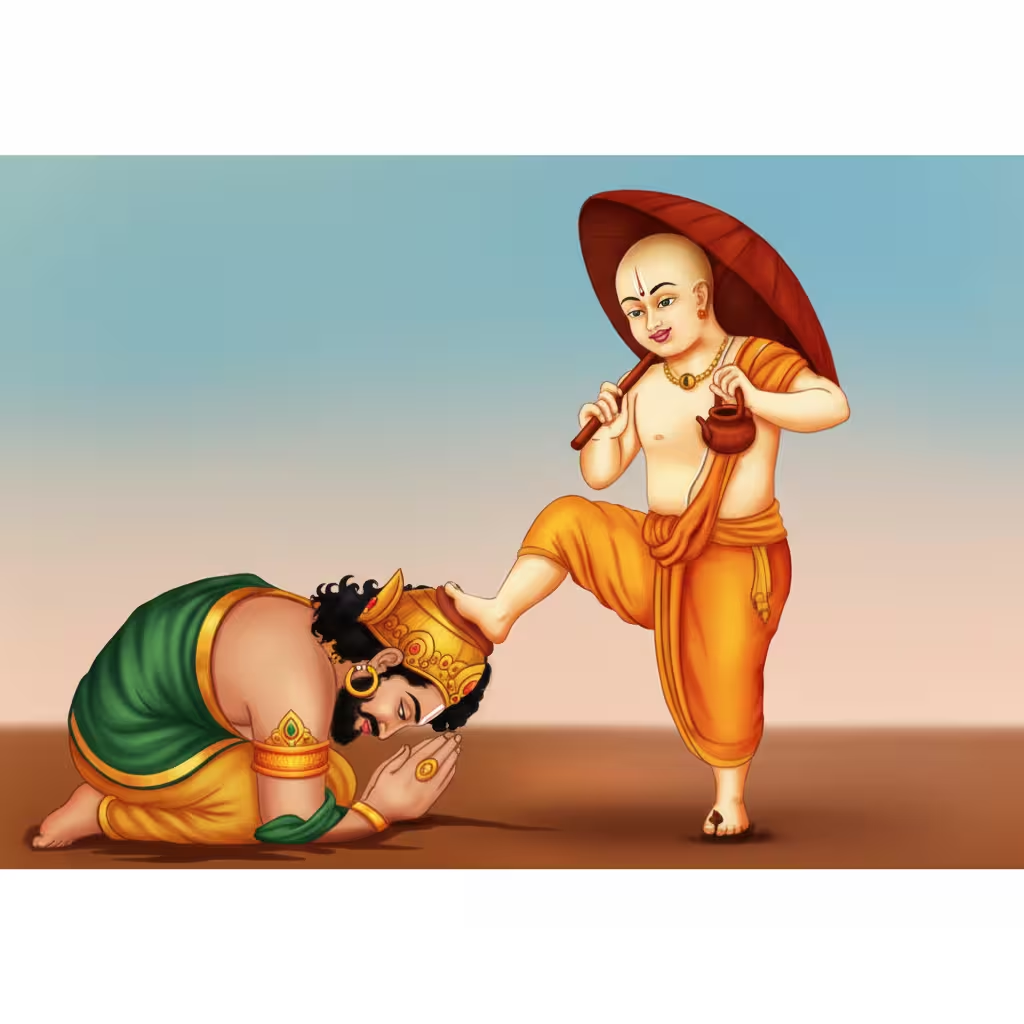
    king bali and vaman pandit
    king bali and vaman pandit

    When Vamana asks for โ€œthree steps of landโ€, Bali is amused by the simplicity of the request. His advisor and guru ลšukrฤcฤrya, however, recognizes the true identity of the visitor and warns Bali not to proceed. The caution is political and cosmic: granting even a seemingly small boon to the Supreme Lord could undo Baliโ€™s conquests.

    Here, Baliโ€™s character blazes forth. He insists that a king who has made a vow of generosity cannot go back on his word. If the petitioner is in fact Vishnu, then giving is not a loss but a blessing. Bali replies that truthfulness and charity are the ornaments of kingship; without them, political authority is hollow. He pours sacred water to seal the promise.

    The moment the vow is sanctified, Vamana begins to expandโ€”no longer a dwarf but the cosmic Trivikrama, whose first stride spans the earth, and the second reaches the heavens. With two steps, Vishnu covers all domains Bali claimed. There is no space left for the third step.

    Vishnu asks: Where shall I place my third step? Bali responds with the ultimate act of surrender: he bows his head and offers it as the third step. The Lord places his foot on Baliโ€™s headโ€”not as humiliation, but as consecration. In many retellings, this gesture purifies Baliโ€™s residual ego and crowns his devotion.

    The aftermath is equally instructive. Vishnu does not annihilate Bali. Instead, he assigns him rulership of Sutala, a splendid subterranean realm, and promises to stand as Baliโ€™s doorkeeperโ€”a profound symbol that divinity guards the devotee who has offered everything. Cosmic balance is restoredโ€”the Devas regain their territoriesโ€”but Baliโ€™s honor is preserved and his devotion validated. Thus, the Vamana episode is not about the defeat of an enemy; it is the elevation of a devotee.

    The Ethical Core of the Three Steps

    The spiritual force of this story lies in its ethical core. The first step represents the return of earthly order; the second step restores celestial harmony; the third stepโ€”taken upon Baliโ€™s own selfโ€”signifies inner surrender. Rulership of worlds without mastery of self is incomplete. Baliโ€™s greatness is that he chooses truth over power, promise over possession, and devotion over dominion.

    Why King Bali is Remembered in Hindu Tradition

    Bali is remembered for more than his dramatic meeting with Vamana. He embodies a cluster of virtues that Hindu thought holds dear:

    Truthfulness: He keeps his word even when warned of catastrophic loss. For Bali, dharma is not conveniently negotiable; it is the spine of sovereignty.

    Generosity: His name is synonymous with dฤna. The request for three steps is not a trap; it is a test he willingly passes by placing honesty above hegemony.

    Humility: Bowing his head for the third step is not defeatist; it is devotional courageโ€”choosing self-offering over self-assertion.

    Devotion: The outcomeโ€”Vishnuโ€™s guardianship at Sutalaโ€”testifies that Bhagavฤn recognizes true bhakti wherever it shines, Asura or Deva.

    Because of these qualities, Bali is revered as Mahฤbaliโ€”great Bali. His story teaches that the measure of a king is not the breadth of his empire but the depth of his integrity.

    King Bali and Festivals

    Across India, Baliโ€™s memory is alive in regional festivals that celebrate his reign and virtues. In Kerala, the harvest festival Onam honors Mahabaliโ€™s annual visit to his people. The popular sentiment holds that Baliโ€™s rule was so just and prosperous that his subjects long for his return, and Onam commemorates that golden age. Houses are decorated with pookkalam (flower rangoli), families share festive meals, and communities engage in boat races, dances, and cultural programsโ€”in affectionate remembrance of a king who cared for his people.

    In western India, especially Maharashtra and Gujarat, the day after Diwali is observed as Bali Pratipada (also called Balipratipada or Padva). The celebration symbolizes Baliโ€™s honor and well-being even after the cosmic reordering by Vamana. Families mark the day with auspicious rituals, new beginnings, and expressions of gratitude and loyalty within households. The festival underscores a nuanced truth: even when divinely checked, Bali is not disgracedโ€”he is blessed.

    That two distinct festivals commemorate Baliโ€”Onam and Bali Pratipadaโ€”illustrates how regional cultures channel the same spiritual admiration through different seasonal idioms. Whether as a just king returning to visit his subjects or as a devotee honored by the Lord, Bali stands as a reminder that righteousness and compassion are the true foundations of public life.

    Spiritual Significance of the Baliโ€“Prahlad Lineage

    The Baliโ€“Prahlad lineage offers a layered spiritual teaching. Prahlad represents the pure heart that clings to the Divine even when the world turns hostile. Bali represents the responsible hand that must choose between oath and ambition in the public sphere. Prahladโ€™s devotion happens under familial persecution; Baliโ€™s devotion unfolds in statecraft. Together, they affirm that bhakti can flower in any soilโ€”in a palace or a prison, under threat or in triumph.

    Their stories also dismantle rigid notions of good guys and bad guys based purely on birth. The Asura label does not predetermine moral failure, nor does Deva identity guarantee virtue. What matters in the Purฤแน‡ic imagination is dharmaโ€”the alignment of action with truth. Prahlad and Bali reveal a continuum of devotion running through the Asura family itself, making the point that the Divine belongs to all who choose Him.

    From a philosophical perspective, Baliโ€™s surrender teaches the Vedantic insight that ownership is illusory. Kingdoms rise and fall; what endures is the soulโ€™s relation with the Absolute. When Vamana expands into Trivikrama, the story dramatizes the truth that the universe itself is the body of the Lord. Offering three steps of land becomes a metaphor for yielding oneโ€™s whole beingโ€”body (earth), mind (heaven), and ego (head)โ€”to the cosmic Person. In this reading, Baliโ€™s bow is the soulโ€™s prostration before Reality.

    Why This Lineage Still Speaks to Us

    In contemporary life, where power, wealth, and brand often eclipse principle, the Baliโ€“Prahlad narrative is unexpectedly modern. It tells leaders that promises matter, that public trust rests upon truthfulness, and that humility is not weakness but moral strength. It tells individuals that heritage and labelsโ€”family, clan, categoryโ€”need not dictate spiritual destiny. What defines us is not the blood we carry but the choices we make.

    King Bali in Everyday Reflection

    Reflecting on King Bali can be a spiritual practice. When faced with dilemmasโ€”profit versus principle, image versus integrityโ€”we might ask: What would Bali do? The likely answer is: keep the vow, honor the truth, and place the head at the Lordโ€™s feet rather than seize a temporary gain. Such a stance does not absolve us from strategic intelligence; recall that Bali was also a brilliant planner. But it insists that strategy without sincerity is a house without a foundation.

    Similarly, Prahlad teaches us to cultivate inner devotion so steady that outer storms cannot shake it. Together, they urge a spiritual lifestyle where devotion informs duty and duty expresses devotion. In that synthesis lies the health of the individual soul and the commonwealth alike.

    Read Also :

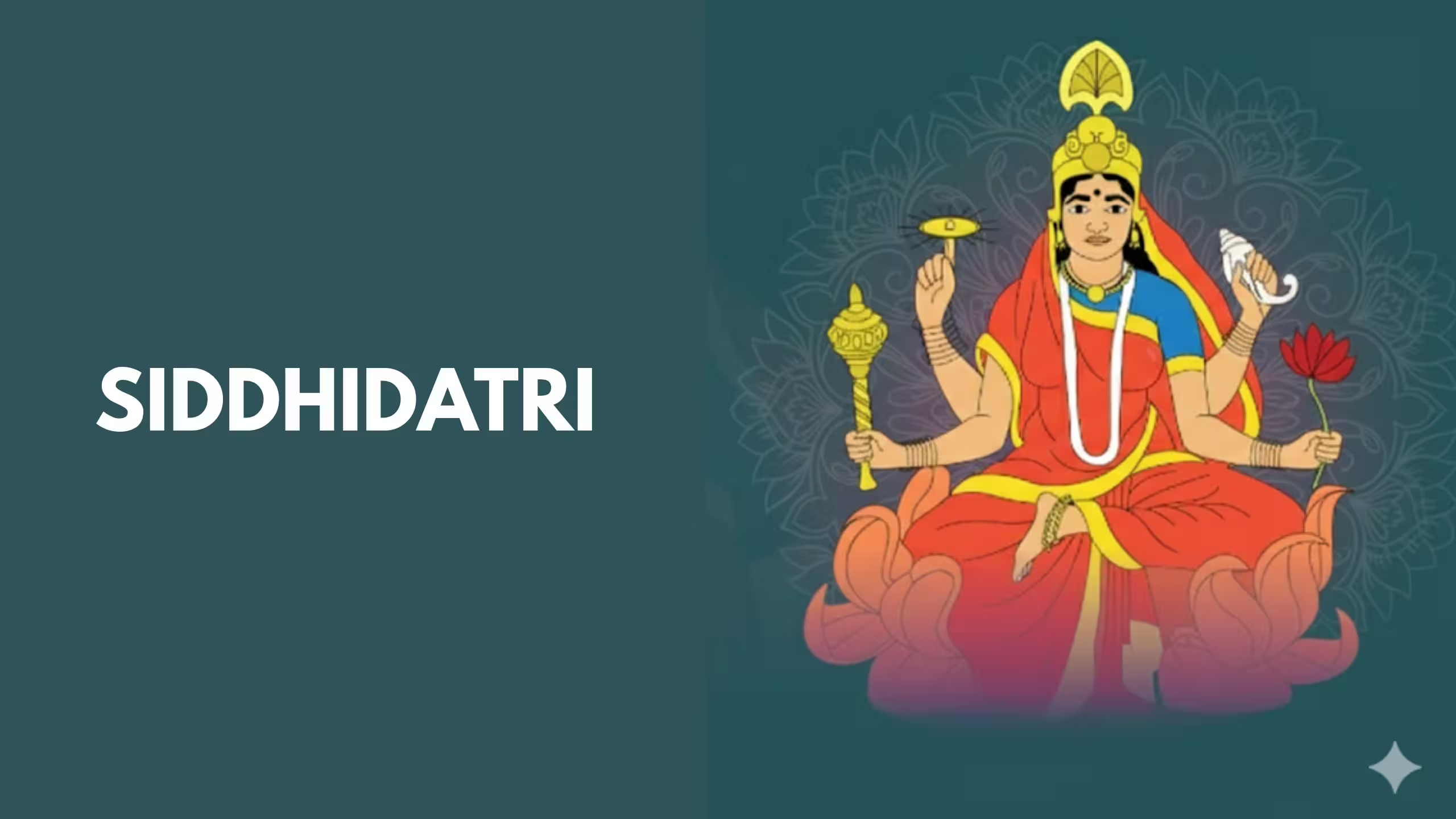
  • Maa Siddhidatri Jivan Charit

    Maa Siddhidatri Jivan Charit

    As the ninth worshipped form in the Navadurga tradition, Maa Siddhidatri embodies the graceโ€‘stream of Shakti that bestows siddhiโ€”that is, spiritual/yogic prowess and inner strengthโ€”upon the seeker. Within the Shakta stream, descriptions of the primordial Divine Motherโ€™s many manifestations appear in the Deviโ€‘Mahatmya (of the Markandeyaโ€‘Purana lineage) and the Deviโ€‘Bhagavata Purana. Affirmed by these scriptural currents, Siddhidatri is revered as the final, consummating form in the Navadurga sequence, where the seeker gathers purity, fortitude, heroism, and discernment received from the earlier forms and orients toward selfโ€‘completeness.

    This Lifeโ€‘Charit presents a Puranaโ€‘based exposition of Siddhidatriโ€™s Nameโ€‘Etymology, Originโ€‘View, Form & Attributes, Doctrine of Siddhi, Scriptural Worship, Fruits of Sadhana, Dharmaโ€‘Ethic, and Place within the Navadurga Order, so that the reader gains scripturally sound, factโ€‘aware, and practical understanding in one place.

    Nameโ€‘Etymology and Purport

    โ€œSiddhidatriโ€ is a compound of two words: siddhi and datri. Siddhi means attainment, accomplished state, or an effortless capability/excellence that ripens through sadhana and divine grace; datri means the giver. Thus, Siddhidatri is the Goddess who bestows siddhi upon the seeker.

    In the Purana tradition, siddhi does not merely denote wondrous operative powers; it also signifies dharmaโ€‘aligned inner strength and the light of discernment (viveka) by which the mind becomes steady and action comes under the discipline of dharma. Therefore, the Siddhidatri principle keeps sadhana purposeful and restrainedโ€”where siddhi is not the end of practice but a means for upholding dharma.

    See also: Maa Shailaputri โ€“ Lifeโ€‘Charit (Puranaโ€‘Based)

    Originโ€‘View: Harmonizing Deviโ€‘Tattva and Siddhi

    The Puranas accept the Primordial Power (Adiโ€‘Shakti) as the Supremeโ€™s Mahamaya, the mover of creation, preservation, and dissolution. In the Deviโ€‘Mahatmya, to the devatasโ€™ hymns, the Goddess manifests in various gentle and fierce forms to curb adharma and protect the devotees. The Deviโ€‘Bhagavata Purana gives broad expositions on Shaktiโ€‘tattva, modes of worship, and fruits of sadhana.

    Within this wide scriptural horizon, Siddhidatri images the coordination of grace and effort. Here, siddhi is not merely operational prowess but an inner heroism that purifies tendencies and culminates in dharmaโ€‘true action. The Purana standpoint concludes that divine boons are auspicious only when they safeguard purity of conduct and discernment.

    Formโ€‘Description: Emblems, Vehicle, and Traits

    Hymnic and iconographic traditions describe Siddhidatriโ€™s form as gentle and graceโ€‘bestowing. Accounts differ regarding the number of arms, emblems, or vehicle; scripturally the import is to signal dimensions of action, not fixate on counts. The commonly remembered traits include:

    1. Seat (Asana): often a lotus throne, symbolizing purity and grace.
    2. Hand Gestures (Mudras): Varada (boonโ€‘granting) and Abhaya (fearโ€‘dispelling).
    3. Emblems/Marks: shankha (conservation and rhythm of time), chakra (discriminative order), gada (steadfast courage), lotus/rosary, and scripture/book (knowledge)โ€”standing for nurture, timeโ€‘wisdom, patience, and insight.
    4. Vehicle: traditions remember the lion, the timeless emblem of fearlessness.
    5. Nimbus (Prabhaโ€‘mandala): a serene radiance, the figure of inner viveka.

    The intent of formโ€‘description is that each emblem of Siddhidatri implants patience, cheerfulness, discernment, and fearlessness in the seekerโ€”the true aim of siddhi.

    The Doctrine of Siddhi: A Purana View

    References to siddhi occur at many points in the Purana corpus. The Bhagavata Purana (notably the Eleventh Skandha) discusses yogic accomplishments and the effects of devotion, where the union of divine grace and sustained practice flowers into remarkable fortitude, discernment, selfโ€‘mastery, and a publicโ€‘spirited bent of action. In the Shakta stream, the Siddhidatri principle means that by the Goddessโ€™s grace the seeker receives righteously governed siddhi, always exercised within restraint and decorum.

    The Puranas primarily urge observance of dharma; hence siddhi must not serve showmanship or adharma, but selfโ€‘cultivation and the welfare of society. This is the central message of the Siddhidatri doctrine.

    Divine Acts (Lila): Grace with Restraint

    In the narrative flow of the Deviโ€‘Mahatmya, the Goddess arises in diverse forms to subdue the wicked and protect the devoted; this balance also appears in Siddhidatriโ€™s grace. Here, grace signifies the measured bestowal of siddhiโ€”that which steadies the mind of the seeker and empowers dutyโ€‘observance.

    The scriptural current concludes that the aim of the Goddessโ€™s grace is to strengthen right order (lokaโ€‘vyavastha). Hence, the pursuit of siddhi must not turn into selfโ€‘display or misuseโ€”this wise restraint is the true ornament of a devoteeโ€™s life.

    Scriptural Worship: Core Injunctions and Decorum

    Shaktiโ€‘worship rests upon mantra, meditation, hymnic recitation, and purity of conduct. In the Navadurga tradition, Siddhidatri is worshipped on the ninth day/culmination. Scriptural priorities include:

    • Purity and Resolve: truth, nonโ€‘violence, restraint; sattvic food; purity in thought, speech, and act.
    • Recitation Traditions: reading the Deviโ€‘Mahatmya (Durgaโ€‘Saptashati); Goddess hymns; guruโ€‘initiated mantraโ€‘japa under the preceptorโ€™s direction.
    • Meditation: contemplate the gentle form with varada/abhaya mudras, with the resolve that all siddhi shall remain under the rule of discernment.
    • Invocations, Offerings, Lampโ€‘worship: always within scriptural bounds; avoid ostentationโ€”inner purity is paramount.

    The Puranic insistence is that the marrow of worship is purity of conduct; outer observances yield fruit when inner practice is firm.

    Fruits of Sadhana: Scriptural Assurances

    The promised fruits of Siddhidatri worship are chiefly inner stability and the light of discernment. The traditional list includes:

    1. Tranquility and Cheer: dissolution of fear/doubt; mental balance and gracefulness.
    2. Discernment and Restraint: dharmaโ€‘true decisionโ€‘power; selfโ€‘control in conditions.
    3. Energy for Action: overcoming sloth/inertia; diligence and timeโ€‘sense.
    4. Removal of Obstacles: victory over inner/outer impediments; continuity in practice.
    5. Publicโ€‘spirited Disposition: moving beyond private attainments toward service of family and society; upholding justice and compassion.

    These fruits endure when practice is regular, scriptureโ€‘aligned, and guruโ€‘guided.

    Place of Siddhidatri within the Navadurga Order

    Navadurgaโ€”nine worshipful dimensions of Shaktiโ€”lead the seeker sequentially toward purity, austerity, valor, creative awareness, motherly compassion, heroic vigor, dispelling of darkness, the grace of purification, and finally, integration through siddhi. In this sequence, the ninthโ€”Siddhidatriโ€”represents consummation and coordination: the earlier samskarasโ€”valor, compassion, discernment, peaceโ€”now converge as discernmentโ€‘governed siddhi, guiding the seeker toward selfโ€‘completeness.

    Fine differences of daily sequences/ritual programs depend upon specific teacherโ€‘lineages; the scriptural gistโ€”integration in the Goddessโ€”remains unchanged.

    Dharmaโ€‘Ethic: The Restrained Use of Siddhi

    The practical teaching of the Siddhidatri principle is that siddhi implies not entitlement but responsibility. Three canons of dharmaโ€‘ethic:

    1. Selfโ€‘governance: mastery over tendencies; quieting of senseโ€‘attachments and ego.
    2. Justiceโ€‘driven Action: employ strength/resources/skills only for dharmaโ€‘supporting ends.
    3. Public Service: protect, educate, cooperate, and uphold justice within family and societyโ€”this is the loftiest use of siddhi.

    Such restrained use makes siddhi auspicious; otherwise, it can lead the seeker toward restlessnessโ€”the Puranas counsel exactly this caution.

    What Not to Do in Puranaโ€‘Based Worship

    • Nonโ€‘scriptural Methods: do not attempt esoteric mantraโ€‘rites/tantric procedures without initiation and preceptorโ€™s guidance.
    • Ostentation: prioritise purity, truth, and compassion over display or luxury.
    • Unsupported Claims: avoid asserting what lacks clear textual basis; first seek scriptural proof.

    Frequently Asked Questions (FAQ)

    Is Siddhidatri explicitly mentioned in the Puranas?

    The gentle and fearโ€‘dispelling forms of Shakti and the flow of Navadurga worship are affirmed by the Deviโ€‘Mahatmya (Markandeyaโ€‘Purana lineage) and the Deviโ€‘Bhagavata Purana. The ninth Navadurga formโ€”โ€œSiddhidatriโ€โ€”is established as a derived/coordinate worshipโ€‘image emerging from these scriptural streams.

    What is the scriptural sense of siddhi?

    From the Purana perspective, siddhi is not merely startling feats; it is governed inner prowess and light of discernment. The Bhagavata Purana treats yogic attainments and the effects of devotion as the union of practice and divine graceโ€”the aim remaining the observance of dharma.

    Are the number of arms/emblems/vehicle fixed?

    Hymnic and iconographic traditions vary; the scriptural intent is education in actionโ€‘dimensions, not fixation on counts.

    Is there any mandatory mantra/fasting rule?

    The safe, scriptural path comprises Deviโ€‘Mahatmya recitation, Goddess hymns, and guruโ€‘initiated mantraโ€‘japa. Counts/nyasa/ritual details must always follow the preceptorโ€™s instruction.

    Didactic Message: The Character of Siddhi

    The Siddhidatri principle teaches that the noblest use of siddhi is selfโ€‘purification and public welfare. When siddhi remains under the discipline of discernment, it becomes the consummation of sadhana; otherwise, it may become a cause of deviation. Hence a pure heart, restraint, and fidelity to dharmaโ€”this is the character of true siddhi.

    Maa Siddhidatri thus implants the samskara of discernmentโ€‘ruled accomplishment in the seekerโ€™s life. In the Deviโ€‘Mahatmya and Deviโ€‘Bhagavata lineages, the final aim of the Navadurga sequence is selfโ€‘completeness and the establishment of dharmaโ€”and Siddhidatri is its gentle, graceโ€‘laden, decorumโ€‘safeguarding form. The essence of worship is a pure heart, scriptural recitation, and the guruโ€™s directiveโ€”this path grants longโ€‘term peace, stability, and meaningfulness.

    Related reading: Maa Shailaputri โ€“ Lifeโ€‘Charit (Puranaโ€‘Based)

    Maa Siddhidatri โ€“ Book: https://amzn.to/3IKvsBK

  • Maa Mahagauri Jivan Charit

    Maa Mahagauri Jivan Charit

    As the eighth venerable form in the Navadurga sequence, Maa Mahagauri embodies the serene, benevolent, and sinโ€‘dispelling current of Shakti. Within the Shakta tradition the primordial Power (Adiโ€‘Shakti) is described through many emanations, whose scriptural roots appear across the Deviโ€‘Mahatmya (of the Markandeyaโ€‘Purana lineage), the Deviโ€‘Bhagavata Purana, the Shivaโ€‘Purana, and other Shaktiโ€‘centric texts. The Mahagauri principle is that aspect of the Primordial Power which plants in the seeker the samskara of inner purification, peace, fortitude, and inward light.

    This Lifeโ€‘Charit presents a Puranaโ€‘based exposition of the nameโ€‘etymology and import, originโ€‘view, iconography, divine work (lila), worship discipline, fruits of practice, dharmaโ€‘ethic, and Mahagauriโ€™s place in the Navadurga sequenceโ€”so that the devout reader receives factโ€‘true, scriptureโ€‘anchored, and practical understanding together.


    Nameโ€‘Etymology and Import

    โ€œMahagauriโ€ is the union of two words: โ€œMahaโ€ (supreme, exceedingly great) and โ€œGauriโ€ (fair, radiant, pure; the gentle, auspicious form of Parvati/Uma). In the Purana tradition, โ€œGauriโ€ signifies Parvatiโ€™s serene, benevolent modality; โ€œMahagauriโ€ points to the paramaโ€‘serenity and supreme purity through which the seekerโ€™s impurities are washed away and the mind becomes placid and luminous.

    The focus of the name is to underline the calm radiance of the Devi: parallel to the fierce forms that subdue adharma, the Mahagauri aspect continuously purifies within and bestows compassion.

    Originโ€‘View: The Devi Principle and Mahagauri

    The Puranic corpus speaks of Adiโ€‘Shakti as the Mahฤmฤyฤ of the Supremeโ€”through whom the functions of creation, sustenance, and dissolution, the activation of divine works, and the safeguarding of dharma proceed. In the Deviโ€‘Mahatmya (Markandeyaโ€‘Purana lineage) the Goddess manifests multiple forms to overthrow demons and protect devotees; the Deviโ€‘Bhagavata Purana elaborates various modalities of Shakti, their worship, and fruits of practice.

    Within this sweeping scriptural horizon, Mahagauri symbolizes the graceful bestowal of purity and the light of inner serenity. She teaches that Power is not only fierceness; it is also peace and wellโ€‘being, wherein the grime of the mind is cleansed and gladness with steadiness arises.


    Iconography: Arms, Vehicle, and Emblems

    Puranic hymns, later stotras, and visual traditions portray Mahagauri as radiantly fair and deeply serene. The principal traits remembered across traditions include:

    1. Complexion and Attire: Fair/white complexion; white garments and ornamentsโ€”images of purity and peace.
    2. Mudras/Emblems: Varada (boonโ€‘giving) and Abhaya (fearโ€‘dispelling) mudras; and in different sources a kamandalu/pot, trishula/damaru, or flower/garlandโ€”signifying the balance of nourishing grace and resistance to adharma.
    3. Vehicle: Many traditions recall the bull (Nandi) or the lionโ€”subtle marks of Shaiva affiliation and emblematic fearlessness.
    4. Aura: A calm, luminous nimbusโ€”a metaphor for inward purity and grace.

    Note that numbers of arms, specific emblems, or vehicle may vary by text and tradition. The scriptural intent is the functional symbolismโ€”the harmony of sustenance and subjugationโ€”not rigid numeric uniformity.


    Parvatiโ€™s Austerities, Gauriโ€™s Grace, and the Meaning of Mahagauri

    Across Shaivaโ€‘Shakta poetry and Puranic narrative, we meet the Himalayaโ€™s daughter Parvati performing austere tapas, choosing Shiva as her lord, and establishing a dharmic householderโ€™s lifeโ€”episodes narrated in the Shivaโ€‘Purana, Deviโ€‘Bhagavata, and allied sources. Within these streams, the name Gauri widely denotes Parvatiโ€™s gentle, auspicious form; โ€œMahagauriโ€ recalls the summit of serenity and purity where, by the synergy of tapas and grace, the mindโ€™s coverings are fully washed away.

    The scriptural signal here is clear: the aim of Shaktiโ€‘worship is not merely external accomplishments but inner cleansing; only then do the capacities for household dharma, service to the world, and steadfast upkeep of dharma ripen. Mahagauri is the remembrance of this complete (maha) purification.


    Divine Work (Lila): The Stream of Purity and Grace

    The Puranas teach that the Deviโ€™s various emanations arise for divine works and the welfare of beings. While the fierce forms quell unrighteousness, the Mahagauri principle pours a stream of purificationโ€”dissolving inner defilements (rฤgaโ€‘dveแนฃa, anger, heedlessness, egoism) and ushering in gladness and fortitude.

    This lila is not mere story: it is a map of inner sฤdhanฤ. By the Deviโ€™s grace the grime of the mind is washed, and the seeker becomes stable on the path of dharma.


    Scriptural Worship: Core Observances and Discipline

    The foundations of Shaktiโ€‘upฤsanฤ are mantra, dhyฤna, stotraโ€‘recitation, and purity of conduct. In the traditional Navadurga cycle, Mahagauriโ€™s worship aligns with the eighth day (asแนญamฤซ), though minor variations of calendric practice occur across lineages. Scriptural priorities include:

    • Purity and Resolve: Truthfulness, nonโ€‘injury, restraint, sฤttvika diet; purity of thought, speech, and action.
    • Recitational Lineage: Reading of the Deviโ€‘Mahatmya (Durgaโ€‘Saptashati lineage), Deviโ€‘stotras, and japa of guruโ€‘given mantraโ€”as per the ฤcฤryaโ€™s instruction.
    • Meditation: Contemplation of Mahagauriโ€™s serene, graceโ€‘bestowing image; remembering Varada/Abhaya mudras to cultivate fearlessness and mental composure.
    • Invocations, Offerings, and Arati: Always within scriptural bounds; avoid ostentationโ€”inner purity is supreme.

    The Puranic emphasis is that the essence of worship is purified conduct; externals bear fruit only when inner practice is firm.


    Fruits of Practice: Scriptural Assurances

    The fruits associated with Mahagauriโ€‘upฤsanฤ are primarily inner purification and a placid, luminous mind. The core outcomes remembered in tradition are:

    1. Mental Clarity and Peace: Diminishing of fear, anger, jealousy, and hatred; emergence of cheerfulness and steadiness.
    2. Fortitude and Gentleness: Soft speech, restraint, forbearanceโ€”qualities that stabilize household dharma.
    3. Discernment and Truthfulness: Sharpened discrimination; performance of duties aligned with truth and justice.
    4. Removal of Obstacles: Soothing of inner/outer hindrances; continuity of practice.
    5. Civicโ€‘Minded Virtue: Extending personal sฤdhanฤ into service, compassion, and justice within family and society.

    These fruits stabilize over the long term when practice is regular, scriptureโ€‘aligned, and guided by a competent guru.


    Place of Mahagauri in the Navadurga Sequence

    The Navadurgaโ€”nine contemplative modalities of Shaktiโ€”lead the seeker through the ascending arc of purification, tapas, valor, insight into creation, maternal compassion, heroic vigor, removal of darkness, purificationโ€‘grace, and integrative siddhi. In this sequence Mahagauri, the eighth, anchors the central sentiment of purificationโ€‘grace: after the fierce samskaras of the preceding stage, the seeker settles into steady serenity and cheer and moves toward the final integration embodied by Siddhidatri.

    Calendric/worship variations across lineages may exist, yet the scriptural purportโ€”the harmonized whole of the Deviโ€‘principleโ€”remains unchanged.


    Dharmaโ€‘Ethic: The Practical Message of Purificationโ€‘Grace

    Mahagauri teaches that the aim of lifeโ€‘practice is not only outer attainments but inner purity, flowering through truth, compassion, nonโ€‘injury, and restraint. Three guiding maxims:

    1. Selfโ€‘Governance: Reining in attachment to senseโ€‘objects, anger, and envy; practicing sฤttvika habits.
    2. Dutyโ€‘Performance: Upholding responsibilities in home, work, and society with prudence and industriousness.
    3. Service to the World: Extending the serenity of the heart into service, charity, and justice.

    When this purificationโ€‘grace descends into daily life, the seeker finds abiding wellโ€‘being, and society moves toward durable orderโ€”the practical consummation of the Mahagauri principle.


    What Not to Do in Puranaโ€‘Based Worship

    • Unscriptural Procedures: Avoid esoteric mantraโ€‘rituals or tantric processes without proper initiation and guidance.
    • Ostentation: Prefer cleanliness, truth, and compassion over display and luxury.
    • Unwarranted Claims: Do not assert what lacks clear scriptural grounding; seek authoritative references first.

    Frequently Asked Questions (FAQ)

    1) Is Mahagauri explicitly mentioned in the Puranas?

    The serene/gentle modalities of Shakti are elaborated in the Deviโ€‘Bhagavata Purana and other Shaktiโ€‘centric texts. The Navadurga traditionโ€™s โ€œMahagauriโ€ crystallizes these scriptural streams into a venerated contemplative form.

    2) Is the bull the only vehicle of Mahagauri?

    Visual and hymnological traditions recall both the bull and the lion. The intent is to indicate fearless serenity and Shaiva affiliation. Variations in vehicle, emblems, or armโ€‘count are symbolic of functions, not rigid numerics.

    3) Does Mahagauri bestow a specific boon?

    Traditionally Mahagauri is associated with purificationโ€‘grace and boon/fearโ€‘dispellingโ€”i.e., the strength for mental composure and dharmaโ€‘aligned duty. Folk lines may speak of household peace and prosperity; give primacy to scripture and clean conduct.

    4) Is there an obligatory text for worship?

    The Deviโ€‘Mahatmya (Durgaโ€‘Saptashati lineage), Deviโ€‘stotras, and guruโ€‘given mantraโ€‘japa are timeโ€‘tested and safe. Detailed counts/nyasas/rites should always follow guruโ€‘instruction.


    Teaching Takeaway: Strength in Peace

    Mahagauri proclaims that peace is not weaknessโ€”it is the gentle face of Power. With scriptureโ€‘aligned practice, the mind is cleansed; sweetness graces speech, patience steadies action, and discernment guides choicesโ€”nourishing the roots of family and society.

    Maa Mahagauri is the current of Shakti that installs purificationโ€‘grace, serenity, and forbearance as durable samskaras in the seekerโ€™s life. In the lineages of the Deviโ€‘Mahatmya and the Deviโ€‘Bhagavata Purana, this gentle form teaches that Power is not only demonโ€‘subjugation but also devoteeโ€‘welfare and the gladness of mind. The heart of worship is a clean mind, scriptureโ€‘reading, and obeying the guruโ€™s guidanceโ€”the path to lasting peace, dutyโ€‘steadfastness, and meaningful living.

    Further reading: Maa Mahagauri (Book) โ€” https://amzn.to/42f7h56

  • Maa Kaalratri Jivan Charit

    Maa Kaalratri Jivan Charit

    As the seventh worshipful dimension in the Navadurga sequence, Maa Kaalratri embodies the fierce manifestation of Shaktiโ€”dispelling fear, darkness (tamas), and unrighteous tendencies while awakening courage and discernment within the seeker. The Shakta tradition, as narrated in the Deviโ€‘Mahatmya (in the Markandeyaโ€‘Purana lineage) and the Deviโ€‘Bhagavata Purana, describes multiple forms of the Primordial Goddess. Through Her fierce emanationsโ€”by which She subdues asuras and restores cosmic orderโ€”the philosophical import of Kaalratri becomes clear: fierceness for the destruction of evil; compassion for the protection of devotees.

    This Lifeโ€‘Charit presents a Puranic, textโ€‘grounded view of Kaalratri across the following sections: Etymology, Origin, Iconography, Divine Acts (Lila), Worship (Sadhana) Procedures, Fruit of Practice, Place in the Navadurga Sequence, Dharmaโ€‘Ethic, along with Doโ€‘Nots in Puranic Worship, FAQs, and a Practical Takeawayโ€”so that readers receive scripturally aligned, accurate, and actionable understanding in one place.

    Etymology and Philosophical Purport

    The name โ€œKaalratriโ€ holds two ideas: Kaal (Time / Sovereign / Bearer of dissolution) and Ratri (Night / Ignorance / Veil). In the Puranic imagination, this form of the Goddess removes the ungoverned fear of time and the veiling darkness of ignorance. Philosophically, Kaalratri signifies the transcendental power that pierces the night of ignorance and fear, opening the gates of fearlessness (abhaya) and discernment (viveka) for the seeker.

    Etymology also hints at balance: the conquest of darkness is not by wrath alone but by a harmony of fierceness and stillnessโ€”where destruction targets adharmic impulses and protection upholds the path of dharma.

    See also: Maa Mahagauri โ€” Lifeโ€‘Charit (Puranic Perspective)

    Originโ€‘View: The Fierce Dimension of the Goddess

    Puranic texts describe the Primordial Shakti as Mahamaya, the cosmic power of the Supreme. In the Deviโ€‘Mahatmya, upon the supplication of the devas, the Goddess manifests fierce forms that vanquish asuric forces. Such destruction is not wanton violence but the reโ€‘balancing of cosmic order. The idea of Kaalratri signals precisely this fierce dimensionโ€”the dispeller of tamasโ€”who quells fear, delusion, inertia, and allied asuric tendencies within and without.

    The Deviโ€‘Bhagavata Purana similarly expounds the Goddessโ€™s many forms, their manifestations, and systems of worship. Seen through this lens, Kaalratri embodies a core function of Shakti: to pierce the veil (avaranaโ€‘bhedana)โ€”dissolving the night of ignorance and ushering the dawn of dharmaโ€‘light.

    Iconography: Weapons, Vehicle, and Emblems

    Puranic hymns and devotional poetry portray Kaalratri as fierce, radiant, and tamasโ€‘transforming. Major traits preserved in tradition include:

    1. Complexion: deep dark / blackโ€‘blueโ€”signifying the power that strikes the sheath of ignorance.
    2. Hair and Face: sometimes disheveled locks, sometimes a severe radianceโ€”a symbol of the poised balance between fierceness and compassion.
    3. Arms and Mudras: textual and artistic traditions vary in armโ€‘count and weapons; commonly, Varada (boonโ€‘bestowing) and Abhaya (fearโ€‘dispelling) mudras appear with weapons like khadga (sword), trishula (trident), or vajra (thunderbolt).
    4. Vehicle: in Navadurga iconography She is often shown on a donkey (garda / gardabha)โ€”emblematic of unwavering toil, humility, and fearless steadiness.
    5. Aura / Radiance: a fierce brilliance that dispels darkness in all directionsโ€”metaphor for the inner light of discrimination.

    Note: Weaponโ€‘lists, armโ€‘counts, and subtleties vary across texts and hymnโ€‘traditions. The scriptural intent is to convey functional aspects (protection and dissolution), not a rigid numeric fixation.

    Divine Acts (Lila): Dispersing Darkness and Establishing Dharma

    In the narrative arc of the Deviโ€‘Mahatmya, fierce emanations of the Goddessโ€”invoked by the devas in distressโ€”subdue asuric hosts. Episodes concerning Shumbhaโ€‘Nishumbha, Chandaโ€‘Munda, and Raktabija symbolize the operational expressions of fierce Shakti. The construct โ€œKaalratriโ€ provides a philosophical name for this very function: the quelling of inner darkness (ignorance, fear, negligence) and the correction of outer unrighteousness.

    These wars, while narrated as external battles, are also allegories for inner sadhanaโ€”the conquest of oneโ€™s own distortions by divine strength and clarity. The aim of Kaalratriโ€‘worship is to understand โ€œfiercenessโ€ not as anger, but as disciplined justice within selfโ€‘control.

    Worship (Sadhana) โ€” Scriptural Basis

    The foundations of Shakta sadhana are mantra, meditation, hymnody, and ethical purity in conduct. In many traditions, Kaalratri is worshipped on the seventh day of Navadurga; minor differences in dayโ€‘order and procedures may appear across lineages. Core priorities include:

    • Purity and Resolve: truthfulness, nonโ€‘violence, selfโ€‘restraint, and sattvic diet; purity in mind, speech, and action makes worship meaningful.
    • Textual Recitation: Deviโ€‘Mahatmya (Durgaโ€‘Saptashati lineage), Shakta stotras, and guruโ€‘given mantraโ€‘japaโ€”strictly as per teacherโ€™s guidance.
    • Meditation: contemplate the fierce form with the resolve to dispel inner darkness; remember Her Abhaya/Varada gestures as the spirit of fearโ€‘removal and grace.
    • Invocation, Offerings, Lampโ€‘worship: all within scriptural decorum; inner cleanliness over outer ostentation.

    The Puranic current insists that the real core of worship is purity of conduct; externals bear fruit only when inner practice is steady.

    Fruit of Practice (Sadhanaโ€‘Phala)

    The Puranic understanding of Kaalratriโ€‘worship emphasizes inner fearlessness and the illumination of discernment. Principal fruits noted in the tradition include:

    1. Removal of Fear: dissipation of anxiety, doubt, and the darkness of tamas; emergence of abiding fearlessness.
    2. Patience and Selfโ€‘control: stability under adversity; transmuting fierceness into ethical justice rather than anger.
    3. Energetic Rightโ€‘Action: overcoming inertia and negligence; cultivating sattvic effort and wise timeโ€‘use.
    4. Obstacleโ€‘Removal: victory over internal and external impediments; continuity and focus in sadhana.
    5. Publicโ€‘spiritedness: a movement beyond personal safety toward social protection and justice.

    These fruits stabilize only through regular, textโ€‘aligned, and teacherโ€‘guided practice.

    Place of Kaalratri in the Navadurga Sequence

    The nine worshipful dimensions of Shakti in Navadurga lead the seeker through progressive states: purity, austerity, valor, creative insight, maternal compassion, heroic strength, dissolution of darkness, radiant purity, and integration of accomplishments. Within this order, Kaalratriโ€”seventhโ€”marks the pivotal node of dispelling darkness and bestowing fearlessness. Dayโ€‘order and ritual nuance can vary across lineages, but the integrative intent of Goddessโ€‘principle remains constant.

    Dharmaโ€‘Ethic: The Balance of Fierceness and Stillness

    Kaalratri teaches that the goal of fierceness is resistance to adharma, not performance of rage. Three working sutras:

    1. Selfโ€‘Governance: mastery over impulses; regulation of attachment and violenceโ€‘tendencies.
    2. Justiceโ€‘Led Valor: never bowing to fear; valor kept within the bounds of ethical restraint.
    3. Service to Society: fulfilling familial and social responsibilities; protection of the weak; honoring rightful norms.

    Only under such balance does fierce power become a cause of public welfareโ€”this is Kaalratriโ€™s practical counsel.

    What Not to Do in Puranic Worship

    • Unscriptural Methods: avoid esoteric mantraโ€‘rites/tantric processes without proper initiation and guidance.
    • Ostentation: prefer inner cleanliness, truth, and compassion over display and luxury.
    • Unwarranted Claims: do not affirm what lacks clear textual grounding; seek scriptural proof first.

    Frequently Asked Questions (FAQ)

    1) Is Kaalratri mentioned in the Puranas themselves?
    Yes. The fierce emanations, asuraโ€‘slaying episodes, and restoration of dharma are elaborated in the Deviโ€‘Mahatmya (Markandeyaโ€‘Purana lineage); the Deviโ€‘Bhagavata Purana expounds Shaktiโ€‘tattva and worship systems in detail. The Navadurga traditionโ€™s โ€œKaalratriโ€ is a worshipful synthesis of these fierce dimensions.

    2) Is the donkey definitively Her vehicle?
    In Navadurga iconography the donkey (gardabha) is widely attested. Some poetic/artistic depictions differ. The intended symbol is fearless effort, humility, and steadfast endurance.

    3) Are the armโ€‘count and weaponโ€‘list fixed?
    Hymnโ€‘ and imageโ€‘traditions vary. The doctrinal burden is functionalโ€”the harmonizing of protection and dissolutionโ€”not fixation on numbers.

    4) Do Puranas mandate specific colors/foods/dates?
    Puranas primarily teach principles of practice; color/offerings/dayโ€‘orders are often later local customs. Prioritize textual recitation, mantraโ€‘japa, and ethical conduct.

    Practical Takeaway: Conquering Fear, Lighting Discernment

    Kaalratri instructs that fear is conquered by an inner culture of fearlessnessโ€”born of selfโ€‘restraint, truthโ€‘observance, and scriptural practice. Sloth and delusion are overcome through wise use of time and steady effort. Fierceness yields welfare only when disciplined by justice and dharma.

    Maa Kaalratri is thus the current of Shakti that clears the seekerโ€™s life of darkness, fear, and negligence, establishing courage, patience, and discriminative light. In the Deviโ€‘Mahatmya and Deviโ€‘Bhagavata tradition, the aim of fierce emanations is the removal of adharma and the restoration of dharmaโ€”this is the essence of the Kaalratriโ€‘principle. The foundation of worship remains a pure heart, scriptural recitation, and adherence to the teacherโ€™s counselโ€”from which arise lasting peace, dutyโ€‘steadfastness, and meaningful life.

    เคฎเคพเค เค•เคพเคฒเคฐเคพเคคเฅเคฐเคฟย เค•เคฟเคคเคพเคฌ

  • Maa Katyayani Jivan-Charit

    Maa Katyayani Jivan-Charit

    Maa Katyayani embodies that radiant dimension of Shakti which simultaneously manifests protection of dharma, destruction of the demonic, and safeguarding of seekers. Within the Shakta tradition the Adiโ€‘Shakti unfolds in many forms; among these, Katyayani is remembered for fierce radiance (ugraโ€‘tejas), courage, and welfare of the world. In the Deviโ€‘Mahatmya (within the Markandeyaโ€‘Purana tradition) and the Deviโ€‘Bhagavataโ€‘Purana, the dominant strands are the Goddessโ€™s manifestation, the slaying of demons, and the reโ€‘establishment of righteousness. In this wider scriptural landscape, the Katyayaniโ€‘tattva blends both the fierce aspect of Mahishasuraโ€‘mardana and the compassionate aspect of devoteeโ€‘protection.

    In the Krishnaโ€‘bhakti tradition, Bhagavata Purana (Skandha 10, Chapter 22) narrates the celebrated Katyayaniโ€‘vrata of the Vraja maidens, who worship Maa Katyayani and pray to accept Bhagavan Krishna as their husband. This shows that Katyayani is not only fierce; she is also the boonโ€‘giving Mother of compassion. This lifeโ€‘charit arranges, from a strictly scriptureโ€‘based perspective, the nameโ€‘etymology, origin, iconography, principal Puranic narratives, worshipโ€‘ordinance, fruits of sadhana, and dharmaโ€‘ethic.

    Nameโ€“Etymology and Tradition

    Regarding the name โ€œKatyayani,โ€ a wellโ€‘known Puranic explanation says: the Goddess manifested through the austerities (tapas) of the sage Katyayana (from the lineage Katya), or appeared in the lineage of Katya, hence the name โ€œKatyayani.โ€ This interpretation links the form of Shakti with rishiโ€‘austerity and divine missionโ€”indicating that the Goddessโ€™s manifestation is not an arbitrary miracle but the synergy of divine grace and ascetic merit for the protection of dharma.

    Thus, the purport of the nameโ€‘etymology is that Katyayani arises from the convergence of acharyaโ€‘tapas and the collective aspiration for lokaโ€‘mangala (the welfare of beings). Hence she is understood as a harmony of fierceness and peaceโ€”fierce in subduing adharma, gentle/compassionate in protecting devotees.

    Also read: Maa Kalaratri: Lifeโ€‘Charit (Puranic)

    Originโ€‘View: Adiโ€‘Shakti and the Katyayaniโ€‘Tattva

    The Puranas describe Adiโ€‘Shakti as the Mahฤโ€‘Mฤyฤ of the Supreme, the power behind the devas, and the governess of cosmic order. In the Deviโ€‘Mahatmya, moved by the devasโ€™ hymns, the Goddess manifests to annihilate the demonic hosts; this annihilation is not mere destruction but the reโ€‘establishment of dharma. In this very tradition, Katyayani is remembered for subduing Mahishasura and dispelling fearโ€”her radiance fierce toward the wicked, yet compassionate toward the devotee.

    The Deviโ€‘Bhagavata Purana elaborates the Goddessโ€™s many forms, modes of worship, and divine missions. The Katyayaniโ€‘tattva is the vivid, heroic emanation of these currentsโ€”awakening valor and steadfastness while retaining forbearance and compassion.

    Iconography: Weapons, Vehicle, and Emblems

    Puranic poetry and hymns recall Katyayani as multiโ€‘armed, weaponโ€‘bearing, and lionโ€‘mounted (seated upon or riding the lion). Across texts and hymns, the weapons include trishula (trident), khadga (sword), chakra (discus), bowโ€‘andโ€‘arrows, gada (mace), kamandalu (waterโ€‘pot), along with varada/abhaya mudra (boonโ€‘bestowing and fearโ€‘dispelling gestures). This variety signals functional dimensions of action; fixed counts and identical lists are not the concern of the Puranas.

    Each emblem in her iconography simultaneously indicates nurture and subjugation: the varada/abhaya mudra denotes fearโ€‘removal and assurance; the weaponsโ€”the suppression of adharma; the kamandalu/ghataโ€”nurture and inward peace. The lionโ€‘vehicle is an enduring symbol of fearlessness and the protection of righteousness.

    The Slaying of Mahishasura: An Ideal of Fierce Valor

    In the Deviโ€‘Mahatmya, the Goddessโ€”born of the radiances of the devasโ€”annihilates Mahishasura and many other demons. The tradition reveres this fierce form as โ€œMahishasuraโ€‘Mardini.โ€ In many Shakta lineages this very fierce form is also remembered as Katyayani. Substantively, it is one and the same Adiโ€‘Shakti expressing different functions; a change in name does not alter the doctrinal importโ€”which remains the subjugation of adharma, the restoration of dharma, and the protection of devotees.

    This episode is not merely an outer battle; it also allegorizes victory over inner demonic tendenciesโ€”ego, intoxication, envy, and violence. The Katyayaniโ€‘tattva teaches that valor is complete only within the bounds of justice and selfโ€‘restraint; otherwise it reduces to mere ferocity.

    The Katyayaniโ€‘Vrata (Bhagavata Purana 10.22) and the Boonโ€‘Granting Tradition

    Bhagavata Purana (Skandha 10, Chapter 22) narrates the Katyayaniโ€‘vrata of the Vraja maidens during winter. They bathe daily in the Yamuna, fashion a Deviโ€‘murti of riverโ€‘sand/clay, offer flowers, incense, and naivedya, and chant the following mantra:

    kฤtyฤyani mahฤmฤye mahฤyoginy adhฤซล›wari |
    nandagopaโ€‘sutaแน devi patim me kuru te namaแธฅ ||

    (Devanฤgarฤซ)
    เค•เคพเคคเฅเคฏเคพเคฏเคจเคฟ เคฎเคนเคพเคฎเคพเคฏเฅ‡ เคฎเคนเคพเคฏเฅ‹เค—เคฟเคจเฅเคฏเคงเฅ€เคถเฅเคตเคฐเฅ€เฅค
    เคจเคจเฅเคฆเค—เฅ‹เคชเคธเฅเคคเค‚ เคฆเฅ‡เคตเคฟ เคชเคคเคฟแน เคฎเฅ‡ เค•เฅเคฐเฅ เคคเฅ‡ เคจเคฎเคƒเฅฅ

    The scriptural purport is that Katyayaniโ€”Mahฤmฤyฤ, the great Yogini, the sovereignโ€”fulfills a seekerโ€™s sฤttvika aspiration within the bounds of dharma. Here the explicit aim was to accept Krishna as husband; more broadly, the passage indicates that in householder decisionsโ€”such as choosing a lifeโ€‘partnerโ€”remembrance of the Goddess instills moderation, purity, and propriety.

    Do note: the finer steps of the vrata, fasting rules, etc., vary across traditions/teachers; the Puranic emphasis remains upon purity, truth, and nonโ€‘injury.

    Scriptural Worship: Core Ordinance and Discipline

    The foundations of Shakta worship are mantra, meditation, hymnody, and purity of conduct. In Katyayaniโ€‘upasana, the classical priorities are:

    • Purity and Resolve: truthfulness, sฤttvika diet, disciplined conduct, and a firm resolve for Deviโ€‘worship.
    • Recitational Tradition: reading of the Deviโ€‘Mahatmya (Durgaโ€‘Saptashati lineage), chanting of stotras, and mantraโ€‘japa as instructed by oneโ€™s Guru.
    • Invocation, Offerings, and Arati: all within oneโ€™s means and within scriptural boundsโ€”free of ostentation, with inner purity foremost.

    Puranas consistently hold that the essence of worship is purification of conductโ€”outer rites bear fruit only when inner sadhana is firm.

    Fruits of Sadhana: Scriptural Assurances

    The Katyayaniโ€‘tattva implants within the seeker fearlessness, patience, restraint, and a sense of justice. Scriptural traditions indicate the following fruits:

    1. Removal of Fear; Grant of Assurance: dissipation of doubt and fear; awakening of selfโ€‘confidence.
    2. Valor and Steadfastness: courage, stability, and dutifulness in demanding fields of action.
    3. Removal of Obstacles: pacification of inner/outer hurdlesโ€”laziness, heedlessness, delusion.
    4. Disposition for Public Good: a movement beyond personal attainments toward service of the community and the establishment of just conduct.

    These fruits endure only when the practice is regular, Guruโ€‘guided, and conformant to ล›ฤstra.

    Dharmaโ€‘Ethic and the Householderโ€™s Path

    The Katyayaniโ€‘tattva instructs the householder that the protection of family and society is sustained not by affection alone but by wise discipline. Three guiding threads of dharmaโ€‘ethic are:

    1. Truth and Nonโ€‘injury: purity in speech and action; justice above likes and dislikes.
    2. Discharge of Duties: commitment to responsibilities at home, work, and in society.
    3. Restraint and Service: regulation of the senses, prudent timeโ€‘management, and contribution to public welfare.

    The essence of Katyayaniโ€‘worship is that compassion and valor must coexistโ€”compassion for protection; valor for resistance to adharma.

    The Navadurga Tradition and the Place of Maa Katyayani

    Among the nine worshipful dimensions of Shaktiโ€”the Navadurgaโ€”Katyayani is remembered with the central sentiments of fierce radiance, courage, and protection of the people. Although the orderly dayโ€‘byโ€‘day sequence of the Navadurga is arranged within acharya lineages, the doctrinal core is that all forms are functional expressions of the one Supreme Shakti; thus the goal of Katyayaniโ€‘upasana is likewise the establishment of dharma and the welfare of the seeker.

    Frequently Asked Questions (FAQ)

    Is Maa Katyayani explicitly mentioned in the Puranas?

    Yes. Katyayani as a form of Shakti is remembered in texts such as the Deviโ€‘Bhagavata Purana; and Bhagavata Purana (10.22) contains the detailed account of the Katyayaniโ€‘vrata. The Deviโ€‘Mahatmya enshrines the fierce form that slays Mahishasuraโ€”many Shakta traditions identify and harmonize this with the Katyayaniโ€‘tattva.

    Are Maa Katyayani and Durga different?

    From the scriptural viewpoint, they are functional manifestations of the one Adiโ€‘Shakti. A difference in name does not change the doctrinal purport. The fierce form that slays Mahishasura is Mahishasuraโ€‘Mardini; many traditions remember this also as Katyayani.

    What is the essence of the Katyayaniโ€‘vrata?

    According to Bhagavata Purana (10.22), it is worship of the Goddess with purity, restraint, and sฤttvika intentโ€”guiding even householder decisions with propriety and discernment.

    Are the vehicle/weapon/number of arms fixed?

    Hymns and Puranic poetry vary; the intent is to signify both nurture and subjugation, not to fix numerical counts.

    Instructional Message: Valor with Compassion

    The teaching of the Katyayaniโ€‘tattva is that compassion is protection, not indulgence; and valor is resistance to adharma, not display of anger. The aim of sadhana is inner restraint and outer justiceโ€”only then does the order of dharma remain steady.

    Maa Katyayani is that current of Shakti which continuously streams fearlessness, discernment, restraint, and publicโ€‘spirited service into a seekerโ€™s life. In the lineages of the Deviโ€‘Mahatmya and the Deviโ€‘Bhagavata Purana, her fierce radiance serves the annihilation of adharma; in the Katyayaniโ€‘vrata of the Bhagavata Purana, her maternal form fulfills the sฤttvika wishes of devoteesโ€”both unified by a single thread: the establishment of dharma. The essence of worship lies in a pure heart, scriptural recitation, and obedience to the Guruโ€”a path that grants longโ€‘lasting peace and meaningfulness.

    Maa Katyayani โ€” Book