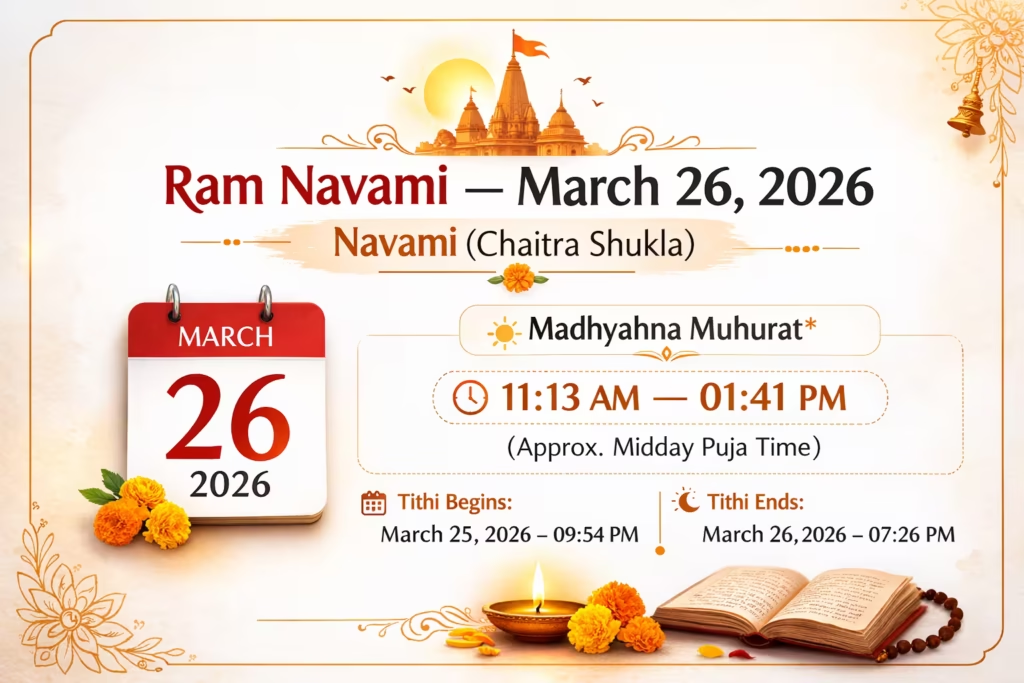
Ram Navami 2026 will be observed on March 26, 2026 according to the common panchang (Navami tithi of Chaitra), with many temples and sampradayas observing key rituals on March 26; some Vaishnava groups follow the udaya‑tithi (next day) and mark celebrations on March 27, 2026. Timings vary by location — check your local panchang for exact muhurat.
When is Ram Navami In 2026 : Date and Time
- Observed date (common panchang): March 26, 2026.
- Navami tithi (general): Navami of Shukla Paksha, Chaitra month — tithi crosses between March 26–27 depending on locality and timezone.
- Madhyahna (midday) muhurat : 11:13 AM to 1:41 PM on March 26, 2026. (Timings may differ city-to-city.)
Note: Because tithi boundaries depend on longitude and local sunrise/sunset, some traditions (including certain Vaishnava/ISKCON observances) prefer the udaya‑tithi rule and celebrate the next day. Always confirm with your trusted panchang or temple.
Ram Navami Muhurat 2026: Madhyahna moment and best time to perform puja
Devotees usually perform the principal puja during the Madhyahna muhurat, the auspicious midday window associated with Lord Rama’s birth. Below are commonly used time markers:
- Madhyahna Muhurat (example): 11:13 AM–1:41 PM (Delhi).
- Symbolic Birth Moment (Madhyahna Kshana): Often taken as a specific minute within the madhyahna — temples may announce the exact minute for ceremonial birth rituals.
If the Navami tithi spans two days in your location, many households perform a simple puja on the first day and attend temple madhyahna rituals on the day the tithi and madhyahna coincide.
Why Ram Navami is celebrated: significance of the birth of Lord Rama
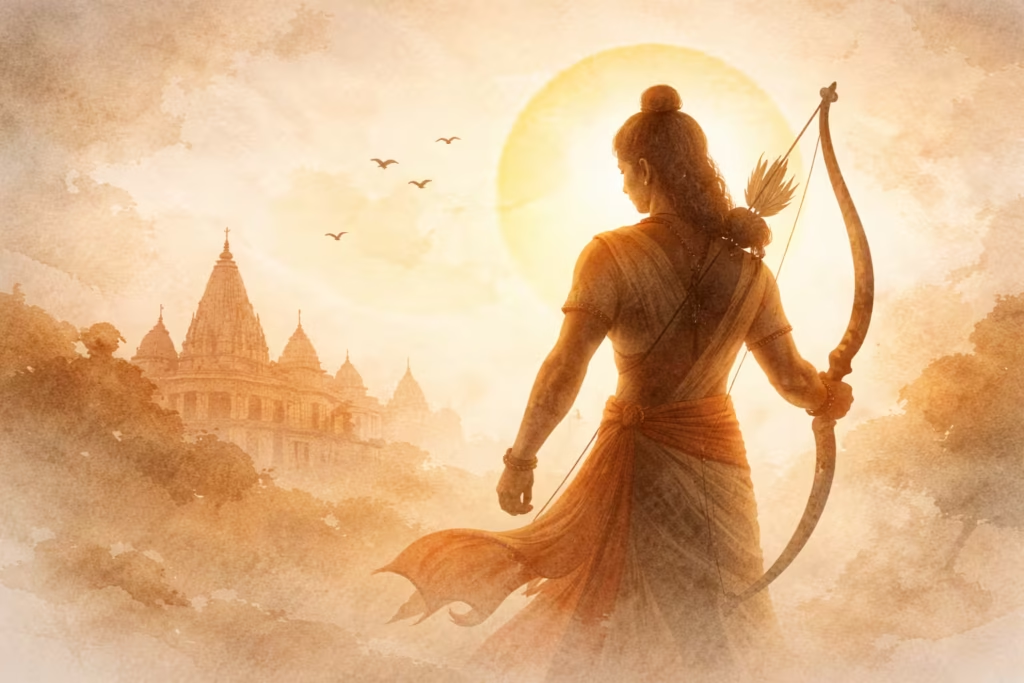
Ram Navami is celebrated to honour the divine birth of Lord Rama, the seventh incarnation of Lord Vishnu, who is revered as Maryada Purushottam — the ideal embodiment of righteousness, truth and virtue. According to the Ramayana, Lord Rama was born on Chaitra Shukla Navami during the auspicious madhyahna period in Ayodhya. The festival reminds devotees of Rama’s life teachings, his commitment to dharma, and the timeless values of ideal conduct, duty towards family and just governance, which continue to inspire millions of followers.
The story behind Ram Navami
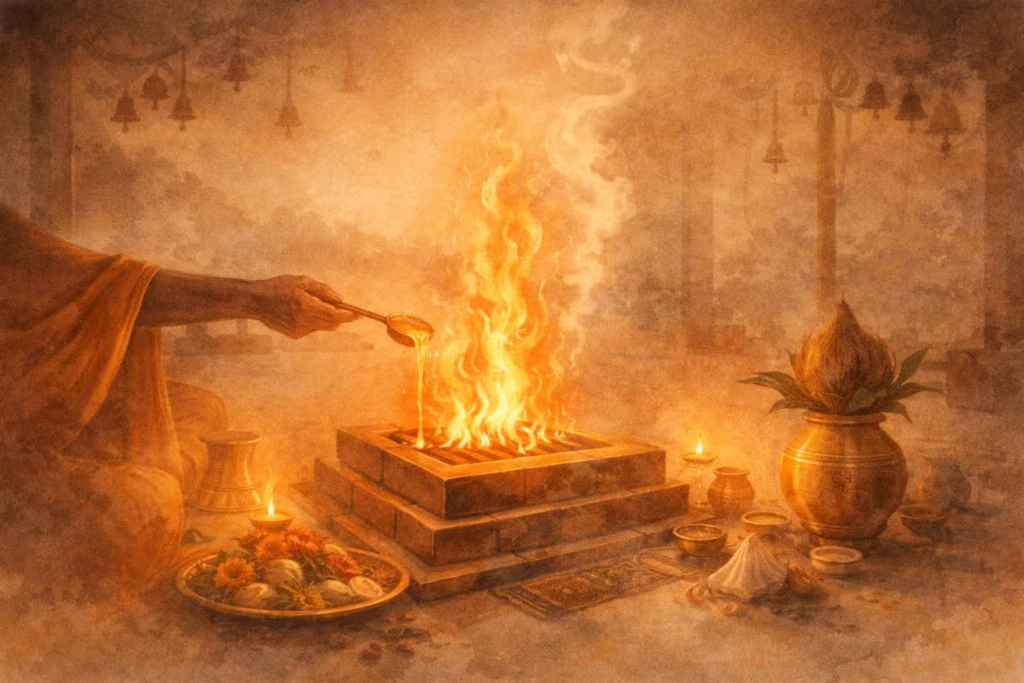
According to the Valmiki Ramayana, King Dasharatha of Ayodhya performed the sacred Putrakameshti yajna to be blessed with sons. Following the yajna, Queen Kaushalya gave birth to Lord Rama on Chaitra Shukla Navami during the auspicious madhyahna (midday) period. Devotees commemorate this divine birth with prayers, katha recitals and celebratory rituals that symbolise the arrival of dharma in the world.
Ram Navami and Chaitra Navratri: how the festival fits into the Navratri calendar
Ram Navami marks the grand culmination of Chaitra Navratri, the nine‑day spring Navratri dedicated to Goddess Durga. Observed on the ninth day (Navami) of Chaitra Shukla Paksha, the festival signifies the completion of Navratri sadhana. Devotees who observe the nine‑day Navratri fast traditionally conclude their vrat on Ram Navami after performing Lord Rama’s midday puja, making the day spiritually significant within the Navratri calendar.
Different traditions — Smarta vs Vaishnava dates: why some observe on March 26 and others on March 27
Two common ways to decide the festival day are:
- Smarta (tithi‑based) rule: Follow the panchang tithi as it falls locally — many Smartas observe March 26, 2026.
- Udaya‑tithi (sunrise considered) rule used by many Vaishnavas/ISKCON: If Navami extends past sunrise, the next day (March 27) may be preferred for public celebrations and processions.
Both practices are rooted in classical shastric prescriptions; neither is universally ‘wrong’ — both aim to align rituals with auspicious cosmic timings.
Puja vidhi
A concise madhyahna puja suitable for households:
- Clean the altar and place an image or idol of Rama (with Sita, Laxmana and Hanuman if available).
- Light a lamp and offer water, flowers and incense.
- Recite the Rama‑stuti (Rama Raksha Stotra or simple Rama mantra: “Shri Ram Jai Ram Jai Jai Ram”).
- Offer traditional naivedya such as Ram‑phal (seasonal fruits), suntha prasad (dry ginger–based panjiri or sunth) and panakam (jaggery drink), which are widely associated with Ram Navami celebrations.
- Perform arati and distribute prasad among family members and devotees.
- Read a short katha or listen to a temple recital.
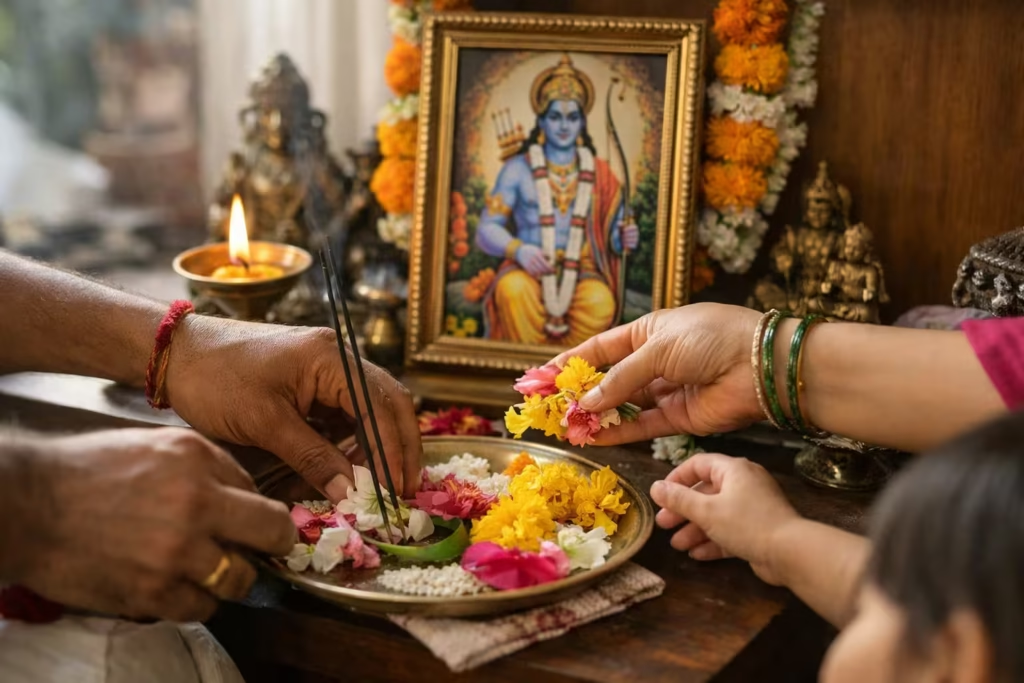
Temples will follow longer priestly sampradayic procedures (abhishekam, alankar, symbolic birth rites) timed to the madhyahna kshana.
Rama Katha & bhajan programmes: temple recitals, Ramayana path and satsang traditions
Across India, bhajan‑kirtan programmes, Ramayana paath and satsangs are organized in mandirs and community halls. Brahmotsav style events, katha recitals and dramatic Ramlila enactments form an important cultural layer of the festival.
Shobha yatra and processions: How cities and temples celebrate
Major temples and mathas organize shobha yatras—processions with decorated palkis, temple chariots, and devotional music. Cities with historic Ram traditions — especially Ayodhya — host large congregations, while ISKCON and other sampradayas organize floating processions, kirtans and community feasts.
| No. | Festival / Event | Date (2026) | Short information | Tithi (Start – End) |
|---|---|---|---|---|
| 1 | Makar Sankranti | 14 Jan 2026 | Sun’s transit into Makara (Capricorn); holy bath & charity | — (Solar event) |
| 2 | Pongal (Thai Pongal) | 15 Jan 2026 | Major harvest festival in South India | — |
| 3 | Vasant Panchami (Saraswati Puja) | 23 Jan 2026 | Worship of Goddess Saraswati; beginning of spring | Magha Shukla Panchami (07:58 AM, 23 Jan – 07:16 AM, 24 Jan) |
| 4 | Republic Day (India) | 26 Jan 2026 | National holiday of India | — |
| 5 | Maha Shivaratri | 15 Feb 2026 | Dedicated to Lord Shiva; night worship and fasting | Phalguna Krishna Chaturdashi (03:34 AM, 15 Feb – 04:04 AM, 16 Feb) |
| 6 | Holika Dahan | 2 Mar 2026 | Bonfire ritual before Holi; victory of good over evil | Phalguna Purnima (05:55 PM, 02 Mar – 05:07 PM, 03 Mar) |
| 7 | Holi (Festival of Colors) | 3 Mar 2026 | Festival of colors, joy, and togetherness | Phalguna Purnima (ends: 03 Mar 05:07 PM) |
| 8 | Chaitra Navratri / Gudi Padwa / Ugadi | 19 Mar 2026 | Navratri begins; New Year in many regions | Chaitra Shukla Pratipada (06:52 AM, 19 Mar – 04:52 AM, 20 Mar) |
| 9 | Rama Navami | 26 Mar 2026 | Birth of Lord Rama; Midday worship is considered special | Chaitra Shukla Navami (11:48 AM, 26 Mar – 10:06 AM, 27 Mar) |
| 10 | Hanuman Jayanti | 2 Apr 2026 | Birth anniversary of Lord Hanuman | Chaitra Shukla Purnima |
| 11 | Good Friday | 3 Apr 2026 | Christian observance of Jesus Christ’s crucifixion | — |
| 12 | Easter Sunday | 5 Apr 2026 | Christian festival of resurrection | — |
| 13 | Akshaya Tritiya | 19 Apr 2026 | Considered highly auspicious for new beginnings | Vaishakha Shukla Tritiya |
| 14 | Buddha Purnima | 1 May 2026 | Sacred day linked with Gautama Buddha | Vaishakha Purnima (09:12 PM, 30 Apr – 10:52 PM, 01 May) |
| 15 | Jagannath Rath Yatra | 16 Jul 2026 | Grand chariot festival of Lord Jagannath | Ashadha Shukla Dwitiya (11:50 AM, 15 Jul – 08:52 AM, 16 Jul) |
| 16 | Independence Day (India) | 15 Aug 2026 | National holiday of India | — |
| 17 | Raksha Bandhan | 28 Aug 2026 | Celebration of sibling bond (Rakhi) | Shravana Purnima |
| 18 | Krishna Janmashtami | 4 Sep 2026 | Birth of Lord Krishna | Bhadrapada Krishna Ashtami |
| 19 | Ganesh Chaturthi | 14 Sep 2026 | Birth of Lord Ganesha; Ganpati festival begins | Bhadrapada Shukla Chaturthi |
| 20 | Anant Chaturdashi | 25 Sep 2026 | Anant Vrat; commonly linked with Ganesh Visarjan | Bhadrapada Shukla Chaturdashi |
| 21 | Gandhi Jayanti | 2 Oct 2026 | Birth anniversary of Mahatma Gandhi | — |
| 22 | Sharad Navratri (Ghatasthapana) | 11 Oct 2026 | Nine-day worship of Goddess Durga begins | Ashwina Shukla Pratipada (09:19 PM, 10 Oct – 09:30 PM, 11 Oct) |
| 23 | Durga Ashtami (Maha Ashtami) | 19 Oct 2026 | A key Navratri day; Kanya Puja in many regions | Ashwina Shukla Ashtami |
| 24 | Vijayadashami (Dussehra) | 20 Oct 2026 | Victory of dharma; Ravan Dahan / Shastra Puja | Ashwina Shukla Dashami |
| 25 | Karwa Chauth | 29 Oct 2026 | Fast observed by married women; moonrise ends the vrat | Kartika Krishna Chaturthi |
| 26 | Dhanteras | 6 Nov 2026 | Dhanvantari worship; prosperity and health | Kartika Krishna Trayodashi (10:30 AM, 06 Nov – 10:47 AM, 07 Nov) |
| 27 | Naraka Chaturdashi (Chhoti Diwali) | 7 Nov 2026 | Abhyanga Snan; a key day of the Diwali season | Kartika Krishna Chaturdashi |
| 28 | Diwali (Lakshmi Puja) | 8 Nov 2026 | Main Diwali day; Lakshmi–Ganesha worship | Kartika Amavasya (11:27 AM, 08 Nov – 12:31 PM, 09 Nov) |
| 29 | Govardhan Puja (Annakut) | 9 Nov 2026 | Govardhan worship; Annakut | Kartika Shukla Pratipada |
| 30 | Bhai Dooj | 10 Nov 2026 | Brother–sister festival (Yama Dwitiya) | Kartika Shukla Dwitiya |
| 31 | Chhath Puja | 15 Nov 2026 | Sun worship; offering Arghya to rising/setting Sun | Kartika Shukla Shashthi |
| 32 | Guru Nanak Jayanti (Gurpurab) | 24 Nov 2026 | Birth anniversary of Sri Guru Nanak Dev Ji | Kartika Purnima |
| 33 | Christmas | 25 Dec 2026 | Birth of Jesus Christ; widely celebrated | — |