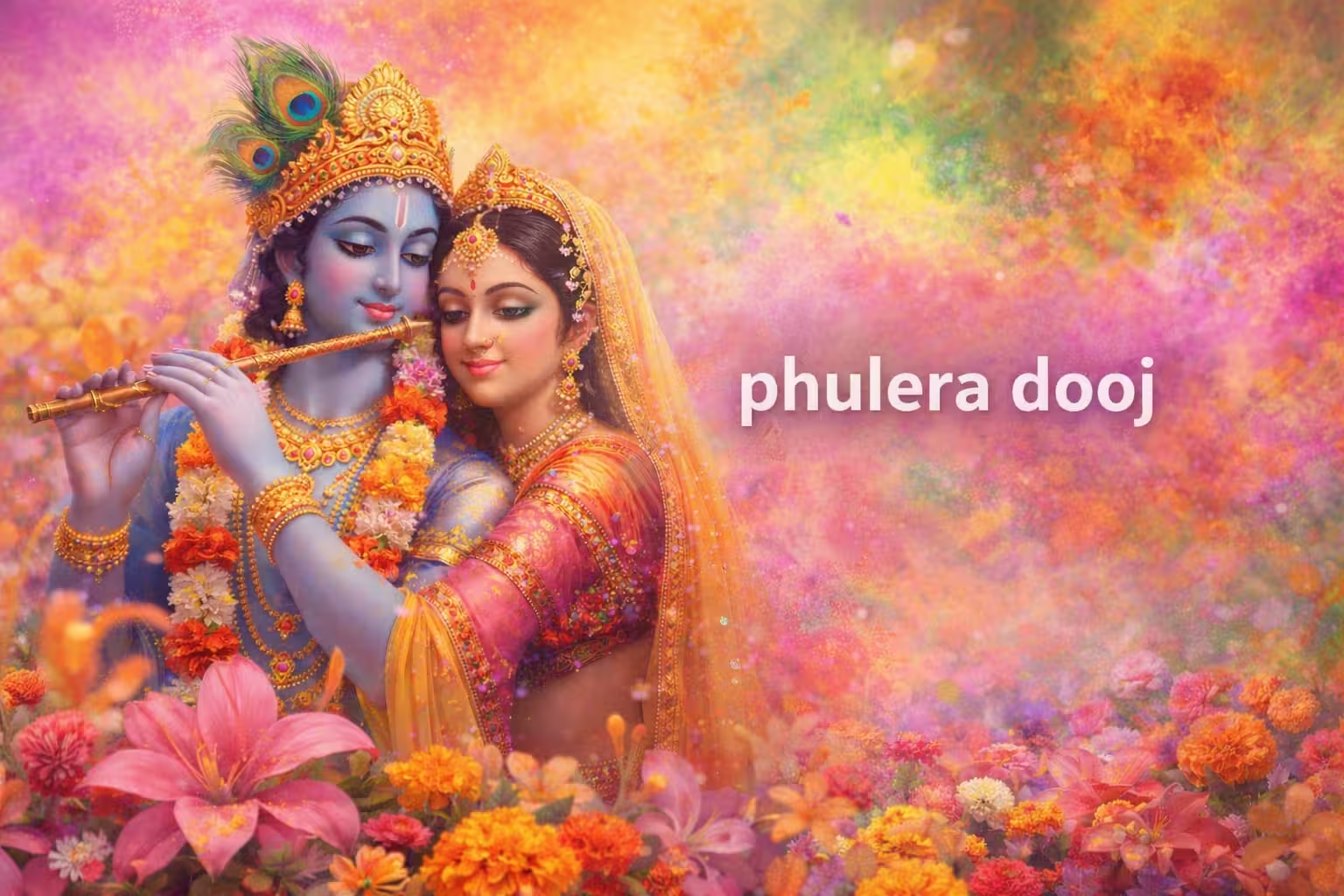
Phalgun month’s Shukla Paksha Dwitiya — celebrated as Phulera Dooj — commemorates the unwavering love between Lord Krishna and Radha. In the Braj region (Mathura, Vrindavan, Barsana), this day marks the beginning of a traditional “flower holi” and is widely regarded as one of the most auspicious, fault-free days for marriage and other ceremonial beginnings.
Phulera Dooj 2026: Date and Auspicious Muhurat
- Phulera Dooj 2026 Date: 19 February 2026, Thursday
- Abhuj (fault-free) Muhurat: Considered auspicious for the entire day (no specific short muhurta required)
Panchang-based detailed timing
Some traditional almanacs (panchangs) provide exact start and end times for the Dwitiya tithi used to determine Phulera Dooj. For example, one local panchang lists Dwitiya as beginning on 18 February at 04:04:57 PM and ending on 19 February at 03:03:58 PM. Within that span, special sub-periods are often highlighted: Abhijit Muhurat is noted from 12:17 PM to 01:03 PM, and Amrit Kaal from 01:00 PM to 02:33 PM.
Performing puja, mantra recitation, or any auspicious activity during these sub-periods is considered especially meritorious. That said, Phulera Dooj itself is traditionally regarded as an intrinsically fault-free (abujh) and auspicious day — so many people also choose to act on this day without consulting minute-by-minute muhurta. For absolute precision, check a local panchang or a verified astrological source for city-specific timings.
Religious and Spiritual Significance of the Festival
Phulera Dooj holds particular importance within the Vaishnavite tradition and among communities in the Braj region. The word “Phulera” derives from “phool” (flower), indicating the festival’s association with flowers. Falling between Vasant Panchami and Holi, the day coincides with the season when nature is in full bloom and colourful flowers are everywhere.
According to devotional lore, on this day Lord Krishna threw flowers to appease Radha when she was upset, thereby causing Radha to become pleased. From that incident, a tradition arose in Braj to celebrate holi with flowers instead of colours on this particular day.
From an astrological viewpoint, Phulera Dooj is considered a “fault-free” day. Many panchangs and astrological calculations label it as a self-manifest auspicious muhurta for starting new ventures. Since harmful planetary influences are believed to be negligible on this day, it is commonly chosen for weddings, property purchases, and the launch of new businesses.
Principal Rituals and Customs
Devotees perform special worship of Radha–Krishna on Phulera Dooj. The main practices are described below:
Floral Adornment and the Flower Holi
The most prominent custom is decorating the deities with fresh and fragrant flowers. Devotees dress the idols of Radha and Krishna with garlands and floral garments made from marigolds, roses, jasmine and other seasonal blooms. During the ceremony, worshippers shower the deities with flowers alongside gulal (powdered colour) — symbolically playing a flower-based holi with the Lord.
Tying Gulal at the Waist
A particular tradition involves tying a small colourful cloth or a pouch containing gulal to the waist of Lord Krishna’s idol. This practice signals that the main Holi festival is approaching and is followed by distributing that gulal as prasad to the devotees.
Special Offerings
In many parts of North India, especially across the Braj region, it is customary to offer poha (flattened rice) and other seasonal sweets as bhog. Since the day emphasizes simplicity and devotion, devotees prepare sattvic (pure) meals with deep reverence and first offer them to the Lord.
Celebration within Families and Communities
Phulera Dooj is not limited to temple rituals; it is a day of familial and communal celebration.
Grand Celebrations at Braj Temples
Mathura and Vrindavan — particularly temples like Banke Bihari and Radha Vallabh — witness special darshans and festivities. Pilgrims travel from afar to join the celebrations. As temple doors open, flowers are showered in abundance; priests sprinkle flowers over devotees as a form of divine blessing.
A Surge in Weddings
Because Phulera Dooj is considered an “abujh muhurat,” a large number of weddings are scheduled for this day across communities. Families that have been unable to find suitable muhurats for marriage often choose Phulera Dooj without hesitation.
Holi Preparations at Home
Households commonly begin Holi preparations on this day. Women may prepare snacks like papad, chips and sweets (such as gujiya), marking the transition from winter toward the warmer season and subtle dietary changes that come with it.
Phulera Dooj is both a marker of seasonal change and a celebration of devotional love and surrender. The festival teaches that pleasing the divine does not require expensive offerings; simple gifts from nature — like flowers — and sincere love matter most. Whether it is newly married couples or devoted Krishna followers, this day brings renewed joy and calm to everyone’s life.
Practical Takeaway (a practical tip for devotees)
“If you are planning a wedding, housewarming, or a new business launch, Phulera Dooj is traditionally one of the best fault-free days to proceed without consulting a detailed muhurta.”
SEO Headline (12 words):
Phulera Dooj: Auspicious Muhurat, Rituals and the Flower Holi of Radha–Krishna
Meta Description (160 characters):
Learn the religious significance, puja rituals and fault-free muhurat of Phulera Dooj. The day is famed for floral adornments of Radha–Krishna and auspicious weddings.
Sources Cited:
- DrikPanchang (Hindu Calendar calculations regarding Abhuj Muhurat)
- Kalnirnay (Significance of Phalguna month festivals)
- Vrindavan/Mathura Temple Portals (Rituals of Banke Bihari & Radha Vallabh Temple)
फुलेरा दूज: राधा-कृष्ण के प्रेम का प्रतीक, शुभ विवाह मुहूर्त और फूलों की होली का महत्व