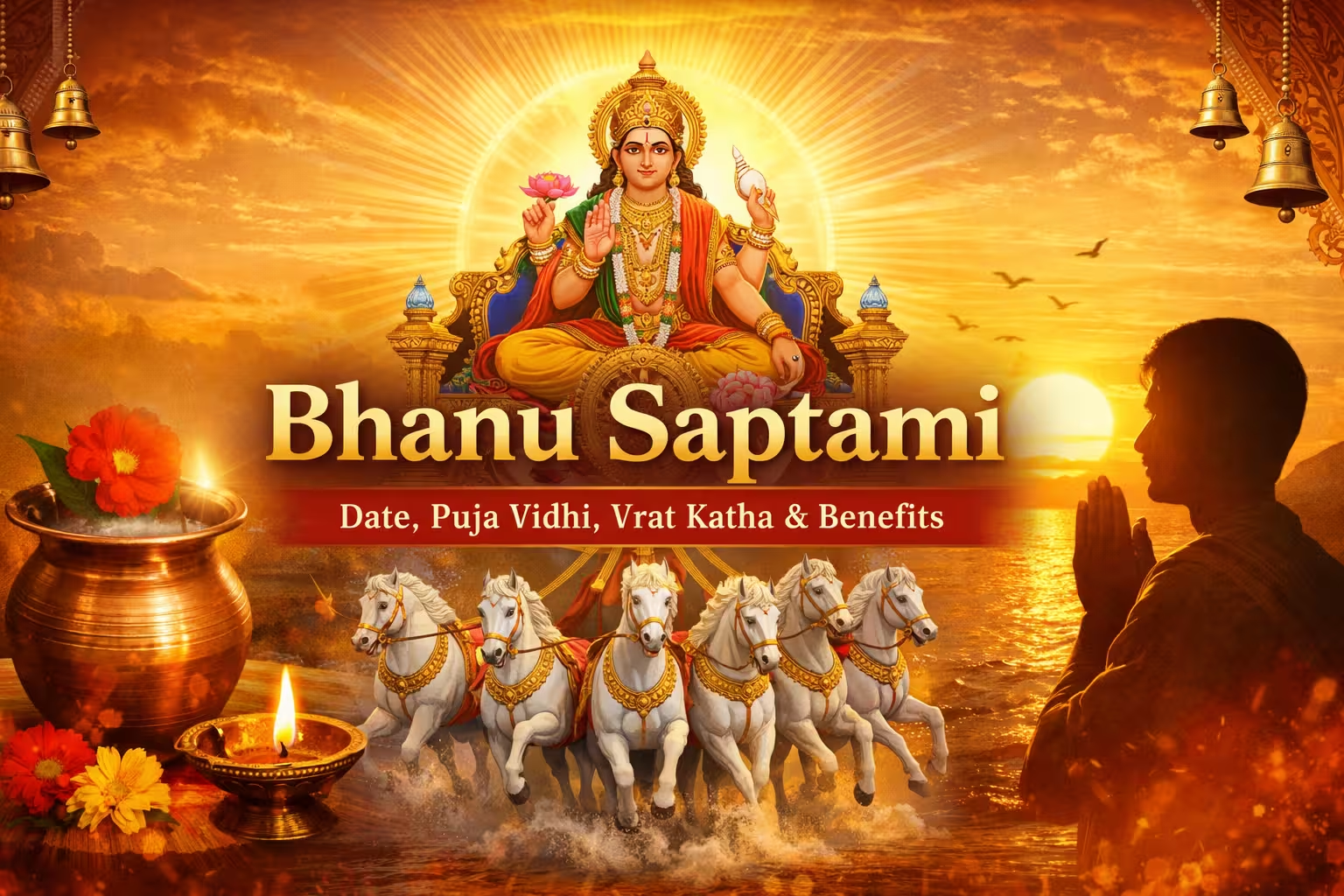
Bhanu Saptami is one of those beautiful Hindu observances that many people hear about only when it appears on a Panchang—and then they wonder, “What exactly is this, and why is it important?” If you’ve never observed it before, you’re not alone. Bhanu Saptami is essentially a special Saptami (the 7th lunar day) that becomes extra auspicious when it falls on a Sunday—because Sunday is the day of Surya (the Sun). On this day, devotees worship Surya Dev with devotion, discipline, and a simple but powerful ritual: offering Arghya (water) to the rising Sun.
In Hindu tradition, Surya is not only the visible source of life and energy, but also a symbol of health, confidence, clarity, truth, and inner strength. That is why Bhanu Saptami is commonly associated with prayers for wellbeing, progress in life, and removal of obstacles—especially those connected with vitality, respect, authority, and personal radiance.
Table of Contents
What is Bhanu Saptami?
Bhanu Saptami is observed when the Saptami Tithi coincides with Sunday (Ravivaar). “Bhanu” is a well-known name of Surya (Sun), so the day literally points to “Saptami of the Sun.” Many devotees consider it one of the most favorable days for Surya Upasana (Sun worship) and for strengthening the positive influence of Surya in life.
Bhanu Saptami 2026 is on which date?
In 2026, Bhanu Saptami is falling on 8 February 2026 (Sunday). Panchang listings for this date show Bhanu Saptami on the day.
What is the Tithi on 8 February 2026?
For 8 February 2026, the Panchang for New Delhi shows Krishna Paksha Saptami, and the Saptami Tithi continues up to 05:01 AM on 9 February (local time). (Timings can vary slightly by city, so always cross-check your local Panchang.)
Why is Bhanu Saptami considered auspicious?
Surya Dev is seen as the giver of prana (life-force). In everyday life, the Sun is what keeps nature active—our mornings, our energy, our routine, and even our mental alertness. Spiritually, Surya symbolizes self-respect, courage, discipline, and the ability to stand tall. This is why Sun worship is often linked with health, career growth, confidence, and clarity of purpose.
Traditional belief also associates Bhanu Saptami with Surya’s divine glory and special blessings for devotees who perform Surya Arghya, japa, and daan on this day.
Is Bhanu Saptami the same as Ratha Saptami?
This is a very common confusion. Ratha Saptami is a well-known festival that usually falls on Magha Shukla Saptami and is celebrated as a significant Sun-related day in many regions. Bhanu Saptami, on the other hand, is identified specifically when Saptami comes on a Sunday, making it a “Sun + Saptami” combination.
So, both are Surya-centered, but they are not automatically the same event. Think of it like this: Ratha Saptami is a fixed festival tied to a specific lunar placement, while Bhanu Saptami is a special coincidence of weekday and tithi.
Who should observe Bhanu Saptami Vrat?
Anyone can observe Bhanu Saptami, but people usually feel drawn to it when they want:
A healthier body and stronger immunity, especially when energy feels low or recovery feels slow. A more disciplined lifestyle, because Surya Upasana is closely linked with routine and willpower. Better focus in studies or work, because Sun symbolism supports clarity and confidence. Respect, recognition, and stability in career and leadership roles—especially if someone feels their efforts go unnoticed.
In many families, women also observe this vrat with prayers for wellbeing, harmony, and long-term prosperity, and several traditional Kathas describe spiritual rewards for sincere Surya worship on this day.
What do people do on Bhanu Saptami?
The heart of Bhanu Saptami is simple: wake up early, become clean and calm, and greet the rising Sun with devotion. Most practices revolve around purification, prayer, offering, and charity.
The most important ritual: Surya Arghya at sunrise
Devotees traditionally face the rising Sun and offer water in a copper vessel. Many add red flowers, kumkum, and sometimes sandalwood paste to the water, then offer it steadily with prayer. This Surya Arghya is considered the central practice of the day.
If you want to keep it traditional but still practical at home, you can prepare a small clean space—balcony, terrace, courtyard, or near a window where sunlight is visible. The ritual doesn’t demand a complicated setup; it asks for sincerity.
Bhanu Saptami Puja Vidhi
Start by waking up early—ideally before sunrise. Take a bath and wear clean clothes. If possible, choose light-colored or fresh clothes that make you feel calm and clean.
Now prepare your offering. Take clean water in a copper lota or vessel. Add a pinch of kumkum and place one or two red flowers. Stand facing the Sun, bring your focus to your breath, and offer the water slowly while praying to Surya Dev. You can keep your prayer simple—asking for health, clarity, strength, and the ability to live with truth and discipline.
After Arghya, many people do a short Surya stotra recitation. If you know Aditya Hridayam, it’s commonly recited as a powerful Surya hymn. Even if you do not know long stotras, chanting Surya’s name with focus is meaningful.
Then, offer a small naivedya at home—fruits are simple and commonly used. Light a diya, offer incense if you prefer, and spend a few minutes in silent gratitude. The most important part is not the number of items—it is the steadiness of devotion.
Which mantra can be chanted on Bhanu Saptami?
Many devotees chant Surya mantras during Arghya. A simple mantra that is widely used is:
“Om Suryaya Namah”
You can chant it 11, 21, or 108 times—whatever fits your routine. Some people also chant Gayatri Mantra or recite Surya stotras while offering Arghya.
Bhanu Saptami Vrat rules: what kind of fast is observed?
Vrat rules can vary by family tradition, region, and personal health. In general, Bhanu Saptami vrat is observed as a day of restraint and purity. Some devotees do a full-day fast and eat only after puja. Others follow a phalahar fast (fruits, milk, simple vrat-friendly foods). Many prefer ekbhukt—eating one simple sattvic meal.
A good approach is to keep your vrat disciplined but safe. If you have health conditions, do not force strict fasting. The spirit of the vrat is self-control, cleanliness, and devotion—not physical suffering. Even a simple sattvic routine with sincere Surya worship is considered meaningful.
Bhanu Saptami Vrat Katha (the story behind the vrat)
Traditional vrat kathas often highlight how sincere worship transforms a person’s life. A well-known narrative connected with Bhanu Saptami speaks about Indumati, who approached Sage Vashishtha seeking a vrata that could uplift her and help her move toward liberation and divine grace. The sage explained the importance of Bhanu/Surya-related Saptami worship and guided her toward disciplined observance and Surya devotion. Over time, her sincere vrata, humility, and devotion became the turning point in her spiritual journey.
The deeper message of such kathas is consistent: your past does not block your future when your devotion becomes honest and your conduct becomes pure.
What should be donated on Bhanu Saptami?
Charity (daan) is considered a powerful part of many vrat traditions, including Surya-centric observances. People often donate items connected with Surya symbolism—such as grains and simple daily essentials. Some traditions mention offerings like wheat, jaggery, or helpful items for the needy as acts of merit and compassion.
Even if you do not follow specific item-based daan, one sincere act—feeding someone, supporting a worker, donating to a temple kitchen, or helping a person in need—fits the spirit of Bhanu Saptami.
Common mistakes people make on Bhanu Saptami
A common mistake is treating the day as “only a ritual.” Bhanu Saptami becomes powerful when your inner posture matches the outer act—meaning you stay calm, truthful, disciplined, and respectful. Another mistake is ignoring location-based Panchang differences. Tithi timings can change by city, so if someone is observing strict timing-based rituals, they should check their own city Panchang.
Also, many people start with strict fasting and then feel weak or irritated. If the vrat makes you harsh or unhealthy, it defeats the purpose. Choose a sustainable, sattvic method.
Myths vs reality about Bhanu Saptami
Some believe Bhanu Saptami is “only for astrologically troubled people.” In reality, Sun worship is a universal practice in Hindu tradition—many observe it simply for health, discipline, gratitude, and spiritual clarity.
Another myth is that if you can’t do a full vrat, “it doesn’t count.” Reality is that devotion is not measured by hardship; it is measured by sincerity. Offering Arghya with faith, living cleanly for the day, speaking truthfully, and doing a small charity is a complete, respectful observance.
Final thoughts
Bhanu Saptami on 8 February 2026 is a wonderful opportunity to reconnect with a simple but deeply meaningful practice: honoring Surya Dev, the visible form of divine energy in our daily life. You do not need complex arrangements to observe it. A clean mind, a sincere heart, early morning discipline, Surya Arghya, and a small act of kindness are enough to make the day spiritually rich and personally uplifting.